Food Strike Launch Event
Start: 2026-10-27 18:30:00 UTC Greenwich Mean Time : Dublin, Edinburgh, Lisbon, London (GMT+00:00)
Event Type:
Virtual
A virtual link will be communicated before the event.
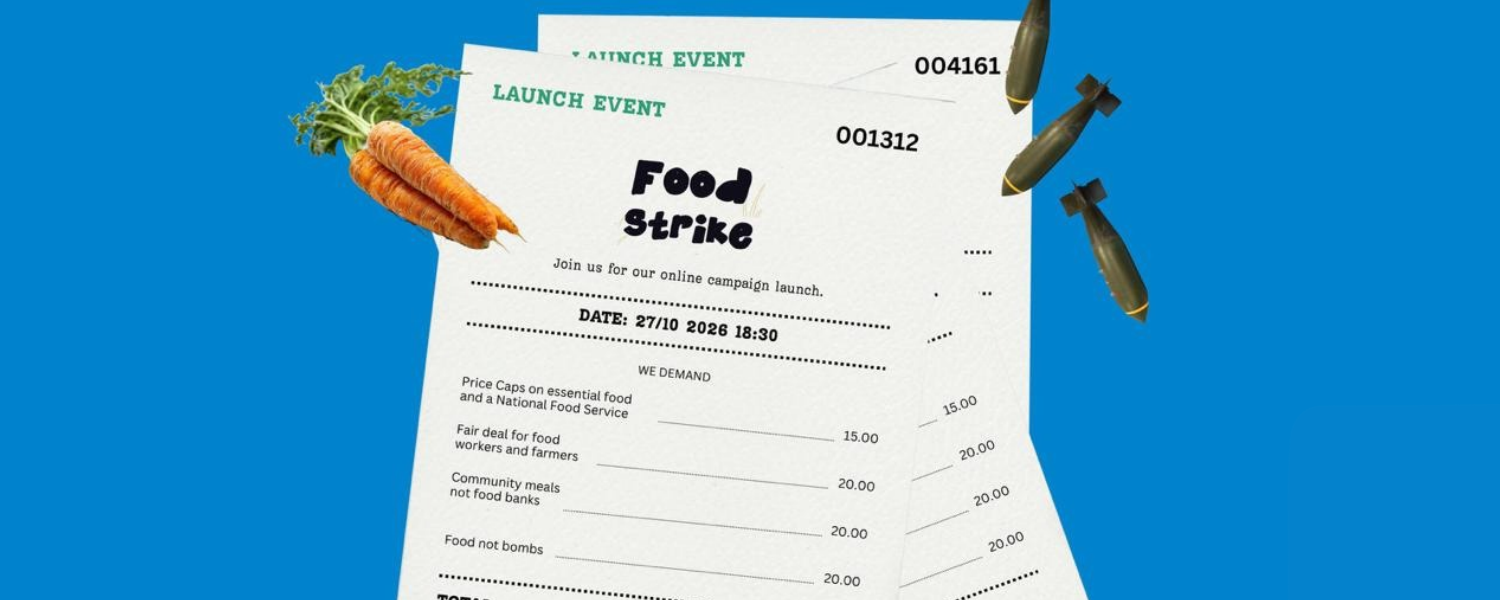
Join us for our online campaign launch
Across the UK, people are struggling to feed themselves, while farmers face flooding, drought, extreme heat and unpredictable growing seasons. Behind these pressures is an economic system deeply dependent on fossil fuels. Oil and gas are embedded throughout the food system, from fertiliser and farm machinery to processing, refrigeration, transport and distribution. Burning fossil fuels is driving the climate disruption that makes growing food harder and less predictable.
When harvests fail, supply chains are disrupted and prices rise. Those on the lowest incomes feel these impacts first and hardest. Families are forced to cut back, farmers are squeezed from the other direction, facing higher costs and greater risks, and workers across the food sector face insecure jobs and stagnant wages. Meanwhile, the companies with the greatest power in the food chain continue to make decisions based solely on profit.
We must act to ensure that everyone eats today, while building a food system that can feed us all tomorrow.
Our dependence on fossil fuels is also bound up with imperialism and war. Oil is not just something we buy at the petrol station. It's a strategic resource around which states, corporations and militaries have built enormous power. The Strait of Hormuz makes this clear. A huge proportion of the world's oil and gas passes through this narrow waterway. Conflict in the region sends energy prices soaring, with consequences for food and household bills thousands of miles away. Yet the response to this vulnerability is too often more military power and more competition for control of energy supplies.
We are part of this. British governments have long used military power to protect strategic interests in the Gulf, while British arms companies profit from the conflicts that devastate communities there. The people who suffer the consequences are rarely the people making decisions. They are families trying to buy food, farmers trying to continue to grow food and the communities living with war and displacement.
Climate justice means breaking the dependence on fossil fuels and military power and challenging the imperial interests that keep it in place.
We demand:
1. Price caps on essential food and the creation of a national food service
We call for enforceable price caps so that people are not left at the mercy of corporations as to whether or not they can afford to eat. We are also demanding publicly owned supermarkets and the creation of a national food service that guarantees access to affordable, nutritious food.
2. A fair deal for food workers and farmers
The people who grow, process, distribute and sell our food deserve security and a decent income. We are calling for national collective bargaining for retail and distribution workers, alongside a public cooperative food production scheme to support small farmers and strengthen local food production.
Farmers are already dealing with the consequences of climate breakdown. They should not be left to absorb the costs of a crisis they did not create. Public investment should help build food systems that are more resilient to extreme weather and less dependent on fossil fuels.
3. Community meals, not food banks
We demand dignity for everyone. We call for public funding for community canteens structured as Public-Common Partnerships, giving communities the resources to provide affordable, nutritious meals and creating permanent local infrastructure for food security.
4. Food, not bombs
We have enough food for everyone. People go hungry as a result of choices made by politicians and corporations. We call for an end to the prioritisation of military spending and investment in food security, community meals, support for farmers and the transition away from fossil fuels. We stand against wars fought over resources and trade routes, and against the imperial interests that keep communities around the world trapped in cycles of violence and extraction.
Food security must become part of climate action, and so must resistance to imperialism.