End the Slaughter: Ban Eid Sacrifice in Bangladesh
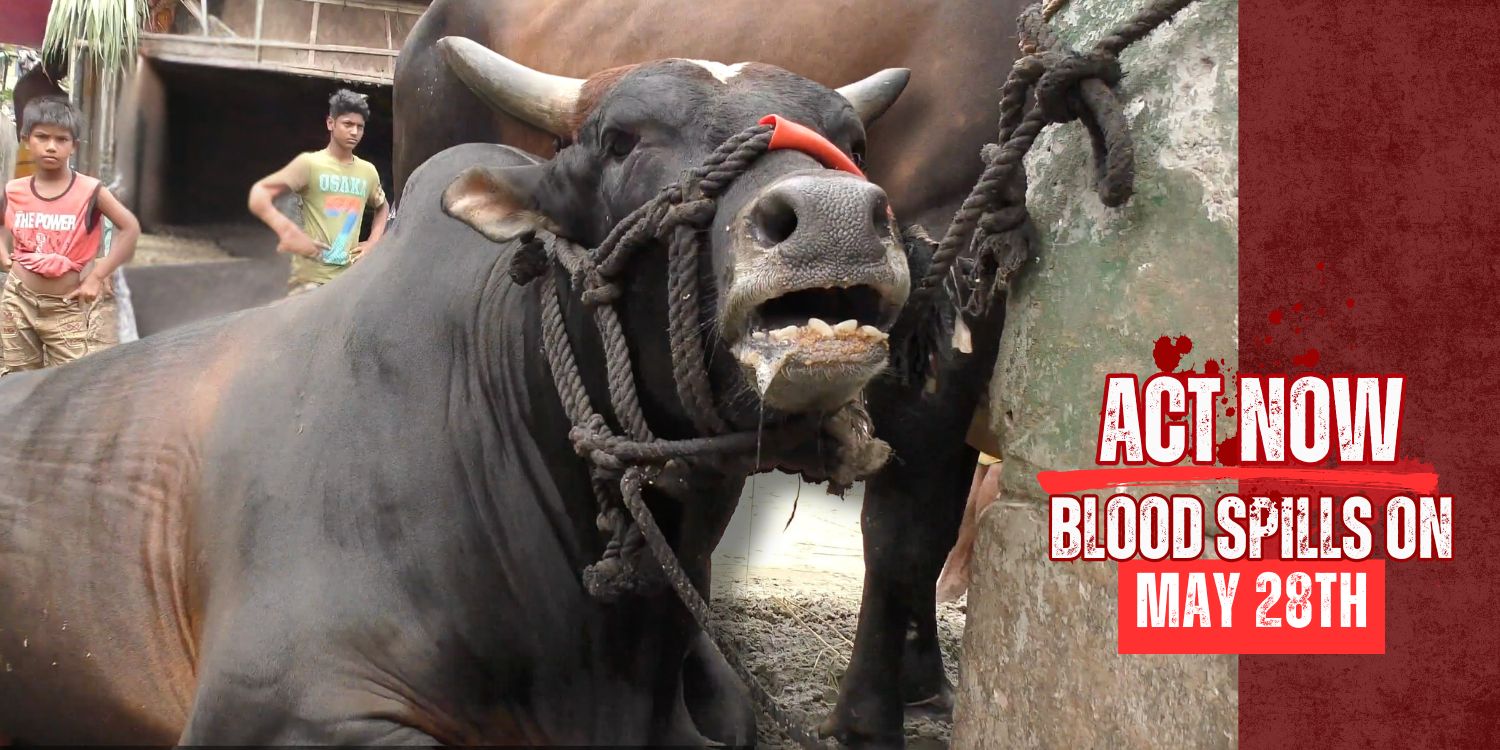
Eid al-Adha, “Feast of Sacrifice,” is approaching — and across Bangladesh, millions of terrified animals are being prepared for a brutal and bloody death.
Bangladesh’s Ministry of Fisheries and Livestock estimates that approximately 12.33 million animals will be made available nationwide for ritual slaughter this year, including 5.69 million cows and buffaloes and 6.63 million goats and sheep.
The government is not preventing the violence.
It is responsible for it.
Officials are coordinating transportation, supply chains, and slaughter operations ahead of the ritual sacrifice to funnel these animals into the capital from all over the region before the ritual begins on May 28.
During Eid, streets, marketplaces, and residential neighborhoods become open-air killing grounds. Animals are dragged through crowds, restrained in fear, and slaughtered in full public view while blood floods roads and alleyways.
Many endure prolonged suffering in chaotic conditions with little oversight. Terrified animals often witness the slaughter of others before facing the same fate themselves.
This is mass brutality disguised as tradition.
Message to Fisheries and Livestock Minister Mohammed Aminur Rashid
Minister Rashid,
Your ministry is actively overseeing and facilitating the movement, supply, and mass slaughter of more than 12 million animals ahead of Eid al-Adha. Under your leadership, millions of cows, buffaloes, goats, and sheep will be funneled into streets and neighborhoods across Bangladesh, where they will endure terror, brutality, and agonizing deaths in full public view.
The world is watching.
We urge you to end public slaughter and phase out ritual animal sacrifice practices that inflict extreme suffering on millions of animals every year.
Ban public slaughter.
End ritual animal sacrifice.
Implement policies that choose compassion over carnage.
Sign this critical petition, and we will send your name, along with thousands of others, to Bangladesh’s Fisheries and Livestock Minister, Mohammed Aminur Rashid, so we can make a more significant impact on your behalf.