Sign the petition to the Senate: Pass the CROWN Act.
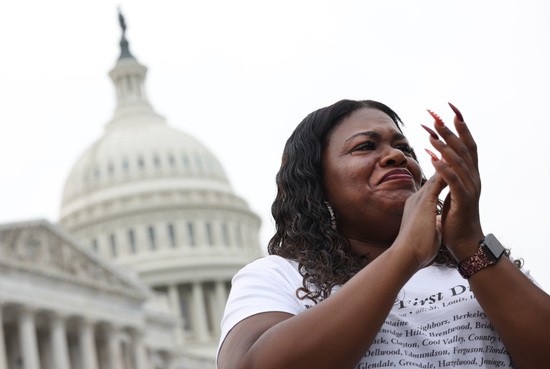
The U.S. is one step closer to banning natural hair-based discrimination for good. The House of Representatives recently passed the Creating a Respectful and Open World for Natural Hair Act (CROWN Act). The CROWN Act bans discrimination based on an individual's texture or style of hair, a key step in the battle to dismantle systemic racism.
Historically, policies aimed at prohibiting natural hairstyles have been used as retaliation to unfairly penalize Black children at school and Black adults in the workplace. A 2021 study revealed that a third of Black children in majority-white schools faced race-based hair discrimination.
Before the House vote was taken, Black legislators shared experiences of discrimination based on their hair. Rep. Cori Bush, D-Mo said, "As a Black woman who loves my braids, I know what it's like to feel isolated because of how I wear my hair. This is the last time we say no more to Black people being made to feel like we have to straighten our hair to be deemed professional.”
Research found that African American women were more likely to be sent home as a result of their hair and that 80% of African American women felt pressured to change their hair to fit in. A separate study also revealed that participants saw Black hairstyles as unprofessional - reinforcing the need for national legal protections against hair discrimination.
The next step is for the Senate to pass the CROWN Act. Under the CROWN Act, natural hair-based discrimination would be treated as race or national origin discrimination under federal civil rights law. The CROWN Act is vital to protecting Black communities, with a strong emphasis on protecting Black women and children. The Senate must pass the CROWN Act.
Sign the petition to the Senate: Pass the CROWN Act.
Participating Organizations
Historically, policies aimed at prohibiting natural hairstyles have been used as retaliation to unfairly penalize Black children at school and Black adults in the workplace. A 2021 study revealed that a third of Black children in majority-white schools faced race-based hair discrimination.
Before the House vote was taken, Black legislators shared experiences of discrimination based on their hair. Rep. Cori Bush, D-Mo said, "As a Black woman who loves my braids, I know what it's like to feel isolated because of how I wear my hair. This is the last time we say no more to Black people being made to feel like we have to straighten our hair to be deemed professional.”
Research found that African American women were more likely to be sent home as a result of their hair and that 80% of African American women felt pressured to change their hair to fit in. A separate study also revealed that participants saw Black hairstyles as unprofessional - reinforcing the need for national legal protections against hair discrimination.
The next step is for the Senate to pass the CROWN Act. Under the CROWN Act, natural hair-based discrimination would be treated as race or national origin discrimination under federal civil rights law. The CROWN Act is vital to protecting Black communities, with a strong emphasis on protecting Black women and children. The Senate must pass the CROWN Act.
Sign the petition to the Senate: Pass the CROWN Act.
Participating Organizations