We oppose genocide so we support Palestine Action - Letter to the Supreme Court
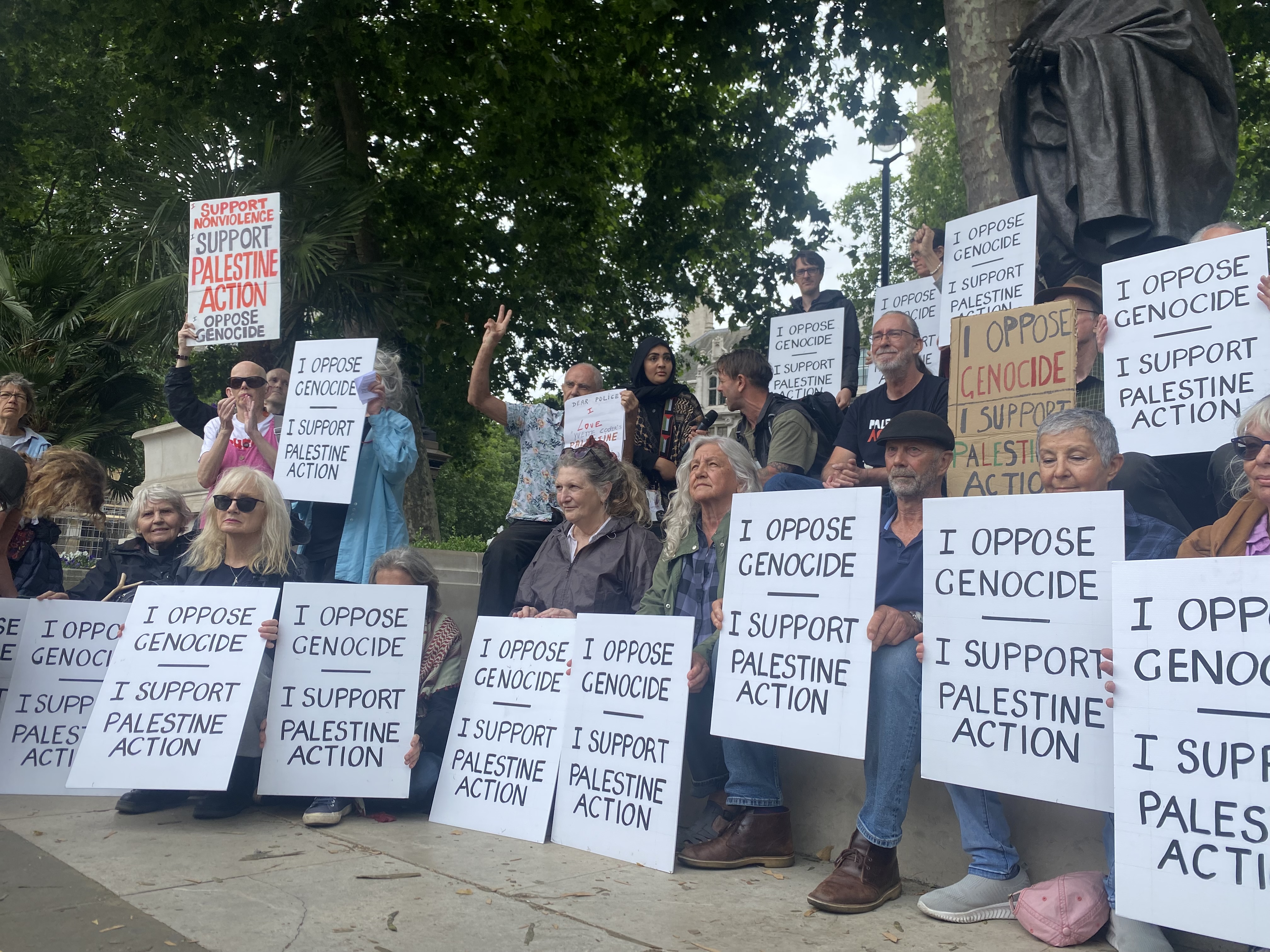
On Wednesday 4 November our Supreme Court finally meets to consider lifting the ban on Palestine Action – would you like to send them a brief message?
Over the next few days, Defend Our Juries are circulating a one-sentence collective letter to the court, that simply reads:
‘We oppose genocide so we support Palestine Action, signed _______’
The initial signatories to this new letter again include many influential and prestigious figures in the domains of Law, Politics and related fields – people like Princeton Professor Richard Falk (a former UN special rapporteur on Palestine), Queen Mary Law Professor Penny Green (another former special rapporteur and founder of the International State Crime Initiative), the writers Sally Rooney and Jonathon Porritt, Stop the War’s Lindsey German and John Rees, Professors Avi Shlaim (Oxford) and Jacqueline Rose (Birkbeck), and more than a hundred other professors from across the UK and abroad.
View the full list of initial and subsequent signatures to the letter by clicking the button below.
If you would like to add your name to this letter, please fill out the short form on this page.
A similar letter to the Court of Appeal was sent back in April 2026 and gathered more than 1700 signatures.
The new letter is open to everyone who resides in the UK, from all walks of life. Please share widely: the more people sign, the more impact this may have.
This is our last chance to lift the ban via the British courts. If we lose this final appeal the only legal recourse will be a last-ditch application to the European Court of Human Rights, which would take years to resolve, and consume a lot of time and resources that could be better devoted to stopping the genocide and dismantling the war machine.
Anyone who might be open to signing this, however, also needs to understand the risks involved. Expressions of support for a proscribed organisation can in principle be prosecuted under sections 12 or 13 of the Terrorism Act of 2000. Over the past eighteen months thousands of people have been arrested for holding signs that make the same point as this collective letter to the court. However, collective letters or online statements do seem to be significantly less risky than holding a placard or wearing a t-shirt.
We are not in a position to offer formal legal advice in a document like this, and since the situation remains a little uncertain (pending the court’s ruling), we think that no-one living in the UK on a visa, or working in a precarious position, should consider signing this letter. We did, however, discuss this same question with a couple of lawyers back in April, and it seems the actual risks involved are quite low. They confirmed that Section 13 of the Terrorism Act 2000 limits its scope to signs or placards or articles of clothing displayed in a public space. Section 12 doesn’t seem applicable.
Of course we can’t know how things may pan out in the future, and everyone should make their own decision about what to do. Nevertheless, some things do seem clear. Public support for proscription in particular and for authoritarian recourse to anti-terrorism legislation more generally, is very low. Whatever residual political support might still remain for Yvette Cooper’s ban of Palestine Action seems to be growing weaker by the day. None of the several previous letters expressing identical forms of support for Palestine Action have yet attracted any police attention (and if the government did eventually decide to investigate then they would probably focus on the letter organiser). There is also clearly some safety in numbers, and the prominence of the initial signatories should lend some protection to everyone else.
The letter will remain open for signatures until Wednesday 18th November 2026.
If you feel able to run the risk, please join us in taking a stand!