Women’s March on DC echoes suffrage march a century ago
Women’s March on DC echoes suffrage march a century ago
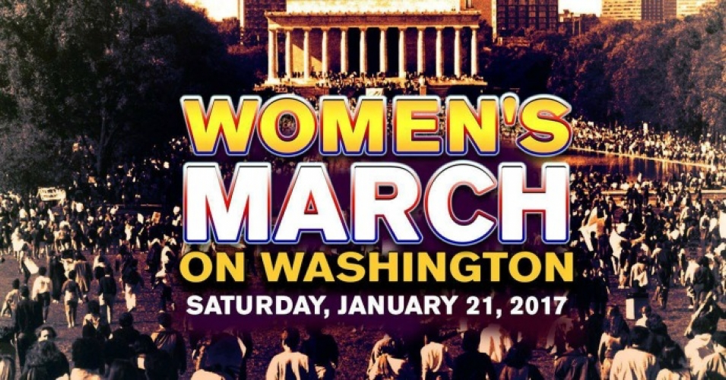 A record-breaking number of women are expected to descend on the capital this Saturday to make their voices heard by the newly-inaugurated president, Donald Trump. This, however is not the first time women have demonstrated for their rights in connection with an inauguration.
 104 years ago, on March 3, 1913, thousands of women marched down Pennsylvania Avenue from the Capitol to the Treasury Building where they demanded the right to vote on the day before the first inauguration of President Woodrow Wilson.


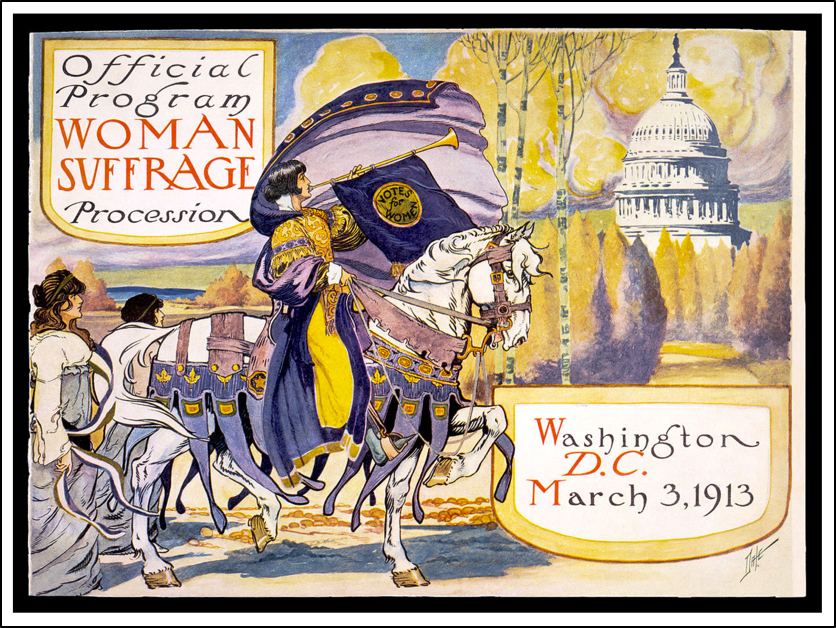 Officially titled the “Woman Suffrage Procession,” organizers took advantage of the nation’s interest in the inaugural ceremonies to “march in a spirit of protest against the present political organization of society, from which women are excluded,” as the official program stated.
A young woman who lived where ATU headquarters and the Tommy Douglas Conference Center now stand in Silver Spring. MD played a central role in that early women’s march.
Genevieve Wimsatt, a suffragist, was the daughter of William Wimsatt, a prosperous Washington lumber salesman, who owned an estate he called “Kinkora” which included the property now occupied by the Tommy Douglas Center. Genevieve became a skilled horse-woman at the estate, which qualified her to lead the cavalry in the 1913 march. Her “bio” in the event’s program reads:
 “Miss Genevieve Wimsatt, a resident of Washington and Maryland, and a graduate of Georgetown Visitation Convent, is often seen in the parks on one of the horses from her father’s country home, “Kinkora,” in Montgomery County, Maryland. Miss Wimsatt, who is organizing the Cavalry Section of the Woman Suffrage Procession, was one of the first women in Washington to ride in divided skirts, and rides both side-saddle and cross saddle.”
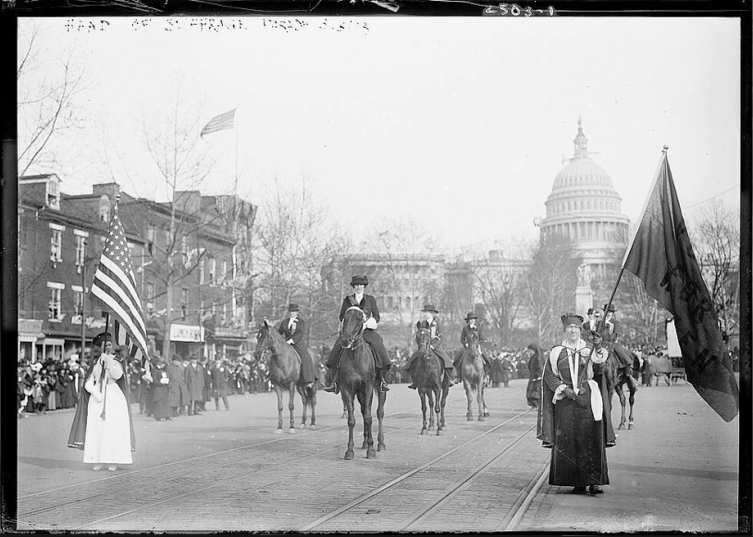
Newspapers across the country carried an account of the event that included the following:
“Petticoat Cavalry”
 “As planned, the officers of the National Woman Suffrage Association were given the place of honor in the line immediately behind the grand marshal and her aides and the purple clad herald. Behind them were massed forty “ushers” and a prancing squadron of ‘petticoat cavalry’ under the command of Miss Genevieve Wimsatt.”
 It took real courage to participate in that parade. The women were surrounded by mobs of jeering men who yelled obscenities and blocked their way. Over a hundred women were sent to the hospital before the army was called out to restore order.
1913 March to appear on $10 bill

 It is said that the march and the attention it attracted had a monumental effect in advancing women’s suffrage.
In recognition of its significance, the Treasury Department will honor the heroes of the women’s suffrage movement with a depiction of the Woman Suffrage Procession on the reverse of the redesigned $10 bill in 2020.
The struggle continues
Today, ATU members are traveling from all over North America to participate in the Women’s March on Washington on January 21, 2017 – a day after the inauguration of Donald Trump. They will come to the same city where their forebears marched for the right to vote the day before the inauguration of Woodrow Wilson over a hundred years ago.
The 1913 march proved pivotal in eventually convincing Americans to ratify the 19th amendment to the Constitution in 1920, giving women the right to vote. In the same way, despite all of the forces that work against equal rights for women, they will succeed in achieving their goals over time just as those who came before them.
