PUSH TO INTRODUCE AND PASS LEGISLATION AGAINST DEEP-SEA MINING SIMILAR TO GUAM’S PUBLIC LAW 38-129 IN THE CNMI
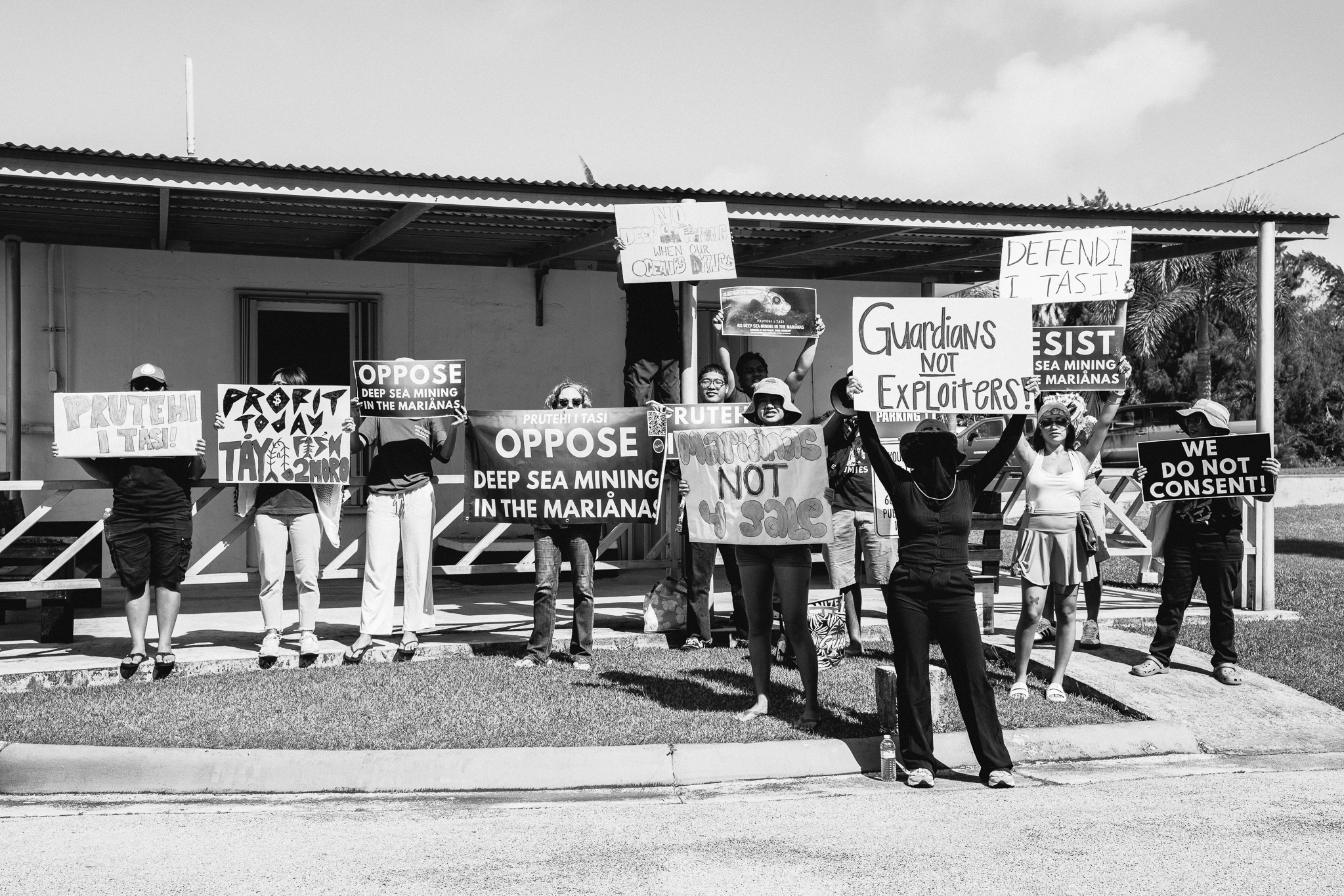
TAKE ACTION! Tell the CNMI Government to make a stance on protecting our ocean and community! By writing this letter, an email will be sent to all members of the CNMI Legislature and Governor.
WHY IS THIS IMPORTANT:
The Marine Minerals Administration’s (MMA), formerly known as the Bureau of Ocean Energy Management (BOEM), current proposal will hold the lease sale of our waters as early as Wednesday, December 16th, 2026. The push to introduce and pass similar legislation as Guam’s Public Law 38-129 in the CNMI is critical and urgent.
The Guam Legislature successfully passed Bill 253-38 (COR), which the Governor of Guam signed into Public Law 38-129 Relative to Prohibiting and Deterring Seabed Mining in the Waters of Guam and the Surrounding Sea on June 3, 2026.
This law:
identifies the areas of territorial waters
prohibits permitting for mining within those areas
prohibits the usage of ports, harbors, anchorages, and territorial waters as staging, supply, or logistics bases for any vessel engaged in, or contracted to engage in, seabed mining operations in adjacent federal or international waters unless authorized by both the government of Guam and relevant federal authority following full consultation with the Department of Agriculture and affected communities
We implore the people of the Marianas to take action and send letters to our legislature to ensure the protection and preservation of our seas for future generations to come. As Indigenous peoples and local communities bear the burden of deep-sea mining and are left with permanent ecological damage and no economic return, we urge the public to use their voices and petition our legislature to introduce a bill similar or identical to that of Guam’s Public Law 38-129.
Once there is a Public Law in place, the CNMI government would then need to transmit the law to the National Oceanic Atmospheric Administration (NOAA) and the MMA because agencies are required to consider limitations of the local law. If the MMA is not allowed to stage their equipment, it can slow and potentially prevent mining from starting.
The MMA conducted an environmental assessment that focused ONLY on issuing leases and authorizing preliminary surveys, with no regard of how our community would be impacted by commercial mining in our waters.
There have been more than 60,000 public comments from our community members earlier this year. Despite the outstanding number of comments, the MMA has advanced the lease-sale process for deep seabed mining, giving Governor David Apatang until October 19, 2026 to formally respond to the announcement. If the federal government decides to proceed, it will have to issue a Final Leasing Notice at least 30 days before the auction, after which companies may bid for 20 year leases. This means that approximately 67.2 million acres of our sacred ocean can be put up to sale as early as December 16, 2026.
Potential environmental and socioeconomic impacts of deep-sea mining:
Disturbance to the seafloor from machine-based digging of the seabed could cause unprecedented destruction of deep-sea habitats, leading to the loss of species that can be found nowhere else, as well as irreversible losses of biodiversity and ecosystem structure and function.
Seabed gouging would lead to permanent habitat loss of fragile, slow-growing benthic communities, hydrothermal vents, and seamounts with endemic species that call the Mariana region home.
Toxic sediment plumes produced by deep-sea mining and exacerbated by mining ships discharging wastewater at the surface may disperse over hundreds of kilometers and take a long time to resettle, leading to smothering of animals, harm to filter-feeding species, and blocking of animals’ visual communication.
Noise, vibration, and pollution generated by mining equipment and surface vessels could affect species such as tuna, whales, and sharks.
Deep-sea mining poses socio-economic and cultural threats to local fisheries, food security, and recreational industries.
Thank you for speaking up for our community!
References:
Guam’s Public Law 38-129: https://guamlegislature.gov/38th_Guam_Legislature/Mess_Comms_38th/Doc.%20No.%2038GL-26-2419.pdf
Proposed Leasing Notice from the US Department of Interior Marine Minerals Administration/Bureau of Ocean Energy Management: https://www.boem.gov/sites/default/files/documents/marine-minerals/critical-minerals/Proposed%20LN%20-%20OCS%20Mineral%20Sale%20-%20CNMI%20PACM-2.pdf?VersionId=u18i6fGCyg5RTia4NkSYgyxEdbxJIgJ3
Micronesia Climate Change Alliance’s (MCCA) Letter Campaign to Stop Deep Sea Mining in the Marianas: https://actionnetwork.org/letters/stop-deep-sea-mining-in-the-marianas?source=direct_link&
Deep Sea Mining Lease Sale in the Marianas: https://earthjustice.org/press/2026/second-deep-sea-mining-lease-sale-announced-off-of-mariana-islands-and-guam
Deep Sea Mining Lease Sale in American Samoa: https://earthjustice.org/press/2026/trump-administration-announces-american-samoa-deep-sea-mining-lease-sale
Letter Campaign by
