Ask state officials: oppose a potential model for industry-backed groups pushing aside public lands conservation efforts in CA!
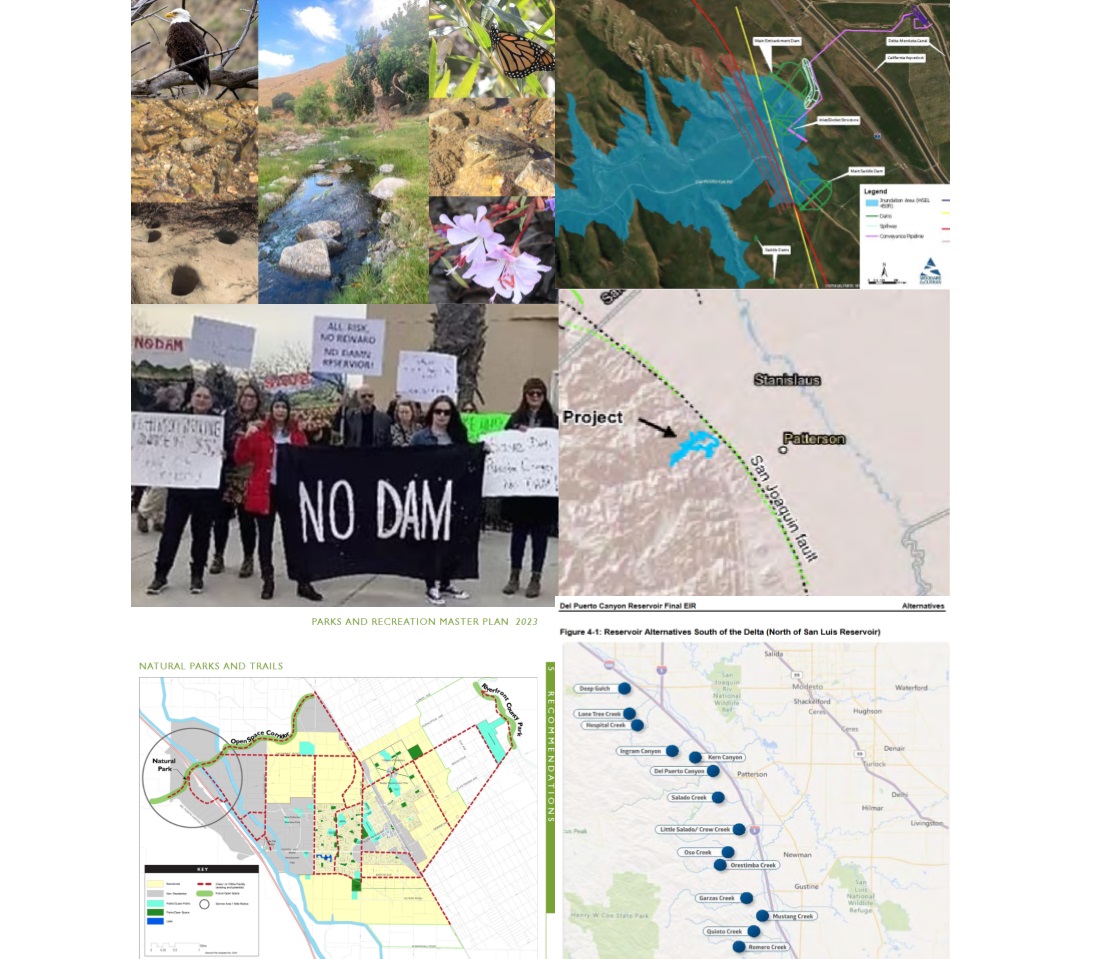
*Tell state officials to repeal the parts of CA Govt Code § 53091 (d-e) that give industry-backed sponsors of energy and water projects eminent domain-like powers to sometimes ignore the plans and concerns of neighboring communities and the counties they operate in, especially for projects mainly designed for supporting NON POTABLE private business uses!!
Background:
Government Code 53091 (d-e) allows some water and power infrastructure projects to be immune from complying with some provisions of county and local zoning codes (https://law.justia.com/codes/california/code-gov/title-5/division-2/part-1/chapter-1/article-5/section-53091/). In many parts of the state, the operation of large-scale irrigation, storage, and other water infrastructure projects are handled by special districts exclusively helmed by and only open to voting by some land title holders. The insular governance structures of such special districts is problematic for public transparency and accountability (https://yalelawjournal.org/article/the-water-district-and-the-state). When nearby municipal and county governments are either unwilling or unable to hold such special districts accountable, this can potentially allow small boards of wealthy, larger-scale landowners to alter or destroy places and infrastructure that are important to the general public.
In 2019, Del Puerto Water District publicly introduced the proposed Del Puerto Canyon Reservoir NON-POTABLE off-stream storage project (https://delpuertocanyonreservoir.com/). Despite being advertised as having a maximum capacity of 82,000 acre-feet of storage, which is already relatively small for its currently estimated $1.2 billion price tag, it would store only 60,000 acre-feet during most normal operations. Most of the prime reservoir sites in CA have already been dammed, resulting in diminishing returns versus projected costs for new surface storage projects that are built (https://www.latimes.com/politics/la-pol-sac-skelton-water-storage-california-20190304-story.html). Also, potentially cheaper and more efficient alternatives like direct groundwater recharge and on-farm storage, coupled with adjusting crop types and other business practices, are becoming increasingly available (https://suscon.org/wp-content/uploads/2018/11/Terranova-Project-Fact-Sheet.pdf, https://www.nature.com/articles/s41467-024-46031-2?utm_id=97758_v0_s00_e231_tv2_tp1_a1demo0ebg7jcu).
Out of more than 10 potential options, project sponsors picked the one location that would allow them to interfere with pre-existing plans for a park by the neighboring city of Patterson, reroute several miles of county-owned Del Puerto Canyon Road, and disrupt decades of legitimate educational and recreational use by botany, entomology, and geology groups along the 80’ right-of-way. Project backers tried to discredit concerns by local educators that the proposed reservoir would eliminate roadside access to view the site where Allan Bennison discovered the first dinosaur fossils identified from California (https://www.delpuertocanyonreservoir.com/assets/pdf/reports/Del-Puerto-Canyon-Reservoir-Final-EIR-Vol-III-Responses-to-Comments.pdf, Section 9-35). They put out public messages associating stopping along public right-of-ways and open roadsides in CA with trespassing. They downplayed concerns by local residents of nearby Patterson about the interference with their future park and flood risks associated with the main dam’s proposed location near the San Joaquin Fault (https://www.ttownmedia.com/patterson_irrigator/news/local_news/public-outcry-at-del-puerto-canyon-reservoir-project-eir-meeting/article_a3b958e4-3d6e-11ea-886d-5720380a41a5.html). The sponsors also admit to identifying Native American archaeological sites, including one they said might have been eligible for state historic protections were it not in the way of their project.
Their proposed redesigned roadway would veer far away from historic Del Puerto Creek and the seasonal wetland habitats specifically valued by locals and educational groups, which would be largely destroyed by grading and flooding. If these areas are replaced by largely artificial conditions, which would also likely make way for more invasive species, those who value getting to see the remnant seasonal native wetlands and native wildlife, fossils deposited around the creek bed and low road cuts in proximity to it, as well as the grinding rocks and other archaeological sites associated with the historic creek and nearby stands of blue oaks will permanently lose those opportunities. Some adjacent landowners have also said they do not want the rerouted roadway to go through their properties.
Patterson is a majority Hispanic community of 25,000+ and is expected to grow with the influx of people from the Bay Area looking for more affordable housing (https://www.census.gov/quickfacts/fact/table/pattersoncitycalifornia,aptoscdpcalifornia,CA/PST045224). It is struggling to meet a benchmark of ensuring that there are roughly 5 acres of open space per 1,000 residents (https://pattersonca.gov/DocumentCenter/View/161/Parks-and-Recreation-Element-PDF?bidId=). The national average is closer to 10 acres of green space per 1,000 residents (https://www.nrpa.org/publications-research/ParkMetrics/). Some independent supporters of the proposed reservoir have told our volunteers that they support the reservoir because it would destroy roadside sites that are currently popular with the general public and potentially disrupt access for certain types of people from the city of Patterson and parts of the Bay Area.
Despite widespread public outcry and organizations like Save Mt Diablo finding major deficiencies (https://savemountdiablo.org/blog/save-mount-diablo-uncovers-major-flaws-in-ridiculous-del-puerto-reservoir-environmental-review/) in the surveys for special status species associated with the initial and revised draft Environmental Impact Reports (dEIRs), several Central Valley politicians have openly aided the project sponsors by attempting to weaken aspects of the California Environmental Quality Act (CEQA) and the federal Endangered Species Act (ESA) (https://gray.house.gov/media/press-releases/congressman-gray-introduces-valley-water-protection-act)(https://www.turlockjournal.com/news/government/gray-introduces-legislation-to-expand-california-water-infrastructure/). Some politicians have said the proposed Del Puerto Canyon Reservoir should be a model for damming other areas in and around the Diablo Range (https://www.youtube.com/live/ekbGeq0rPOA?si=mUYgeeRVAMen1z5r&t=3734). It is fairly well known that this regional hotspot for biodiversity, fossils, and Native American archaeological sites has been increasingly eyed by other state agencies and NGOs for long-term conservation efforts and public lands expansion.
Many of the parks in CA that were initially formed through conservation battles might not otherwise exist today if members of the general public and other third parties had not been able to see what was there and be inspired to fight to save them. Industry-led groups in other states like Wyoming have lobbied state officials to introduce enhanced trespassing laws and other legislation to block the ability of citizen scientists, environmental watchdog groups, and nearby residents to frequent open roadsides and share data they collect to public online repositories (https://www.publicjustice.net/public-justice-challenging-constitutionality-of-wyoming-data-censorship-laws/). Allowances for third-party members of the public, educational groups, and environmental monitors to continue to have access to adjacent, publicly-accessible spaces and right-of-ways is essential for encouraging would-be developers and large-scale business interests to be transparent about their operations, actually comply with environmental and archaeological protection laws, and respect the wishes of the wider public.
All of these factors give the impression that the proposed Del Puerto Canyon Reservoir could be being used by some as a test for how effectively developers can preempt pre-existing conservation plans using projects labeled as “water infrastructure projects” and special privileges afforded to them by current CA codes. If this is the case, defenders of public lands need to speak out to both ensure that this proposed development does not succeed and close the legal loopholes that currently allow special districts and certain classes of projects to bypass wider public review.
Letter Campaign by
