Defend the Wild Yough and Save the Old Growth Hemlock Trees
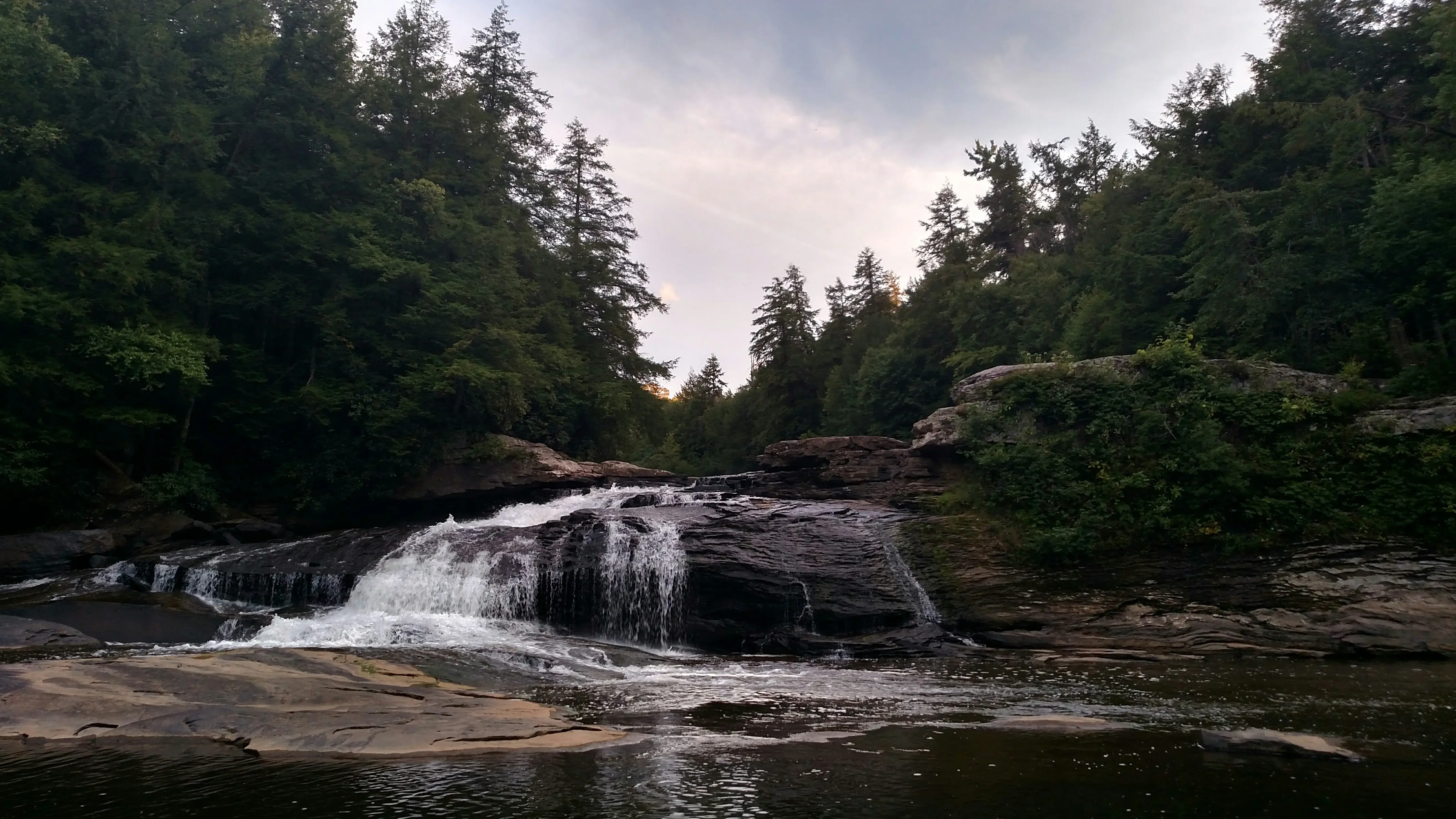
The Top Yough and surrounding Old Growth Forests Need Your Help!
Tell Garrett County Commissioners to choose Option 1C and use the existing bridge alignment for the Swallow Falls Bridge. By doing so, Garrett County, MD will avoid unnecessary demolition of old growth hemlock trees and destruction of the Wild Yough Corridor.
Backstory: A new bridge has been proposed to cross the Wild Youghiogheny River scenic corridor near the entrance of Swallow Falls State Park in Garrett County, Maryland. Swallow Falls State Park is home to waterfalls, trails, old growth hemlock trees, landscapes that are only found in this unique area, and the Wild Yough River. The county wants to replace the existing bridge (constructed in 2012) with a larger bridge. The new bridge will service two lanes of traffic and remove the concrete pylons that are currently in the river to support the current bridge. Garrett County Commissioners are working with a consulting firm to develop the project designs and coordinate with the many agencies involved. There were multiple project design proposals, including designs that use the existing alignment.
Happening Now: The most recent proposal plan would remove “Old Growth” hemlock trees from Swallow Falls State Park. These trees are said to be over 360 years old and were spared during historical logging activities. The current proposal would also destroy wetlands and unique geological features within the “Wild” Youghiogheny River (Maryland Scenic & Wild Rivers Act). Impacts to important cultural and historical structures are also proposed, and two Maryland State Irreplaceable Natural Areas would be impacted.
Do the Right Thing: Utilize the existing bridge alignment to minimize environmental impacts. Option 1C was recommended by the design firm as the best option to minimize environmental impact, the least duration and the least impacts to the adjoining Park lands. This option constructs the new bridge within the current County right-of-way with much more limited impacts to the 3 protected areas here. The alternative that would cause the least environmental harm in this situation would be to construct the bridge in the footprint where it currently exists, preserving the old growth hemlock trees and other important ecological features of the area.
Defending the Youghiogheny River benefits all of us, and we know that saving Old Growth Trees is worth the fight!
Sponsored by
.png)