Ask your state representatives to help save Del Puerto Canyon from being destroyed for a non-potable storage project designed to sell water to export growers down south!
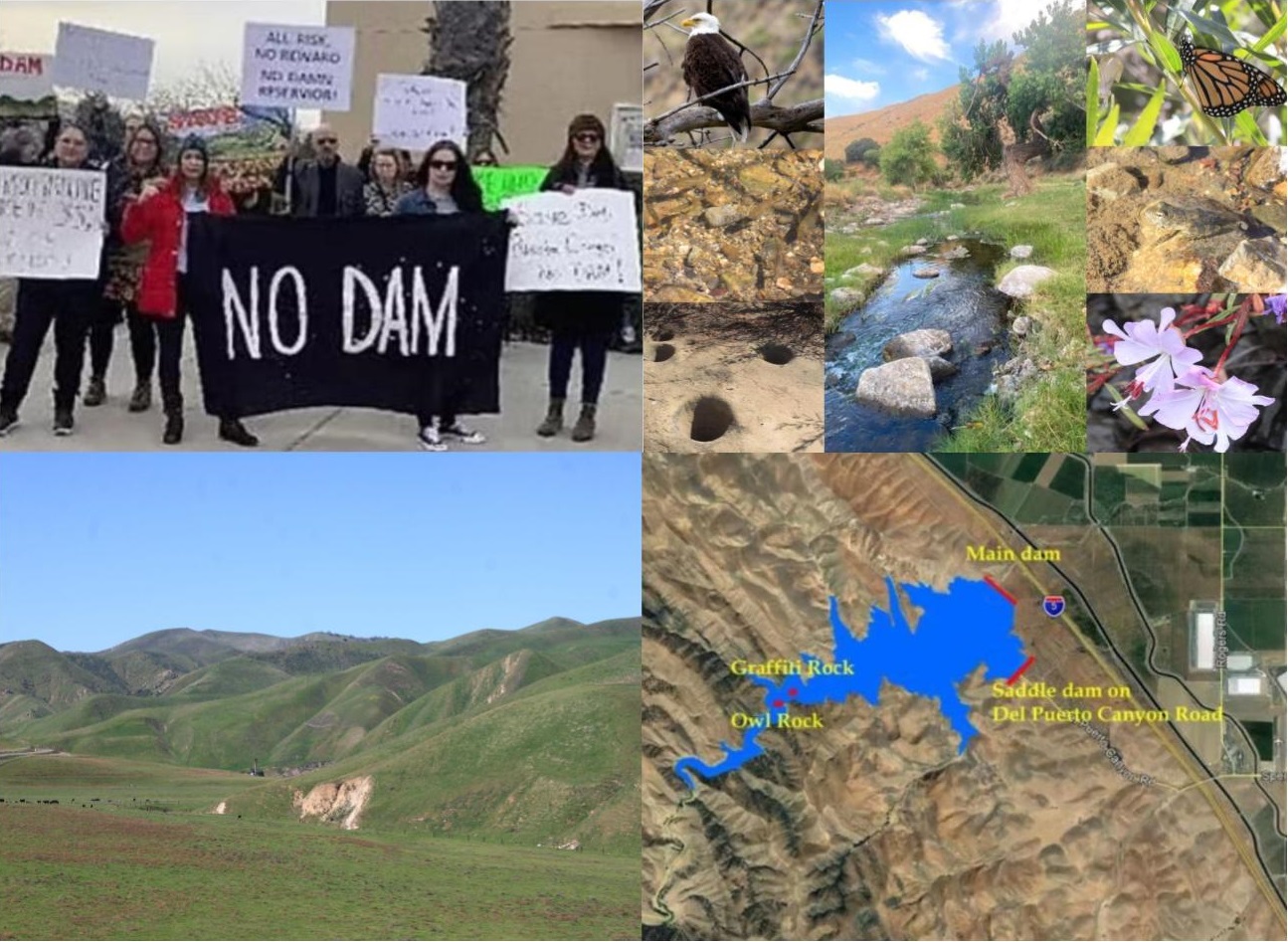
We need your help to Save Del Puerto Canyon! (https://www.savedelpuertocanyon.org) We know there are many people who care about the conservation and equity issues raised in this fight and who travel to the canyon from surrounding areas like Dublin, Livermore, San Ramon, Richmond, Oakland, Berkeley, and East San Jose. These areas are also represented by assemblymembers who have histories of drafting legislation promoting habitat conservation, outdoor education, and holding big-ag water projects accountable throughout the state. Some assemblymembers have specifically introduced bills/resolutions calling for the Diablo Range, which Del Puerto Canyon is a part of, to be prioritized in future land conservation efforts. But unless they act specifically to protect Del Puerto Canyon right now, this area where there are pre-existing plans for a community park could be destroyed before those long term goals are realized for a NON-POTABLE storage project designed for selling water down south to export large-scale export crop businesses!
(Letters from petition-signers coming from outside these assembly districts will be forwarded to CA Senator Adam Schiff who has come out in favor of defending public lands and may be able to help in the Senate.)
You can help our movement make connections with these lawmakers to try to draft emergency legislation (1) protecting Del Puerto Canyon from being destroyed for a proposed, non-potable agribusiness reservoir and (2) preventing the tactics used by project backers against outdoor educators, environmentalists, and historically underrepresented community members from being repeated elsewhere in CA.
Background:
According to Save Mt. Diablo, Del Puerto Canyon is one of the top five most biodiverse areas within the Diablo Range. The existing 80' public right-of-way associated with Del Puerto Canyon Road and other adjacent open lands have allowed many individuals and groups to publicly access portions of the canyon for decades. Historically flexible land management practices in some areas of the canyon have also been valuable for field techniques and data sampling training/practice activities that engage future generations of geologists, entomologists, and botanists. The rich assemblage of bedrock mortars and other Yokuts artifacts in the canyon are valuable links to the past for descendants of current and former tribes and members of Indigenous advocacy groups.
However, representatives of Del Puerto Water District and San Joaquin River Exchange Contractors Water Authority have proposed a reservoir to store water for non-potable uses that would inundate 4-5 miles of Del Puerto Canyon. The construction of Del Puerto Canyon Reservoir would allow them to both block pre-existing plans for a public park in the canyon by the neighboring city of Patterson and reroute several miles of county-owned Del Puerto Canyon Road. Astonishingly, CA law allows water districts to make such eminent domain-like decisions that can interfere with the plans of neighboring municipalities. On the ground, some project supporters have expressed their desire to use the potential reservoir and road reroute as a way to make it harder for underrepresented Hispanic residents from Patterson and visitors from the Bay Area to access rural open space areas west of I-5. Some project supporters have also put out messages implying that the general practice of stopping along open roadsides is illegal and downplaying the potential inundation of known Native American archaeological sites. This includes at least one location the district admits in their own Environmental Impact Report as being potentially “unique” and eligible for state historical protections if it weren’t in the way of their proposed reservoir. District officials also used this EIR to cast doubt about the location and historical value of the area where a teenager discovered the first dinosaur fossils identified from California in 1936. Nearby roadside pullouts are still used by geology classes and clubs to view the site, but this area would be mostly inundated by the reservoir. There have been anecdotal accounts of individuals stopped along public roadsides being harassed by those trying to support the water district’s efforts to curb public activities within the proposed project zone. Project backers have also continued to downplay concerns stemming from the proposed main dam and saddle dams’ proximity to the San Joaquin Fault. Despite several earthquakes occurring near the project area after the publication of the initial EIR, its authors have failed to include this earthquake activity in their revised EIR. Water district managers have used the initial 2022 court ruling and later appellate court decision that found parts of their EIR legally viable to restrict further public comments on many of these environmental and safety concerns.
Some members of the water district's leadership promoting the reservoir, which is designed to store publicly-sourced water from the Delta Mendota Canal, have also been open about their close personal connections to commercial growers and business associations who might benefit from it.
Many public officials representing Stanislaus County and the 13th Congressional District have been openly supporting Del Puerto Water District’s efforts. Some members of the Stanislaus County Board of Supervisors said they would like to see Del Puerto Canyon Reservoir used as a model for damming other parts of the canyon and the Diablo Range on behalf of big ag during a February 2025 meeting. Coinciding with their communications with the water district, which included a personal tour of the project site by its general manager, Central Valley officials drafted the "Valley Water Protection Act." This legislation would create a pathway for agribusinesses and water storage projects to apply for exemptions from “national security threats” or “economic harm” from Endangered Species Act regulations. Del Puerto Canyon Reservoir’s support and lobbying network could produce further negative effects for environmental initiatives in other areas of the state if it succeeds.
Given all the obstacles we’re fighting against to protect the canyon from this project, we need your help to
ask your state representative(s) for legislative solutions, including
some of these possible areas:
Introduce emergency legislation or other legal actions to protect both Allan Bennison’s dinosaur discovery site and the Native American artifacts Del Puerto Water District identified as possibly meeting the criteria for state historic preservation from being destroyed.
Either repeal parts of CA Gov’t. Code Section 53091 (ref: https://codes.findlaw.com/ca/government-code/gov-sect-53091/) that give sponsors of large-scale water projects the ability to ignore the building and zoning ordinances of cities and counties, or add an amendment to stop projects that are not designed to directly improve potable water supplies from taking advantage of such exemptions to community oversight.
- Strengthen laws against the destruction of wetland habitats needed by species listed under the state California Endangered Species Act (CESA) and include language blocking provisions of the “Valley Water Protection Act,” the “Central Valley Water Solution Act,” the Water Agency and Transparency Review Act,” and the “Build Now Act” (designed to weaken federal environmental laws regulating industrial water for big ag projects) from weakening or waiving CESA regulations.
Require water districts who restrict their voting eligibility and board membership by landowner status and who plan to move existing public infrastructure paid for by taxes from the wider public, like county-owned roadways, to seek permission from the public through an open ballot initiative process.
Increase attention, through a state resolution, commission, or other investigative body, towards examining how governance structures like special districts may be contributing to patterns of racial or class-based disparities in land access, availability of public parks, and other community planning decisions in some unincorporated parts of the state.
Stricter conflict-of-interest laws to bar water district managers and board members from spearheading projects using public funds or publicly-sourced water that could potentially benefit their personal businesses, business partners, or family members.
Create clearer language reinforcing the right of the general public to be present along roadside right-of-ways and associated open areas, with specific allowances for groups engaged in “citizen science.” Current state rules limiting the use of trespass claims within public right-of-ways and in certain types of publicly-accessible, open land are ambiguously worded. This makes them vulnerable to being intentionally overlooked by those who want to prevent the general public from potentially finding natural, historical, or cultural resources of value near areas they want to develop.
Introduce legislation to make sure that conserved Diablo Range lands also include some areas managed like Bureau of Land Management properties or National Forest land analogs for activities those agencies have traditionally deemed to be “lower impact.” This includes activities that both engage and familiarize prospective entomologists, botanists, and geologists with field techniques and conditions mirroring what they may encounter in professional working environments, along with some traditional rural outdoor pastimes that many non-landowners lack outlets for around the Central Valley. This would be a continuance of how some county and local land managers have historically overseen some lands in and around Del Puerto Canyon, which has remained a biodiversity hotspot for decades in spite of such uses. Setting aside lands to continue to accommodate these more diverse activities will be crucial to promoting community buy-in for conservation, reducing tensions between different recreational groups, and lessening intrusions into other areas where public access may need to sometimes be more regulated to protect specific natural or archaeological resources.
Your help is crucial to our efforts to stop this project and to make sure the tactics its proponents have used here don't get repeated elsewhere.
Letter Campaign by
