Urgent request to Victorian Government`s Minister for the Environment, Steve Dimopoulos and Premier Allan
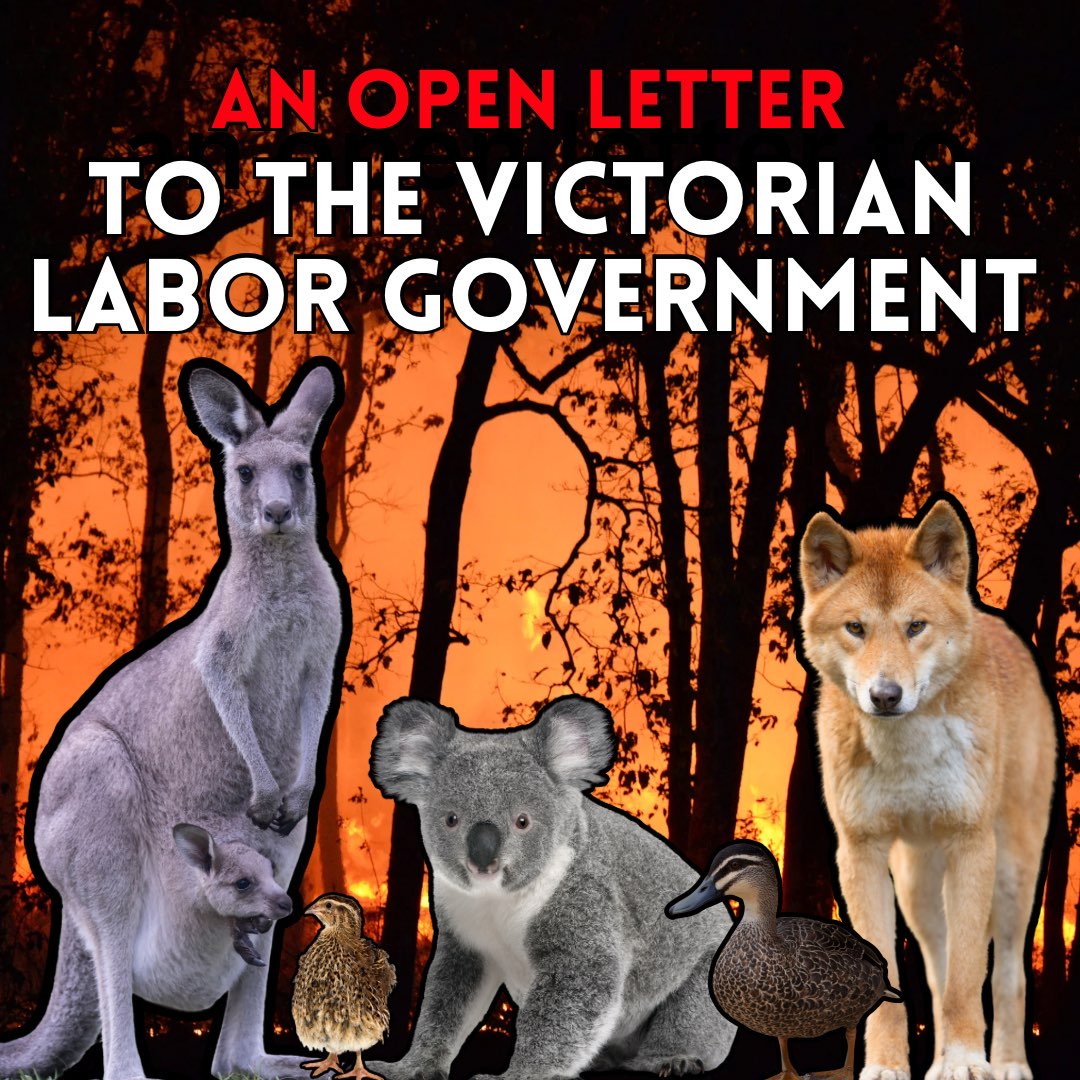
Horrendous devastation caused by ongoing drought and fires has inflicted immeasurable harm on Victorian wildlife and ecosystems, with some already endangered species approaching extinction. The neglect and continued destruction of wildlife by the Victorian Government is particularly distressing to those who work and volunteer in wildlife conservation and related fields.
The Victorian public expects better.
The following organisations have signed an open letter to decision makers Premier Jacinta Allan and Minister for the Environment, Steve Dimopoulos:
LAWN - Labor Action for Wildlife Network
Coalition Against Duck Shooting
Association For the Conservation of Australian Dingoes
Victorian Kangaroo Alliance
End Duck and Quail Shooting Alliance
Geelong Duck Rescue
Advocacy for a Kinder World
Read our letter below, then add your signature to call for better protection for wildlife!
Urgent request to Victorian government`s Minister for the Environment, Steve Dimopoulos and Premier Allan,
1. Cancel the 2026 recreational shooting of native waterbirds
On Thursday 12th February a full 3-month duck shooting season commencing in March was announced.
The devastating Victorian fires which destroyed millions of native animals and birds, are just one reason why the recreational shooting seasons of native waterbirds and quail should be cancelled. The fact that the shooting is going ahead anyway, confirms the union-driven gun lobby's influence on the government, over all other considerations.
Each year, hundreds of thousands of sentient native waterbirds and quail (including threatened and protected species) are shot during the recreational duck and quail shooting seasons. More than 25% suffer after being wounded rather than killed outright.
This activity will cost the Government over $10M this year to prop up, when budgets are being severely cut elsewhere. The extreme conditions mean birds will congregate around fewer wetlands and massacres will be inevitable. Many wetlands are PFAS affected following the fires and there are official warnings against eating waterbirds, yet shooting is still permitted, just for the thrill of the kill.
A First Nations–led, cultural, nature-based wetland tourism industry would allow all Victorians to enjoy these environments while increasing the $2.6 billion already spent annually in Australia by overseas birdwatchers.
Premier Jacinta Allan is rightly commended for initiating the First Nations Treaty process. But allowing a 2026 duck shooting season demonstrates a profound disregard for Victoria’s First Nations peoples and their waterbirds.
2. Cancel the commercial shooting of Kangaroos
These iconic native species have been devastated by fire, drought and habitat loss. Despite the current bushfire crisis, surviving kangaroos are still being shot to sell their meat and skins for profit. Commercial hunters are shooting in fire-affected areas where survivors are easy targets. Joeys are too small to ‘harvest’, so are either brutally bashed to death (as per the National Code of Practice) or left to perish slowly without their mother's care. Many kangaroos are left horrifically wounded, and it falls to volunteer rescuers to manage these traumatic cases.
Despite this repugnant cruelty, the Government still chooses to describe this killing as a ‘humane and responsible’ approach to the ‘management’ of a native species. This broadscale killing is devastating tourism in regional communities and destroys opportunities for sustainable eco-tourism. Some regional tourism enterprises and outraged communities’ repeated requests for a ban on shooting kangaroos in their area have been definitively refused by the Government and Premier. This has included the Yarra Ranges and Mt Alexander Shire (recently devastated by fire), despite these communities having Council support.
3. Immediately cease all dingo trapping, shooting, and poisoning in Victoria
The lethal control measures currently used are inherently cruel and unacceptable to the Victorian public. The wildlife unprotection order that legalises such destruction should be immediately lifted. Dingoes are listed as ‘vulnerable’ under the Victorian Flora and Fauna Guarantee Act. They are, in effect, being governed to extinction by the Victorian Government’s current flawed policy settings.
Dingos are crucial for the protection of biodiversity. Due to their role as apex predators, dingos reduce the negative impacts of pest species of foxes and cats. This science has been repeatedly communicated to the Victorian Government by environmental experts and repeatedly ignored.
Dingos are nearing extinction throughout Victoria. There are many fallacies around dingos actively disseminated by the poison industry and Agriculture Victoria. The Victorian Government's own data show that their impact on farm stock is miniscule compared to poor animal husbandry, extreme weather losses and fox predation.
Dingos are genetically and biologically distinct from domestic dogs, as shown by Victorian Government funded genetic research; they are not ‘wild dogs’. Genetic research has proven that there are virtually no free-living domestic dogs in the wild; the overwhelming majority are predominantly dingo.
The unrelenting killing of dingos particularly in North Eastern Victoria where their habitat has recently been devastated by drought and fire, means that all lethal control must cease. If the current practices continue Victoria will likely lose its dingo populations, further compounding ecosystem decline.
4. Immediate funding needs to be provided to independent volunteer wildlife rescuers to support their services and timely access to fire-affected areas permitted
Wildlife rescuers have received virtually no funding from federal or state governments. Expenses for travel, transport, food, medicines, dressings, medical tests and care have been borne by volunteer wildlife rescuers and carers, and from public donations.
The current delays in granting wildlife rescuers access to fire-affected areas has already resulted in countless stories of burned animals suffering and animals who survived the fires, later dying of starvation or dehydration. These incidents of suffering and death were avoidable in many cases, if they had been given the right care and support in a timely manner.
Their earliest possible entry to fire-affected areas must be facilitated and threats against rescuers and prohibitions on care-giving need to end. Without these volunteers there would be nil support to fire-devastated wildlife, especially with the lack of government funded wildlife officers.
5. Reinstate the hundreds of staff recently cut from DEECA`s environmental sector, severely affecting the Victorian Government’s capacity to responsibly manage our precious wildlife including in fire affected areas.
The Bushfire and Forest Services Group is losing 208 staff across 99 regional sites. It is unacceptable that fire in the natural environment if not a threat to life and property is simply left to burn. This not only results in unacceptable wildlife loss but contributes significantly to carbon release.
.png)