Call on Dallas City Council to Invest Bond Funding in Affordable Housing
Dallas Mayor Eric Johnson & City Council
On December 6, 2023 and January 19, 2024, Dallas Mayor Eric Johnson and the Dallas City Council were briefed on multiple Draft Program Proposals for the 2024 Capital Bond Program.
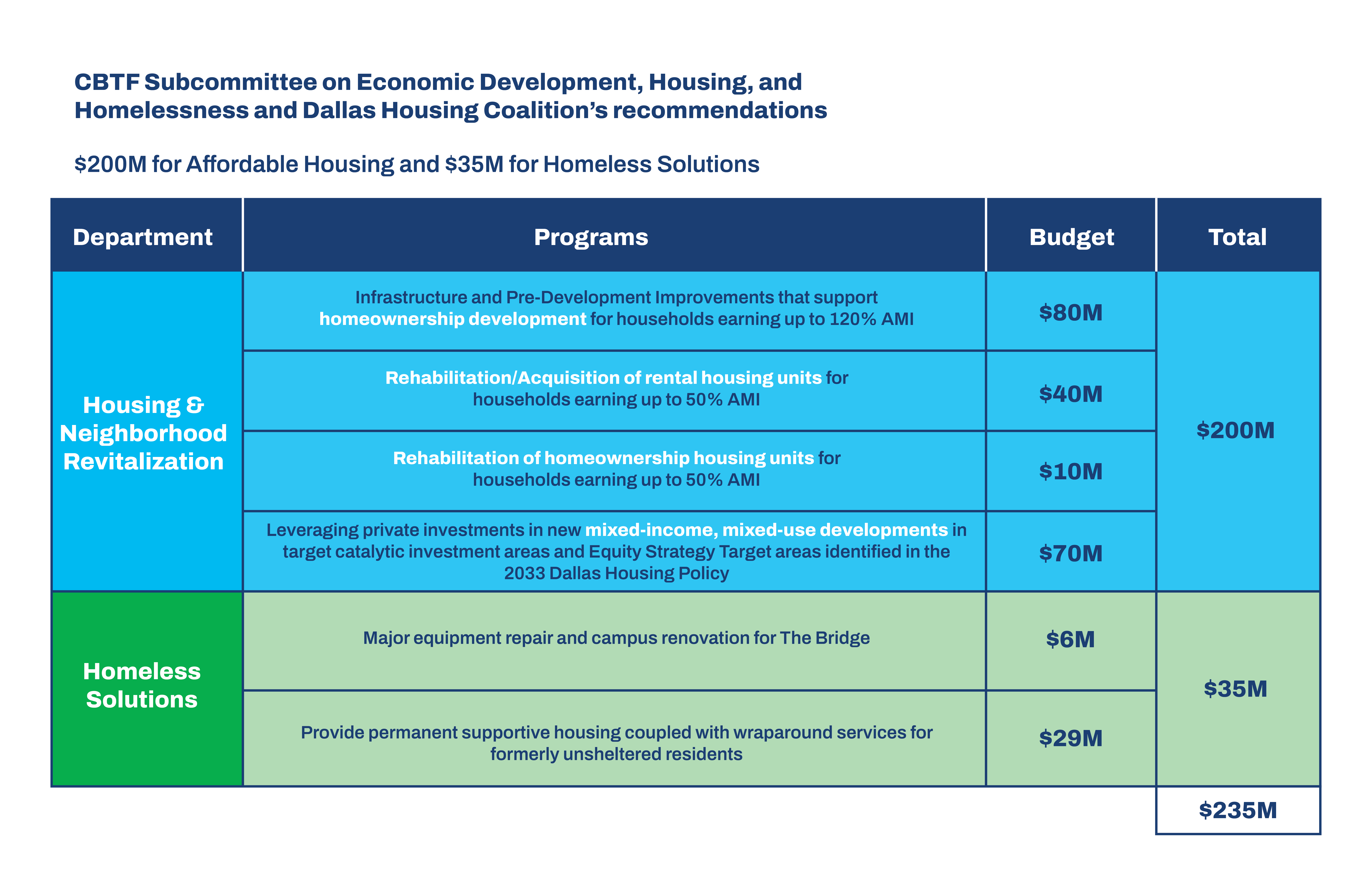
Sign this petition to show your elected officials that you support a greater investment towards affordable housing preservation and development - up to $200M for Housing and $35M for Homeless Solutions as recommended by the Community Bond Task Force Subcommittee on Economic Development, Housing, and Homeless Solutions below.
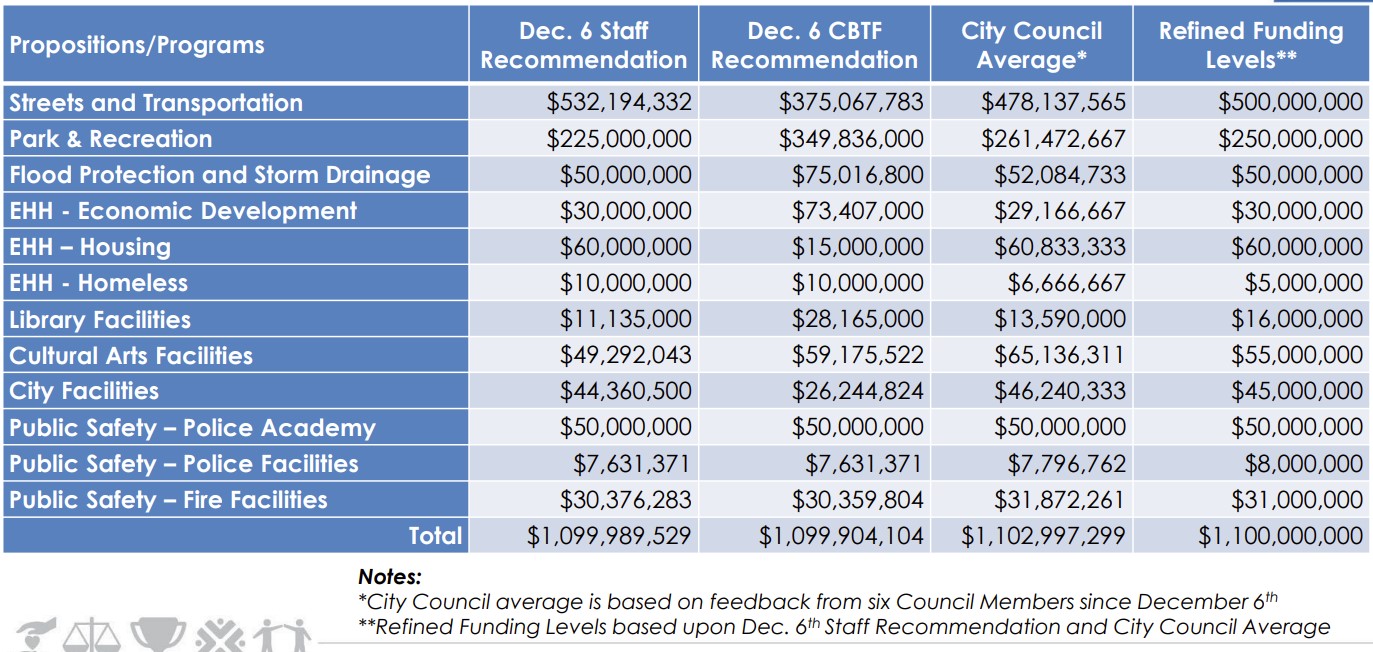
Unfortunately, City staff's and the main Community Bond Task Force's recommendations do not reach our goal and do not adequately meet Dallas' need for housing.
Proposition Allocations from January 19, 2024
Sign our petition today to show Housing must be a higher priority.
The Dallas Housing Coalition (DHC) represents more than 190 non- and for-profit organizations committed to advocating for the development and preservation of attainable housing in the city of Dallas for all families. Our coalition consists of neighborhood associations, corporations, faith-based organizations, housing developers, policy experts, and residents who are all united in our cause.
We serve and advocate on behalf of the housing needs of Dallas’ diverse populations, including youth, teens, seniors, longtime residents, persons with disabilities, people without housing, veterans, working professionals, and growing families. We do this because we believe Dallas is big enough for everybody!
Click here to find you City Council District.
If you are interested in joining the DHC or subscribing to the DHC's communications, you can do so through the Dallas Housing Coalition's website.
Sponsored by

To:
Dallas Mayor Eric Johnson & City Council
From:
[Your Name]
Alongside the Dallas Housing Coalition, I am asking you to invest $200 million towards affordable housing preservation and development and $35 million towards homeless solutions as recommended by the Community Bond Task Force Subcommittee on Economic Development, Housing, and Homeless Solutions.
This funding would be used for several key initiatives with your oversight approving all projects that would receive bond funding, oversight from City staff through Dallas’ NOFA program, and oversight from the appointed boards of the DPFC and DHFC as a few example mechanisms:
$80M for homeownership development for households making up to 120% AMI
$40M for rental housing rehabilitation for households making up to 50% AMI
$10M for single family home repair programs for housing making up to 50% AMI
$70M for mixed-income, mixed use developments in Equity Strategy Areas and other catalytic investments for households making up to 50% AMI
A city where the median income is $58,200, and the average home price is $405,000 is unsustainable. In addition, there is a shortage of over 16,000 single-family units according to bcWorkshop and 33,600 rental units for families making less than 50% AMI according to the Child Poverty Action Lab.
Cities that fail to offer affordable housing solutions will ultimately drive out residents leading to a shortage in the workforce, an increase in negative health outcomes for our residents, and inevitably, discourage growth in our local economies.
Dallas needs 100,00 new or refurbished affordable housing units by 2033 to meet our housing demand and increase affordability across the city. At a conservative, average construction cost of $200,000 per unit, the current housing gap will take at least $10 billion to close.
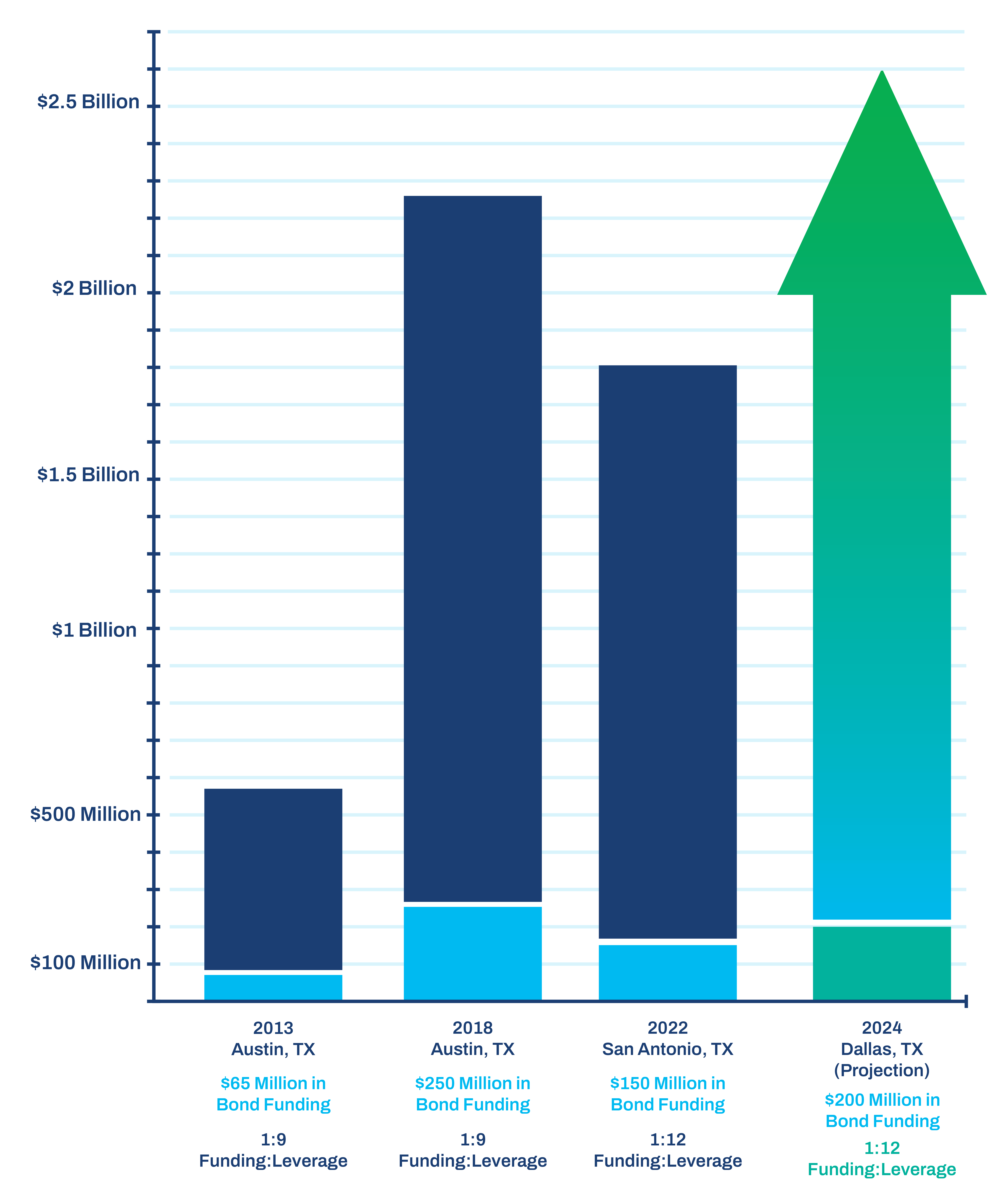
A $200 million bond investment would be leveraged with other public and private financing at a 1:10 or 1:12 ratio as seen in Austin and San Antonio, respectively, turning this $200 million to over $2 billion worth of economic impact for the city of Dallas from supply chain to construction to resident savings.
We trust in your leadership to prioritize housing access, keeping Dallas competitive regionally, and rising to the occasion that this housing crisis demands.
Dallas is big enough for everyone.