Cyber Monday is No Bargain for Inland Empire Families
San Bernardino Elected Officials
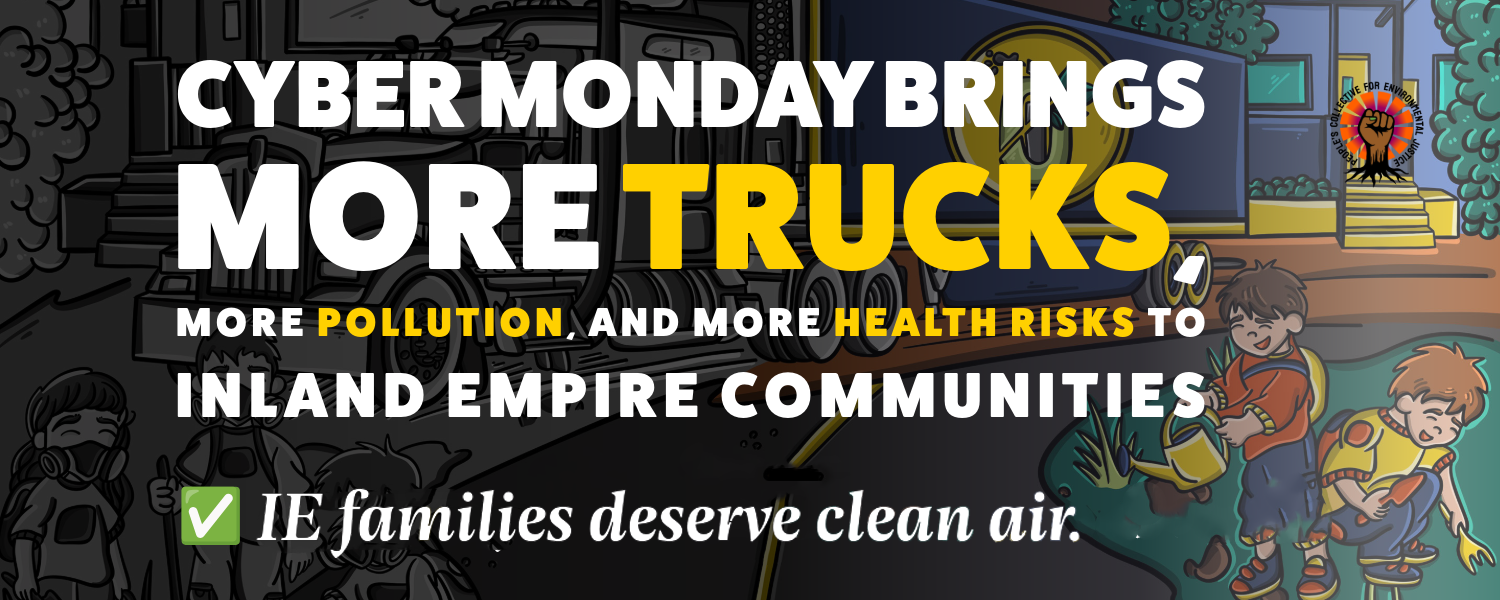
As many American consumers flock to their computers on Nov. 30th, eager to take advantage of Cyber Monday sales, the online shopping event is not a bargain for Inland Empire families and workers.
In 2025, Cyber Monday weekend research indicates 75.9 million people shopped online and generated over $14.2 billion in sales revenue. More importantly, CO2 emissions spike – up to six times the usual amount by some estimates – during Cyber Monday week.
Those numbers are expected to increase substantially in 2026, with the number of online shoppers predicted to set a new record of more than 205 million. With more than 1 billion square feet of warehouse space in San Bernardino and Riverside Counties, the uptick in upcoming sales means even more freight movement through the IE.
We already suffer some of the worst air quality in the nation. Our communities should not have to absorb the environmental costs of a national shopping holiday while receiving few of its benefits.
The Scale of the Logistics Footprint in Our Communities
This is not an abstract concept. It is the defining physical reality of my region:
4,000+ warehouses occupying more than 1 billion square feet.
More than 600,000 truck trips per day on our freeways and surface streets.
An estimated 40% of the nation's goods move through Inland Empire warehouses.
The sector employs 267,800 of my neighbors—nearly 20% of San Bernardino County's workforce, roughly double the national average. Yet many of these jobs average just 35,000–48,000 a year, well below the two counties’ median incomes of about 82,000–89,000.
We host the warehouses, absorb the traffic, and staff the shifts, but the workers who make this system run are paid a fraction of what their neighbors earn, while the environmental costs pile up in our backyards, our schools and parks.
An Environmental Justice Crisis
The pollution burden is not shared equally. It falls hardest on our communities of color and on the workers inside these facilities:
EPA data identifies our Highway 10 and Highway 60 corridors as having among the highest levels of ozone, PM2.5, and diesel particulate matter in California.
Communities of color are disproportionately exposed to those contaminants. Here in the, Latino residents make up 60% of those living within a quarter-mile of a warehouse, bearing the direct pollution burden.
More than 150,000 of my fellow workers are employed in climate-vulnerable occupations, with logistics workers exposed to diesel pollutants and heat hazards in facilities lacking adequate ventilation.
The people with the least power to avoid pollution are the ones breathing it, working in it, and living beside it every day.
This Holiday Season, Give Us Clean Air
As we head into the holidays, many of you will host toy drives for our communities, and while grateful, what we and our neighbors affected by these pollutants need and want is equipment to help us breathe. Air filters, air monitors and carbon monoxide detectors for our homes, schools, and community centers. A toy – while appreciated – does nothing for wheezing child. A filter does. Our families need real, tangible protection from the pollution we are forced to breathe every day.
Why This Matters
The Inland Empire is not a sacrifice zone. Our families deserve clean air and a say in the decisions that shape our future. When elected officials choose policies that concentrate pollution in our communities while the benefits flow into the pockets of developers and billion-dollar corporations, they are failing the people they were elected to serve.
What We Ask of You
I call on my elected officials to:
Champion zero-emission logistics and support the transition of warehouses and delivery fleets to zero-emission vehicles and equipment.
Protect workers alongside residents. Support living wages, heat and ventilation standards, and safe working conditions for the 267,800 logistics workers—and ensure the clean-air transition creates good, stable local jobs.
Invest in our air and health. Direct resources toward air quality monitoring, health screenings, and green infrastructure in the neighborhoods bearing the heaviest pollution burden.
Put residents first in every decision. Commit to transparency and meaningful community input before approving policies or projects that affect our air, our health, and our quality of life.
We ask you to choose us. Make decisions that benefit — not harm — the communities you serve.
*******************************************************************************************- Más de 4.000 almacenes que ocupan más de mil millones de pies cuadrados.
- Más de 600.000 viajes de camión diarios por nuestras autopistas y calles locales.
- Se estima que el 40 % de las mercancías del país transitan por los almacenes de Inland Empire.
- Este sector emplea a 267.800 de mis vecinos —casi el 20 % de la fuerza laboral del condado de San Bernardino, aproximadamente el doble del promedio nacional—. Sin embargo, muchos de estos empleos ofrecen un salario promedio de apenas 35.000 a 48.000 dólares anuales, una cifra muy inferior a los ingresos medios en ambos condados, que oscilan entre los 82.000 y 89.000 dólares.
- Los datos de la EPA (Agencia de Protección Ambiental) indican que nuestros corredores de las autopistas 10 y 60 presentan algunos de los niveles más altos de ozono, partículas finas (PM2.5) y partículas provenientes del diésel en toda California.
- Las comunidades de color están expuestas de manera desproporcionada a estos contaminantes. Aquí, los residentes latinos constituyen el 60% de las personas que viven a menos de un cuarto de milla de un almacén o centro logístico, soportando así la carga directa de la contaminación.
- Más de 150,000 trabajadores —mis compañeros— se desempeñan en ocupaciones vulnerables ante la crisis climática; los trabajadores del sector logístico, por ejemplo, están expuestos a contaminantes del diésel y a riesgos por calor en instalaciones que carecen de una ventilación adecuada.
Las personas con menos capacidad para evitar la contaminación son, precisamente, quienes la respiran, trabajan en medio de ella y viven a su lado todos los días.
- Promuevan una logística de cero emisiones y apoyen la transición de los almacenes y las flotas de reparto hacia vehículos y equipos que no generen emisiones.
- Protejan tanto a los trabajadores como a los residentes. Apoyen salarios dignos, establezcan normas sobre ventilación y protección contra el calor, y garanticen condiciones laborales seguras para los 267,800 trabajadores del sector logístico; además, deben asegurar que esta transición hacia un aire más limpio genere empleos locales, estables y de calidad.
- Inviertan en nuestro aire y en nuestra salud. Destinen recursos al monitoreo de la calidad del aire, a exámenes de salud y a la infraestructura verde en los vecindarios que soportan la mayor carga de contaminación.
- Prioricen a los residentes en cada decisión. Comprométanse con la transparencia y con una participación comunitaria significativa antes de aprobar políticas o proyectos que afecten nuestro aire, nuestra salud y nuestra calidad de vida.
Sponsored by

To:
San Bernardino Elected Officials
From:
[Your Name]
Put the needs of our community first! Our families deserve clean air and a say in the decisions that shape our future. When you choose policies that concentrate pollution in our communities while the benefits flow into the pockets of developers and billion-dollar corporations, you are failing the people you were elected to serve.
We already suffer some of the worst air quality in the nation. Our communities should not have to absorb the environmental costs of Cyber Monday while receiving few of its benefits.