Stop the Shirttail Forest "Restoration" Project!
U.S. Forest Service, Eldorado National Forest
EMERGENCY: Your Voice Is Being Silenced!
Sign in support of those who have signed during the comment period!
The U.S. Forest Service has emergency authorized yet another destructive logging plan disguised as "restoration." We must act now to protect the Tahoe National Forest from this assault on biodiversity! The Shirttail Forest "Restoration" Project is a massive logging plan threatening 18,000 acres of our public land, and the entire project is authorized under emergency authority! This isn't restoration—it's a smokescreen devastating forests and imperiling communities while shamelessly claiming to do the opposite! This time they have gone too far! They are messing with democracy and throwing We the People under the bus!
Key Concerns:
- Emergency Action: The entire project bypasses public review, undermining democratic processes and public trust. 18,000 acres are threatened with imminent emergency-authorized logging, bypassing normal public input processes and undermining democracy.
- Forest Plan Amendments: Proposed forest plan amendments weaken canopy cover regulations, etc.
- Climate Change: Logging emissions far exceed wildfire emissions, contradicting climate mitigation claims.
- Wildlife Impacts: Threatens California Spotted Owls (proposed for ESA listing) (PACS in area according to USFS) and many other bird species that depend on intact forest habitats, including Flammulated Owls (heard) and Saw-whet Owls (heard).
- Old-Growth Forest Degradation: The project insidiously includes the last best Old-Growth and record-size trees remaining on the lower Foresthill Divide under pretext of plantation bark beetle salvage.
- "Thinning" aka Logging: Significantly cripples true forest recovery and kills far more trees than it can possibly claim to save.
- Fire Risk: Contrary to claims, scientific evidence suggests that thinning, aka logging, may increase fire severity and community risk.
- Cumulative Impacts: Fails to adequately address effects alongside other regional projects on wildlife, watersheds, and forest fragmentation.
- Misleading Labeling: "Restoration" is a sham that misrepresents the project's true nature and impacts, prioritizing timber harvest over true ecological restoration.
- Inadequate Data: Lack of comprehensive GIS data prevents thorough public review.
We Call For:
- Withdrawal of the undemocratic Emergency Action!
- A full Environmental Impact Statement (EIS).
- A true no-action or minimal action alternative allowing old-growth forests and wildlife habitat to flourish.
- Full protection of all old-growth forests within the project area.
- Release of comprehensive GIS data.
- Honest project labeling.
- Complete withdrawal of the project if the above concerns cannot be adequately addressed.
Act Now!
Sign this Petition
More info:
Linktree Resources: https://linktr.ee/STOP_SHIRTTAIL_PROJECT?utm_source=linktree_profile_share<sid=987cd5bb-8b72-4e5d-998e-c759c805ea64
USFS Project Page: https://www.fs.usda.gov/project/?project=63359
Contacts:Environmental Contacts: sierraforestaction@gmail.com and info@johnmuirproject.org
USFS Contact: kelly.pavlica@usda.gov
Share widely, subscribe for updates, and support the environmental groups fighting to save our forests!Sponsored by
.png)
To:
U.S. Forest Service, Eldorado National Forest
From:
[Your Name]
Dear Tahoe National Forest Supervisor,
We, the undersigned individuals, are writing to express our profound dismay and opposition to the Draft Environmental Assessment (Draft EA) and the Emergency Action Determination for the proposed Shirttail Forest Restoration Project on the Tahoe National Forest, American River Ranger District. This project, with its 18,000-acre scope, threatens to devastate irreplaceable ecosystems and endanger vulnerable wildlife species under the guise of "restoration."
We strongly demand that the U.S. Forest Service (USFS) immediately rescind the emergency authorization decision affecting the entire project area. This blatant attempt to circumvent proper environmental review processes is not just misguided—it's a dangerous assault on our democratic values and environmental protections.
The use of Emergency Authorization to ram through this ill-conceived project without proper scrutiny sidesteps environmental review processes, silences public input, and sets a dangerous precedent. It puts our forests at the mercy of hasty, poorly-considered decisions that are not in accordance with the best available science and evidence. This action undermines public participation and environmental review, both fundamental to our democratic system.
Emergency Authority erases all reason and sound logic from the process, preventing the best available scientific evidence from even being considered. It leaves our public forests at the mercy of a government that is quite frankly overreaching its authority and trampling on the public trust.
How does this use of emergency authorization, decided before the EA public comment period even took place, adhere to the Forest Service's mandate to serve people? How does excluding We The People and due process of environmental law serve the public interest?
Furthermore, we strongly oppose the proposed Forest Plan amendment, which is a thinly veiled attempt to strip away crucial habitat protections. This amendment would weaken existing safeguards for wildlife, particularly for species like the California Spotted Owl and Northern Goshawk. It is unconscionable that the Forest Service would consider reducing canopy cover requirements and altering habitat designations at a time when these imperiled species face increasing threats from climate change and habitat loss. This proposed amendment is not based on sound science and directly contradicts the Forest Service's mandate to protect and preserve our natural resources.
The Draft EA is woefully inadequate and fails to comply with the best available science on forest and fire ecology, failing to address crucial ecological concerns. We call on the Forest Service to prepare a full Environmental Impact Statement (EIS) that truly grapples with the complex realities of forest ecosystems and climate change. We also call on you to fully protect mature and Old-Growth (MOG) habitats from logging in accordance with the executive order…and to respect the unique microclimates ecosystems that allow for the flourishing of vibrant biodiverse communities of plants and animals. The Draft EA does address significant concerns and does and does not provide a reasonable range of alternatives, as follows:
Climate Change Considerations: The Shirttail Fire Restoration Project must carefully consider the climate implications of proposed salvage logging activities. Hudiburg et al. (2019) revealed that logging-related emissions in California, Oregon, and Washington were approximately five times greater than emissions from wildfires. Harris et al. (2016) found that 85% of carbon emissions from U.S. forests were attributed to logging, while only 12% resulted from the combined effects of wildfire, insect outbreaks, wind damage, and drought. A letter to CARB (CBD et al., 2019) highlighted that current models assume unrealistically high percentages of incineration during wildfires, leading to overestimated emission figures. Stenzel et al. (2019) demonstrated that model-based calculations often significantly overstate actual wildfire emissions.
Wildlife Impacts:
The project's treatment of wildlife, particularly the Northern Goshawk and California Spotted Owl, is nothing short of criminal! The EA pays lip service to Protected Activity Centers (PACs) but fails to grasp the devastating consequences of its proposed actions. The overlapping PACs in old-growth areas are a testament to the ecological richness of these forests, yet the EA treats them as expendable.
1. Northern Goshawk:
The EA's treatment of the Northern Goshawk is woefully inadequate and potentially devastating for this magnificent species. The USFS's own maps show a Northern Goshawk PAC directly over 'Sugar Basin Grove' (figure 7 EA, large tree density), yet the EA shamefully fails to provide sufficient protection measures for this critical habitat. This is not just an oversight—it's a blatant disregard for the ecological importance of this apex predator. The proposed logging and thinning activities could destroy nesting sites, disrupt hunting territories, and fragment the mature forest habitat that goshawks depend on. Research has shown that goshawks are highly sensitive to forest disturbance, making them an essential indicator species for overall forest health. A through analysis of impacts to this state listed species of special concern is needed!
2. California Spotted Owl:
The proposed thinning in the Shirttail Forest Restoration Project raises significant concerns about impacts on California Spotted Owls, a species recently proposed for listing as threatened under the Endangered Species Act.
California Spotted Owls preferentially select areas with high canopy cover and complex structure characteristic of mature and old-growth forests for nesting and roosting (Bond et al., 2009). The proposed thinning would degrade these important habitat elements that owls rely on. Importantly, Lee (2018) observed that Spotted Owls continue to occupy and reproduce in territories with complex forest structure, even in areas affected by high-severity fire.
This adaptability to post-fire landscapes is further supported by Jones et al. (2016), who described the "bed and breakfast effect," where owls nest in areas with high canopy cover but forage in more open areas, including high-severity burn patches. Bond et al. (2009) found that California Spotted Owls preferentially selected high-severity burn areas for foraging. This suggests that even if high-severity fire breaks out in unthinned areas, it may actually create valuable habitat for Spotted Owls rather than destroying it as often assumed.
Thinning in owl habitat can have long-lasting negative impacts. Stephens et al. (2014) found that while treatments initially reduced owl habitat quality, they did not improve forest resilience to wildfire in the long term as often claimed. Tempel et al. (2014) observed that medium-intensity timber harvests, which can include thinning, were negatively associated with owl territory colonization rates and positively associated with territory extinction rates.
Given these findings and the species' proposed threatened status, it is imperative that the Forest Service conduct a comprehensive Environmental Impact Statement to fully assess these impacts. We urge the exclusion of all mature and old-growth stands from thinning treatments in this project to protect critical California Spotted Owl habitat, recognizing that even areas that may experience high-severity fire in the future can provide important habitat for this species.
3. Flammulated & Northern Saw Whet Owls:
Even more appalling is the complete disregard for the Saw-whet and Flammulated Owls, species known to inhabit the project area but apparently deemed unworthy of consideration
a. Flammulated Owl: These small owls thrive in mixed conifer forests, particularly in ecotones between drier ponderosa pine-dominated stands and more mesic Douglas-fir and sugar pine-dominated areas—exactly the type of habitat where they were heard in the project area by qualified wildlife biologists Maya Khosla and Craig Swolgaard (retired). Their presence signifies a delicate balance of old-growth elements, open understory for foraging, and abundant insect populations. Studies like Linkhart et al. (2016) have shown that Flammulated Owls strongly prefer mature and old-growth ponderosa pine/Douglas-fir forests with a multi-layered canopy structure. The proposed project threatens to homogenize these complex forest structures, potentially rendering them uninhabitable for these owls and countless other species dependent on these unique habitats.
b. Northern Saw-whet Owl: Similarly, Northern Saw-whet Owls rely on MOG mixed conifer forest habitats, especially more mesic forests, which are at risk from the proposed project. These small owls play crucial roles in forest ecosystems, controlling rodent populations and serving as indicators of forest health. A Northern Saw Whet Owl was heard by birdwatcher Joshua French in 2019 within the project area, in mesic forest habitat dominated by Douglas Fir and Sugar Pine. The EA's failure to even acknowledge this species, let alone provide protection measures, could have far-reaching consequences for the forest's biodiversity. The proposed logging and thinning activities could destroy nesting sites, disrupt hunting territories, and fragment the mature forest habitat that Northern Saw-whet Owls depend on for survival.
The USFS's failure to even mention these species in the EA, let alone provide specific protection measures for their habitat, is an ecological travesty and a shocking abdication of their responsibility to maintain biodiversity and ecosystem health. This omission is particularly egregious given the known presence of these owls in the very habitats targeted for "restoration."
4. Pileated Woodpecker and other indicator species:
The EA's failure to address crucial indicator species like the Pileated Woodpecker is a glaring oversight that undermines its ecological credibility. These magnificent birds, which have been observed in the project area, are vital indicators of forest health and biodiversity. Pileated Woodpeckers were heard calling extensively on a site visit to an Old-Growth forest in the project area by birdwatcher Joshua French in 2024. Their presence speaks to the ecological value of the mature forest habitats that this misguided project threatens to destroy. The USFS's willful ignorance of these species and their habitat needs is not just an oversight - it's an ecological travesty that could have far-reaching consequences for the entire forest ecosystem.
4. Foothill Yellow-Legged Frog:
The EA's reliance on outdated studies from 1936-1996 for foothill yellow-legged frog habitat preferences is nothing short of scientific malpractice. This species has faced significant declines and habitat changes in recent decades, yet the USFS seems content to base its decisions on research that predates our modern understanding of amphibian ecology and climate change impacts. More recent studies, such as Kupferberg et al. (2012), have shown that this species is highly sensitive to changes in stream flow regimes and water temperature—factors that could be significantly altered by the proposed forest management actions. The EA's failure to incorporate current scientific knowledge is a dereliction of duty that could push this vulnerable species closer to extinction.
And this is just a handful of the many many wildlife species that call the MOG forests within the project area home. Is it unconscionable to destroy their habitats!
Mature & Old-Growth (MOG) Forests and Large Tree Impacts:
The EA's treatment of our majestic mature and old-growth forests is a travesty. The
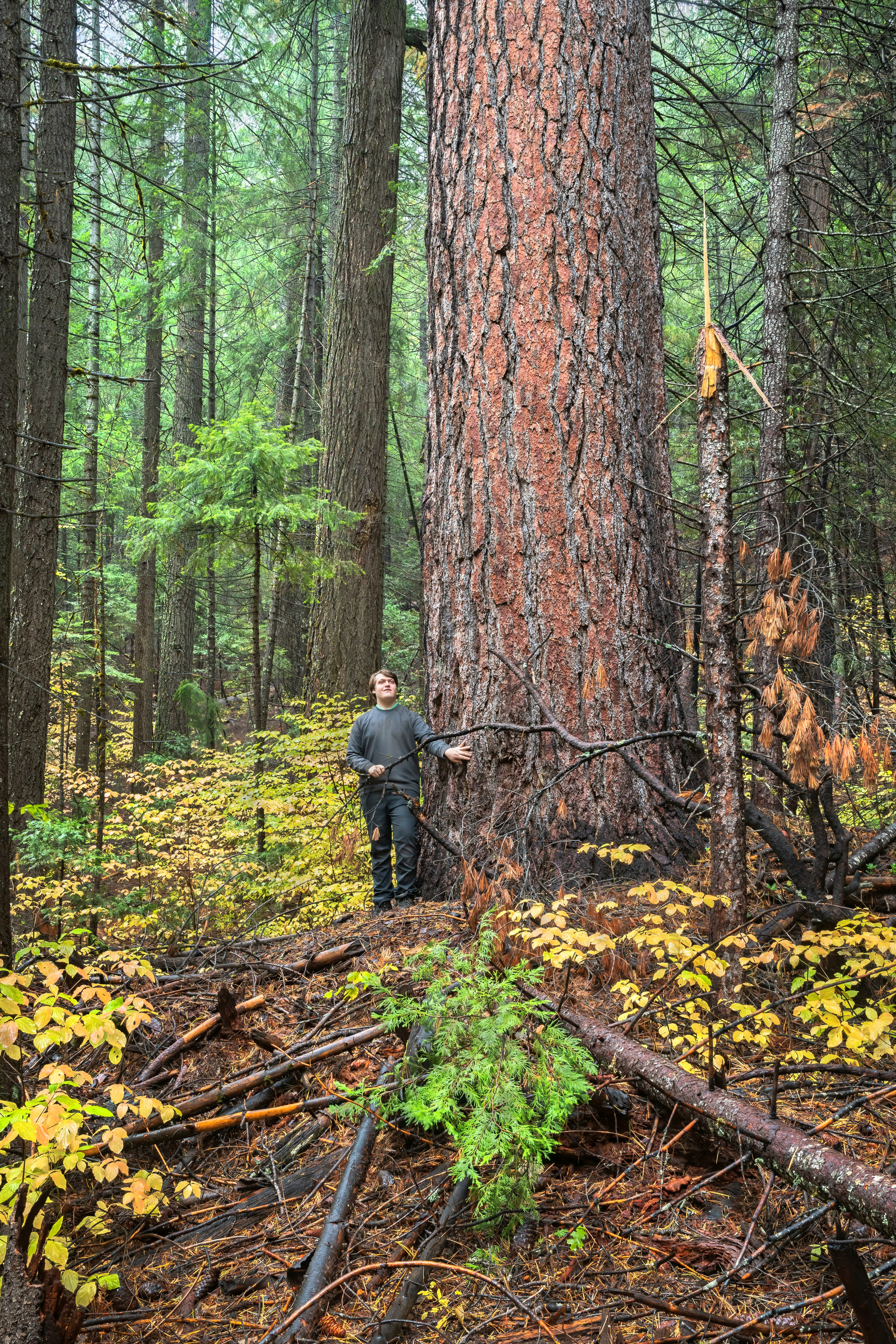
The EA's treatment of our majestic mature and old-growth forests is nothing short of criminal. These ancient cathedrals of nature, with trees reaching an awe-inspiring 7 feet in diameter and over 250 feet tall, are barely acknowledged, let alone protected.
Record breaking tall sugar Pines are also ignored. The failure to adequately protect or even acknowledge the 0.6 square mile tract of pristine mesic Old-Growth forest —a vital biodiversity hotspot and sanctuary for countless species —is shamefully ignored, as if it doesn't even exist. Furthermore this forest is actually shown on the Forest Service's own maps! Therefore, the fact the EA doesn't even acknowledge it is an ecological crime of the highest order!
Many other adjacent and non adjacent Old-Growth areas are also affected by the project, including two record-class size Sugar Pines discovered by big tree hunters Michael Taylor, Zane Moore, and Brain [last name unknown].
1. Sugar pine
Height: 255.64 ft (77.92m) dbh: 6.9 ft
2. Sugar Pine #2
Height: 247,34 ft [75.39m) dbh: 7.1 ft
These are among the tallest on earth and represent an ecological heritage so valuable that is is unconscionable to lose it. Cutting them or affecting their microclimate would be such a breach of public trust would trigger immediate outrage and news media coverage
These ancient ecosystems are irreplaceable treasures, hundreds of years in the making that support countless species and play a crucial role in carbon sequestration. Studies like Lutz et al. (2018) have shown that old-growth forests continue to accumulate carbon for centuries, making them invaluable in our fight against climate change.
The EA's complete disregard for the unique microclimatic conditions created by Old-Growth Forests is a shocking display of ecological ignorance. Research by Chen et al. (1999) has demonstrated that Old-Growth forest microclimates can buffer against extreme temperature fluctuations and maintain higher humidity levels—crucial factors for many sensitive species. The proposed thinning could disrupt these delicate ecosystems, potentially leading to a cascade of local extinctions that the EA conveniently ignores.
The project's focus on managing plantations and younger stands overlooks the irreplaceable ecological value of mature and old-growth forests. This is not forest restoration—it's forest destruction masquerading as conservation.
Microclimate and Hydrological Impacts:
The EA's failure to address the unique microclimates and hydrological conditions in the project area is inexcusable. Old-growth forests create distinct microclimates that support a diverse array of flora and fauna. The proposed thinning could disrupt these delicate ecosystems, potentially impacting numerous species that depend on these specific conditions.
The EA's failure to address the unique groundwater situation in the project area is not just an oversight—it's a potential ecological catastrophe waiting to happen.
Certain basins collect significantly more water than surrounding areas, suggesting a complex hydrological system that could be irreparably damaged by proposed logging and thinning activities. Studies like Goeking and Tarboton (2020) have shown that forest management practices can significantly alter local hydrology, affecting everything from stream flow to groundwater recharge.
This is completely overlooked. This egregious oversight could lead to numerous unintended consequences for local hydrology and ecosystems.
Descriptions of Old-Growth Forest and Hydrological conditions locally specific to the project area:
Description of 'Sugar Basin Grove'
'Sugar Basin Grove' is perhaps one of the most impressive Old-Growth Forests in the entire Northern Sierra, boasting an exceptional density of large trees per acre. This 0.6-square-mile grove, which is quite large for an intact Old-Growth stand in this part of the Sierra, is home to an extraordinary collection of massive trees.
This grove's unique characteristics are strongly influenced by its geological and hydrological features. As described by the late explorer Russel Towle, mudflows and underlying rhyolite volcanic rocks create a situation where water is funneled through the aquifer across most of the ridge, emerging in springs around Hayden Hill and the 'Sugar Basin' at 3800 ft elevation. This results in ‘Sugar Basin Grove’ receiving practically an entire ridge's worth of groundwater, creating a mesic microclimate distinct from the surrounding forests. (Sources: https://northforktrails.blogspot.com/2007/10/hayden-hill.html?m=1 and https://northforktrails.blogspot.com/2008/06/return-to-hayden-hill-and-terrace-trail.html?m=1)
The grove features at least two 7-foot DBH Sugar Pines and two 7-foot DBH Douglas Firs, along with a rumored 8-foot DBH Sugar Pine. Reminiscent of a magnificent cathedral, this forest is densely packed with numerous 5-foot and 6-foot DBH trees, some of which reach heights of up to 240 feet tall!
The diverse species composition supported by these unique conditions is striking. The forest character takes a dramatic shift from some of the surrounding areas (inc adjacent Old-Growth forest), transitioning from a drier conifer-dominated understory to a lush Pacific Dogwood understory, with some dogwood trees reaching over 10 feet in height! The lower Sugar Basin adds Pacific Yew (one known 2.0' DBH specimen!) and Bigleaf Maple to the mix, with Tanoak covering the upslope parts. There are even glades with alders, further evidencing the mesic nature of the site. The grove's exceptional biodiversity extends to its wildlife as well, with Flammulated and Saw-Whet Owls being heard in the area by observers Maya Khosla, Craig Swolgaard, and Joshua French. There are overlapping Spotted Owl and Northern Goshawk PACS, according to the Forest Services’ own data!
'Terrace Grove' as described by Russell Towle:
"... I entered quite a lovely and special forest. Huge trees were common, some Douglas Fir measuring close to six feet in diameter, with large Ponderosa and Sugar pines in the area, too. The terrain was nearly flat. A rather gigantic terrace had formed, at the base of the strata of andesitic mudflow which composed all the ridge above, and near the top of the rhyolite ash strata beneath the mudflows. This is just where perennial springs are wont to form, and even if there are no springs, there is often a generalized "seep," in which water-loving species of trees and other plants are well-established. The evidence of the top-of-the-rhyolite seep may be as subtle as a roughly horizontal zone on the side of a ridge (high on a canyon wall, say), a zone where Kellogg's Black Oak and Ponderosa Pine are larger than they are either above or below the zone.
That is, upon almost every ridge in the middle elevations of this part of the Sierra, there is a "perched aquifer," a water-bearing zone. Above this zone, horizontal strata of andesitic mudflow; and below, the rhyolite ash, so often weathered into a dense clay-like material, forms an "aquaclude," and inhibits the downward migration of water. Hence springs and seeps pop out at the surface. When one considers that, when undisturbed by roads or logging or anything which could impact the soils, the mudflow above has an almost incredible capacity to absorb rainfall and snowmelt without surface runoff, one can do a little arithmetic, as follows: such-and-such a ridge is capped by andesitic mudflow, and the top of the ridge has an areal extent of, say, 1000 acres. The annual precipitation is 60 inches, or five feet. Hence 5*1000 acre-feet of water are absorbed by the mudflow (an enormous quantity of water!). The water sinks lower, hits the rhyolite ash aquaclude, and migrates horizontally to discharge as springs and seeps.
Hence, if looking at a topographic map, one notes that along the sides of a ridge whose crest is at 4000' elevation, there is a series of springs at, say, 3800' elevation, one is entirely justified in assuming that that ridge is capped by andesitic mudflow, and beneath the mudflow, as always, lies the rhyolite ash. You have, in effect, discovered the top of the rhyolite ash layer. You have also discovered that the mudflow strata are 200 feet thick.
Having so discovered the rhyolite ash, one is also safe in assuming that the bedrock is not far below. These perennial springs are usually less than 100 feet above the unconformity separating the ancient bedrock from the "young volcanics."
Here, there were spectacular springs, huge trees, including somewhat unusually large Bigleaf Maples, a significant concentration of the passing-rare Pacific Yew, and even some Torreya, larger than our usual Torreya. There were Giant Chain Ferns, and White Alders, and many Pacific Dogwoods, all water-loving plants. ..."
(Sources: https://northforktrails.blogspot.com/2007/10/hayden-hill.html?m=1 and https://northforktrails.blogspot.com/2008/06/return-to-hayden-hill-and-terrace-trail.html?m=1)
Furthermore, it should be noted, the author of these blogposts, Russel Towle, railed against the abuses of the forest service’s so called "Timber harvests, nowadays conducted under the guise of "thinning the forest" previously conducted within the Shirttail Project area as he saw them the very day of his expedition talked about in his blogpost.
He further stated:
"It [meaning “thinning”]is a crime, it is a kind of terrorism inflicted upon a landscape, upon a heritage and upon a wildlife and a scenery which can by no means speak for themselves, as it were, relying entirely upon us, upon the citizens, to stand up for them.
But we do not so stand up."
- Russell Towle
(Read more: https://northforktrails.blogspot.com/2007/10/hayden-hill.html?m=1)
It's worth noting that Towle made this statement in 2007, just a year before his tragic passing. He was referring to a "thinning" project in the same area and conducted similarly to the currently proposed Shirttail Project. The gre
Approach to Bark Beetle Impacts:
The EA's approach to bark beetle infestations is shockingly shortsighted. It fails to recognize the vital ecological role these insects play in forest regeneration and biodiversity. Instead, it perpetuates the misguided notion that every natural disturbance must be "managed" out of existence, regardless of long-term consequences for forest health.
The bark beetle logging is much like logging for drought. There is no way we can possibly know which trees are likely to be resistant to bark beetles. Pesticides also must be used on trees surrounding those infested in these projects. Chads main point however is that tree mortality is already increasing across the state, and likely to only accelerate, as indicated by numerous USFS studies, whether by drought, climate, beetles whatever. If we do not know which trees are likely to be genetically resistant to those numerous threats, and knowing that our forests are our best carbon-sinks, it is irresponsible to intentionally kill any mature trees.
So called "ladder-fuels" are in most cases more likely to dampen the effects of fire, as they retain incredible amounts of moisture. This is obvious to anyone who has been in an old-growth forest. Low hanging branches act as wind breaks, lessening the spread of embers. The recent Davis Fire in Reno had some videos posted which clearly showed how much more intense the fire burned where the vegetation was most sparse, while it was mostly creeping along among the more dense areas.
https://www.instagram.com/reel/DAHRllvMuId/?igsh=MzRlODBiNWFlZA==
This is nature's way of compensating. after your agency did extensive salvage logging after the 1960 Volcano Fire Salvage logging! Please do not repeat past mistakes. Where does this end?
Fire Risk and Community Safety Concerns:
The proposed project raises significant concerns about increased fire risks to local communities. Contrary to the Forest Service's assertions, extensive scientific evidence suggests that salvage logging and mechanical thinning can exacerbate wildfire behavior and threaten public safety. Baker and Hanson (2023) found that areas with recent thinning and past high-severity fire followed by salvage logging and plantation creation burned at higher severity than areas of mature, never-logged forest. Multiple scientific studies support these observations, challenging the effectiveness of fuel treatments and highlighting potential negative effects of removing mature trees.
Inadequate Data Accessibility:
The Forest Service has completely failed to provide any GIS (Geographic Information System)data for the 18,000 acre Shirttail Project. While static image maps have been included in the public materials, the underlying digital mapping information hasn't been made available at all. This critical spatial information should have been included in the initial public release to allow for thorough project review during the comment period. Without this data, it's impossible for the public to fully understand the project's impacts across the vast project area.
This situation is particularly egregious in an age where satellite imagery and mapping technologies are at our fingertips. With free tools like Google Earth Pro readily available for public use, citizens now have unprecedented abilities to analyze complex spatial data and understand landscape-level impacts. Yet, for the Shirttail Forest “Restoration” Project, the Forest Service has withheld crucial information that should be available for public review.
This failure is unacceptable for several reasons:
1.It undermines public participation: Without access to the underlying GIS data, citizens are unable to perform their own analyses or fully understand the project's impacts across the vast 18,000-acre project area.
2.It obscures the true scope of the project: The lack of accessible mapping information makes it nearly impossible for the public to grasp the extent and site specific impacts of this project. We can't properly assess which specific old-growth stands might be affected, how wildlife and their habitats could be impacted, or how proposed actions might impact local watersheds.
3.It violates the spirit of NEPA: The National Environmental Policy Act emphasizes informed public participation. By withholding crucial project information, the Forest Service is failing to uphold this principle.
4. It's part of a systemic problem: This isn't an isolated incident. The Forest Service has consistently failed to provide project data in publicly accessible formats across multiple projects, indicating a broader issue with transparency in forest management decisions.
The Forest Service must rectify this issue by either:
A: Reissuing the comment period with full, accessible GIS data provided. This data should be in a format that can be easily viewed using free, publicly available software like Google Earth Pro.
B: Preparing a full Environmental Impact Statement (EIS). The current Environmental Assessment is clearly inadequate given the project's scope and the public's inability to properly review its spatial components. Moreover, the need for an EIS goes far beyond this one issue. Reasons for an EIS are many and multifaceted as we have detailed
This lack of GIS data isn't just about maps – it's about transparency, public participation, and ensuring that our forests are managed with full consideration of all potential impacts. The Forest Service's failure in this regard violates the spirit of NEPA and undermines public trust in their decision-making process. In an era where most people can easily look up directions or explore their neighborhoods using free online mapping tools, it's unacceptable that the public can't do the same for proposed actions in their national forests.
Cumulative Impacts:
The Draft EA fails to adequately address the cumulative impacts of the Shirttail Forest Restoration Project when considered alongside other past, present, and reasonably foreseeable future actions in the region. This analysis is crucial for understanding the full scope of environmental consequences, including impacts on wildlife habitat, watershed health, carbon sequestration, and true overall forest resilience.
1. The project must consider the cumulative effects of multiple "thinning" aka logging operations across the Sierra Nevada region, which collectively impact wildlife habitat, watershed health, and carbon sequestration on a meta-landscape scale.
2. The cumulative loss of post-fire habitat due to this and other salvage logging projects could have significant long-term impacts on species like the Northern Goshawk and California Spotted Owl, potentially leading to population declines across their range.
3. The Draft EA should analyze how this project, combined with other forest management activities in the area, might alter future fire behavior and impact overall forest resilience in the face of climate change.
4. The cumulative effects on water quality and soil erosion from multiple logging operations could have far-reaching consequences for downstream ecosystems and communities.
5. The Forest Service must consider how this project, along with other similar projects, contributes to the overall fragmentation of forest ecosystems in the Sierra Nevada, potentially disrupting wildlife corridors and altering species distributions.
Misleading Project Labeling:
The disconnect between the stated goals of "restoration" and the likely outcomes as indicated by numerous peer-reviewed studies is stark. The project prioritizes timber harvest over true forest health and short-term economic gains over long-term ecological resilience. This mislabeling is not just semantically incorrect but fundamentally misleading to the public and decision-makers:
1. True ecological restoration would prioritize natural regeneration processes, habitat preservation, and ecosystem recovery, not extensive thinning aka logging which is really "timber harvest under the guise of... (Russel Towle).
2. The project's focus on removing bark beetle infested trees and man made plantation management ignores the ecological value of Old-Growth forest habitats and the natural forest succession that occurs after previous wildfires ie: the1960 Volcano Fire.
3. By labeling this as a "restoration" project, the Forest Service is obscuring the potential negative impacts on wildlife, soil health, and true long-term forest resilience.
4. We urge the Forest Service to accurately describe this as a "salvage logging" or "timber sale" project to reflect its true nature and intentions.
5. The misuse of the terms "restoration" and "thinning" for what is essentially a thinly veiled (pun intended) commercial logging operation undermines public trust and misrepresents the ecological consequences of the proposed actions. We call on the Forest Service to be transparent about the project's primary objectives and to honestly reconsider whether large-scale commercial logging aligns with true forest restoration principles.
Endorsement of John Muir Project Comments:
We, the signers of this petition, fully support and endorse the following points from the John Muir Project comments on the Shirttail Restoration Project, submitted to the USFS on September 25th.
Key Issues Involved:
Irretrievable commitment of resources in California spotted owl habitat before potential ESA listing.
2004 Sierra Nevada Forest Plan Amendment is outdated due to new scientific information.
Inadequate pursuit of alternatives, i.e. calling for focus on defensible space near homes instead of large-scale thinning.
Need for an Environmental Impact Statement (EIS) due to project scale and potential impacts.
Scientific Evidence Against Thinning:
Multiple studies question the effectiveness of mechanical thinning for fire suppression.
Research suggests thinning can even increase fire spread and intensity under certain conditions.
Past Failures of Thinning:
Examples of Dixie, Camp, and Caldor fires burning through thinned areas before destroying communities.
Satellite imagery shows high-intensity fire effects in previously thinned forest areas.
Effectiveness of Defensible Space: Defensible space pruning within 100 feet of homes is more effective than large-scale thinning.
Caldor fire example of stopping at defensible space boundaries.
Key Studies Cited:
Zald & Dunn (2018): Severe fire weather and intensive forest management increase fire severity.
Bradley et al. (2016): Increased forest protection may not correspond to higher fire severity.
Cruz et al. (2014): Caution against using modeled fire behavior to evaluate fuel treatment effectiveness.
Syphard et al. (2014): Role of defensible space in protecting structures during wildfires.
Cohen (2000): Home ignitability in wildland-urban interface.
Gibbons et al. (2012): Land management practices associated with house loss in wildfires.
Legal Precedent:
BARK v. U.S. Forest Service (2020): Ninth Circuit ruled an EIS was required for a similar project due to controversial and uncertain effects. The comments argue that this evidence demonstrates the need for a full EIS and reconsideration of the project's approach to wildfire management.
We fully intend this endorsement to mean full future standing on these issues for each signer, on the issues each signer individually agrees upon.
We also endorse these photographs: https://www.flickr.com/photos/200810020@N03/albums/72177720320706739/
In conclusion, the Shirttail Forest Restoration Project EA is a blueprint for ecological disaster. It prioritizes short-term timber management over the long-term health of our forests and wildlife. It ignores the intrinsic value of old-growth ecosystems and the complex web of life they support.
We demand that the Forest Service:
1. Rescind the Emergency Action Determination immediately.
2. Withdraw the proposed Forest Plan amendment that would weaken protections for wildlife habitats.
3. Prepare a full Environmental Impact Statement (EIS) instead of the inadequate Environmental Assessment.
4. Provide a true no-action alternative that allows for natural regeneration and protects forest areas from further disturbance.
5. Fully protect all mature and old-growth habitats from logging, recognizing their ecological importance and role in carbon sequestration.
6. Prioritize true forest restoration principles rather than commercial logging interests.
Release comprehensive GIS data for the project to allow for thorough public review.
7. Focus on proven, science-based methods for protecting communities, such as creating defensible space immediately around homes and structures, rather than pursuing extensive logging in backcountry areas.
8. Reconsider the use of the term "restoration" for a project that the evidence indicates will cause significant ecological harm.
Our forests, our wildlife, and our future depend on it! The Forest Service must go back to the drawing board and produce an assessment that truly honors its mandate to protect and preserve our invaluable natural resources for generations to come.
Sincerely,
We The People:
By signing this petition, you agree that your information will only be used to support our advocacy efforts against this project, and we will always respect your privacy. We may also update the petition text based on feedback to better reflect the intended message. If you have any questions, feedback, or concerns, please email us at sierraforestaction@gmail.com. Thank you for your support!