Petition the EPA to Investigate the Aeromarine Landfill
U.S. Environmental Protection Agency (EPA)
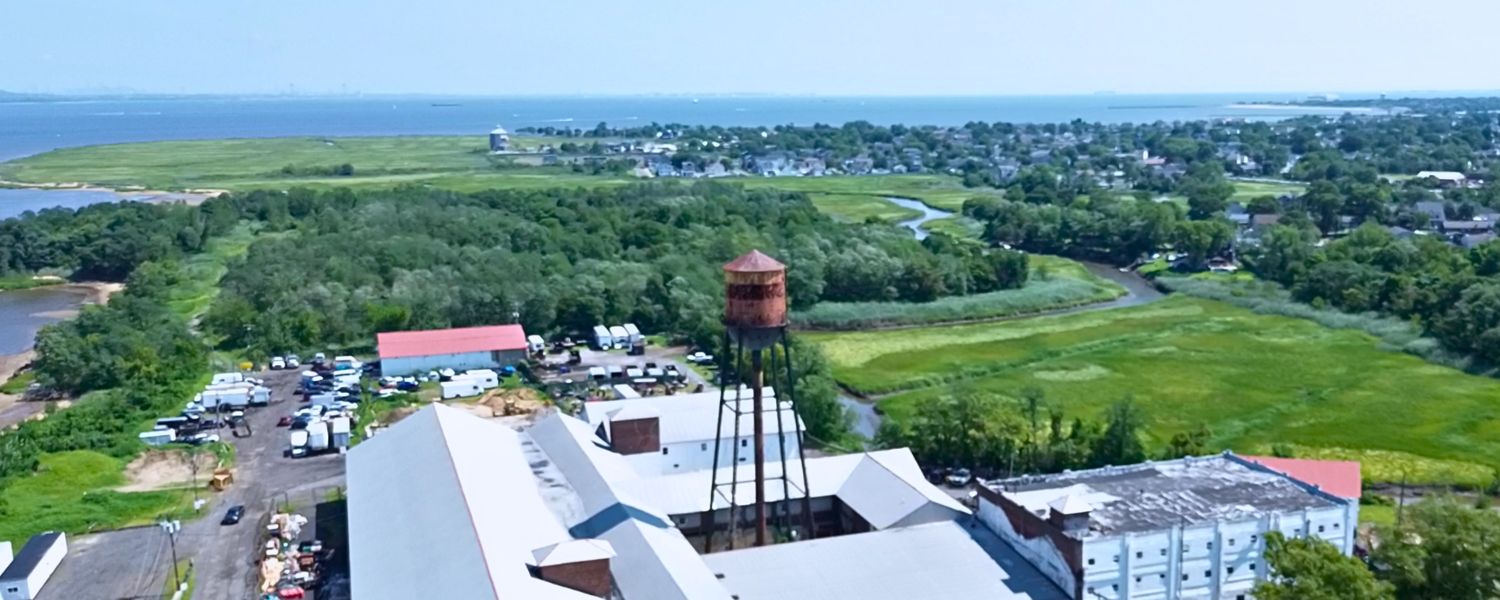
The Aeromarine Landfill in Keyport, New Jersey has been the subject of environmental concerns for decades. Residents are asking the U.S. Environmental Protection Agency to conduct a formal Preliminary Assessment and Site Inspection and evaluate the site for inclusion on the National Priorities List.
This petition asks the EPA to independently assess the site, investigate potential contamination pathways, including vapor intrusion, and determine whether the landfill qualifies for federal Superfund oversight and funding.
You do not need to live in Keyport, Monmouth County, or even New Jersey to sign. Anyone who believes communities deserve a thorough investigation of potential environmental hazards is encouraged to add their name.
By signing, you are urging the EPA to review the Aeromarine Landfill and take the steps necessary to protect public health and the environment.
The EPA requires petition submissions to include a name, street address, and phone number.
Learn more at https://www.keyportaction.org
Sponsored by

To:
U.S. Environmental Protection Agency (EPA)
From:
[Your Name]
Under the authority of CERCLA Section 105(d), as amended, the undersigned petitioners, who are residents living in Keyport and the surrounding area near the Aeromarine Landfill, as well as other concerned citizens, request that the Aeromarine site be immediately evaluated by the US EPA for inclusion on its National Priorities List (NPL) of Superfund toxic waste sites. Per EPA guidance, this evaluation would include the following two initial steps:
1. Preliminary Assessment/Site Inspection (PA/SI). The EPA would conduct a PA/SI to review historical records and existing data and then inspect the site to test the soil, groundwater, and subsurface air on or near the site to see what hazardous substances are present and if they are being released into the environment.
2. Numeric Scoring using the Hazard Ranking System (HRS). The EPA would then use the data collected from the PA/SI to determine a numeric score for the site using the EPA HRS tool to see if the score exceeds the value of 28.50 needed to allow the site to be placed on the NPL and be eligible for federal funding.
Vapor intrusion concern: Based on past environmental reports and NJDEP technical guidelines, a thorough investigation into the risk of vapor intrusion has not been conducted, but is urgently needed. An investigation in 2010 detected volatile chemicals (VOCs) in soil gas at concentrations exceeding NJDEP Soil Gas Screening Levels (SGSLs), which should have required further evaluation of vapor intrusion exposure pathways. Benzene was detected at concentrations up to 1,086 µg/m³, over 60 times higher than NJDEP's residential SGSL of 16 µg/m³. In conducting a PA/SI, we request that the EPA test the air in residential basements.
Location of the release/threatened release: Aeromarine Landfill (also known as Keyport Landfill / Aeromarine site), Keyport, Monmouth County, New Jersey. The site is located in the Borough of Keyport near the Raritan Bay waterfront and adjacent residential neighborhoods. Aeromarine Industrial Park, 55 Walnut Street, Keyport, NJ 07735 Block 141, Lot 15. A marked map is attached.
How the petitioners are affected: We are residents of Keyport and the surrounding area living in proximity to the Aeromarine Landfill, along with other concerned citizens. Documented groundwater contamination from the site (including exceedances of New Jersey Groundwater Quality Standards for contaminants such as benzene, arsenic, ammonia, PAHs, and others) raises serious concerns about potential impacts to our health, our families’ health, the safety of local groundwater and surface water, property values, and the surrounding environment. For many residents, these concerns are deeply personal. Throughout the community, families and their children have faced cancer diagnoses and the loss of loved ones while questions about contamination at the landfill remain unsolved. As nearby residents and concerned citizens, we are directly affected by the ongoing threat of contaminant migration from this historic landfill.
Type or characteristics of the substance(s) involved: Hazardous substances associated with historical landfill operations, including volatile organic compounds (e.g., benzene, vinyl chloride), metals (e.g., arsenic, lead, cobalt), polycyclic aromatic hydrocarbons (PAHs), ammonia, and elevated total dissolved solids, as documented in New Jersey Department of Environmental Protection (NJDEP) monitoring well reports and site investigation records.
Nature and history of any activities: The site operated for many years as a large uncapped, unlined landfill/dump. Today, it remains unremediated in a tidal area surrounded by water on three sides. Multiple rounds of groundwater monitoring by the NJDEP have documented contaminant exceedances in monitoring wells on and near the property. Environmental reports also document that groundwater flows outward from the former landfill’s center towards the surrounding bodies of water. Concerns about incomplete closure, potential off-site migration, and the need for more robust long-term remedies continue to be raised by residents.
State and local authorities contacted: The New Jersey Department of Environmental Protection (NJDEP) has been overseeing the site for nearly five decades and has conducted monitoring and investigations. However, significant concerns remain regarding the extent of contamination, the potential for off-site migration, and whether all exposure pathways, including vapor intrusion, have been adequately evaluated. Given these unresolved questions and the community’s loss of confidence in the investigation process, we are requesting a federal Superfund Preliminary Assessment to determine whether additional independent assessment by independent experts, resources, or National Priorities List consideration may be warranted. Placement on the National Priorities List would provide federal oversight, funding, and enforcement authority to help ensure that any necessary investigation and cleanup activities meet the appropriate standards.