Follow State Law: Stop the Concentration of Supportive Sites
Mayor Lurie and Supervisor Dorsey
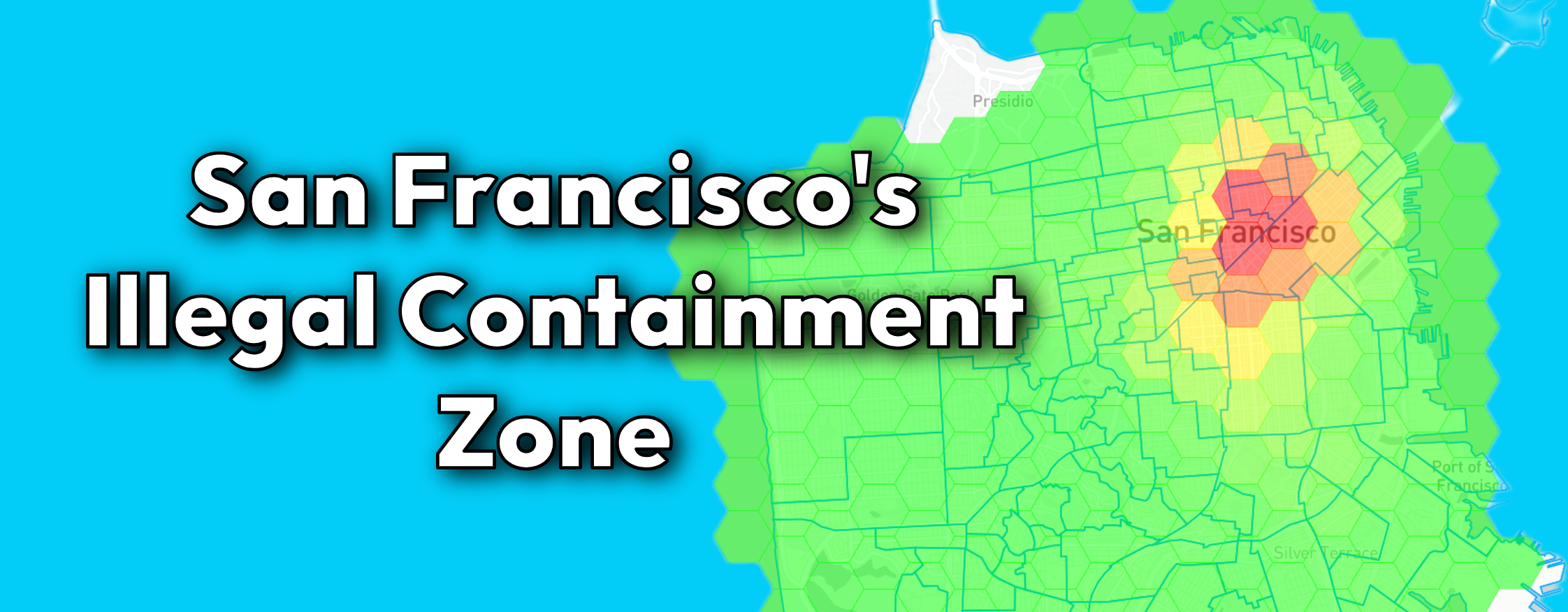
We're asking for your support: tell the City to stop concentrating shelters and public services in a containment zone confined to a few neighborhoods and to require that the entire City bear its fair share.
For years, the City has concentrated its highest-need social services into western SOMA while withdrawing the baseline infrastructure, sanitation, and public safety resources required to manage them. The practical effect has been to shield better-resourced neighborhoods from sharing this responsibility, and to leave our streets, our small businesses, and our neighbors bearing a disproportionate burden.
State law requires San Francisco to deconcentrate poverty and integrate neighborhoods. The City has done the opposite, directing over $157 million in discretionary funding since 2023 to entrench and concentrate services into a small number of neighborhoods, including SOMA.
The SOMA West Neighborhood Association (SWNA) has formally filed a 47-page civil rights and fair housing complaint with the State of California. You can watch an overview video about the complaint here, and read the full complaint here.
60% of all City shelter beds are concentrated in just the Tenderloin and South of Market. According to the City's own data from the 2024 Point-in-Time Count, SOMA is home to 11% of the City’s unhoused population but is forced to host 28% of the City’s shelter beds. We are currently oversubscribed by 660 beds relative to our equitable share. You can see the concentration of shelter beds and other services using this interactive map source.
These City policies have life-threatening consequences. By placing vulnerable people struggling with addiction into neighborhoods that already suffer from open-air drug markets, the City is deepening an extraordinary concentration of overdose deaths. SOMA and the Tenderloin alone account for more than 40 percent of the City's fatal overdoses. Many of the shelters and services sited here are accompanied by open drug use, violence, and hazardous conditions for both the people they serve and the surrounding community (as documented in articles here and here).
We love our neighborhood and want to help the City succeed. SOMA is the economic and cultural engine of San Francisco; it's home to its largest employers, its newest housing, and thousands of residents and small business owners who chose to invest here. The fight to have the City restore geographic equity would demonstrate that San Francisco can solve its most complex systemic challenges while supporting all of its vibrant neighborhoods.
Petition by

Sponsored by

To:
Mayor Lurie and Supervisor Dorsey
From:
[Your Name]
We demand that the City honor the law and Reduce the Burden on SOMA.
1. ENFORCE A NET REDUCTION IN SERVICES
We demand the City achieve geographic equity by reducing the number of beds in western SOMA by relocating them to neighborhoods that have capacity. Start by refusing to renew master contracts for highly saturated sites that cannot maintain a safe, drug-free perimeter, and relocate those state-funded resources to well-resourced neighborhoods.
We demand the City freeze the pending June 2026 multi-year contract renewals on 6th Street and Howard Street that threaten to lock SOMA into this inequitable system for the rest of the decade.
2. FIX EXISTING SITES
Many of the service sites foster hazardous conditions for both residents and the community. We urge the City to bring in competent management, clear enforcement standards, and humane, safe operating conditions.
3. STOP STARVING SOMA OF PUBLIC RESOURCES
The City has left SOMA with one of the most under-staffed police stations, among the lowest tree canopy in the City, a lack of public sanitation infrastructure, and a sizable deficit in parks and recreation activities. We demand the City provide public benefits proportionate to those received in other neighborhoods throughout our City.
SOMA has done its share. It is time for the rest of the City to step up.