NO Data Center in Stokes County!
Stokes County Commissioners
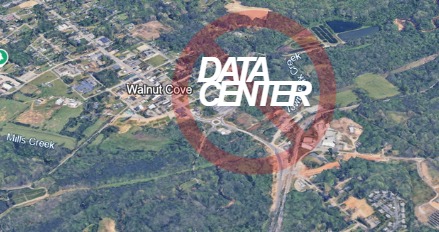
The Stokes County Commissioners are considering whether to approve the 1,800-acre Project Delta Data Center, you can learn more about the public hearing here.
The planning board voted not to recommend this data center, but the county commissioners have the final say. The planning board did recommend adding data centers to local zoning, with not very strong conditions. We need to study this more before sanctioning data centers entering our county!
This data center is a threat to local history and heritage, it would be on land that was Upper Saura Town, is culturally important to the Occaneechi Band of the Saponi Nation, and that has a historical home of the Hairston family.
The data center would run on methane gas generators while they wait in line to connect to Duke Energy's grid... unclear how long! Generators are loud and pollute the air.
This
data center is SPECULATIVE there is no tech company lined up to buy or
use this data center, no guarantee this investment pans out. Many economists are warning of an AI bubble, what happens to this project if the bubble pops before they are through?
Data centers don't employ many people long term and are one reason electric bills are rising 2x faster than inflation.
This data center would be on the banks of the Dan River, construction could cause pollution of the Dan.
What do we want instead?
-Deny the rezoning request for Project Delta Data Center!
-A moratorium on data centers in Stokes County. This would give the county time to study their impacts and have strong public engagement on whether data centers fit with the 2035 Land Use Plan and character of Stokes County.
-Partnership with community members and DFC Stokes LLC to come together on a more stable and sustainable use for the land currently under consideration for rezoning. This land is important to Stokes County’s history, the Saura People, the Occaneechi Band of the Saponi Nation, the Hairston and Sally Blagg descendants, and for protecting the Dan River.
Sponsored by
To:
Stokes County Commissioners
From:
[Your Name]
Dear Stokes County Commissioners,
We, the residents of Stokes County, ask you to deny the request from DFC Stokes, LLC and DFC Stokes 2, LLC to rezone 1800+ acres from Residential Agricultural to Heavy Manufacturing at US 311 and Tuttle Rd and US 311 for the Project Delta Data Center.
The planning board did not recommend this rezoning. However, they did recommend adding data centers to our zoning rules, with not very strong conditions. Instead, we further demand that you pass a moratorium on data centers in Stokes County. This would give the county time to study their impacts and have strong public engagement on whether data centers fit with the 2035 Land Use Plan and character of Stokes County.
We ask that you partner with community members and DFC Stokes LLC to come together on a more stable and sustainable use for the land currently under consideration for rezoning. This land is important to Stokes County’s history, the Saura People, the Occaneechi Band of the Saponi Nation, the Hairston and Sally Blagg descendants, and for protecting the Dan River.
Here are our concerns with the rezoning request and data centers in Stokes County:
Economic Concerns
• Data centers do not employ many people long-term. Construction jobs are temporary.
• It’s a risky investment: Engineered Land Solutions is not a tech company. They do not have a data center customer who plans to use this site.
o This plan depends on the bubble of demand for artificial intelligence (AI) to continue to grow. Right now, experts are starting to warn of an AI bubble, similar to the dot com crash in the 2000s.
o There is a serious risk of overbuilding AI data centers, beyond what the demand for their computing power in the future might be, which could leave communities with unused industrial sites.
• Higher electric bills- nationally, data centers are one reason electric bills are rising 2x faster than inflation. If the data center finally does connect to Duke Energy’s grid, a new law passed in 2025 forces residential customers to pay an unfair share of fuel costs for big industrial customers like data centers.
• The proposal is not consistent with Stokes County’s 2035 Land Use Plan, created through extensive public input and thoughtful review by residents and elected officials.
• The 2035 plan describes this 1,844-acre area as “preserved land” and “reserved land.”
A Potential Threat to Historic and Cultural Resources
• This land is near where the grave of the Sauratown Woman was found in 1972.
• The land the developers seek to rezone is home to a historical home of the Hairston family, which is now in disrepair.
• Local descendants of the Hairston Family, Sally Blagg, the Occaneechi Band of the Saponi Nation, and the Saura people, as well as local historians, have expressed concerns that the site might have additional important archaeological or cultural resources that could be harmed or lost forever by a big industrial project.
Air pollution
• AI data centers use tons of energy to run 24/7. The developer has said in meetings that they plan to run this data center on methane gas generators 24/7 until they can connect to Duke Energy’s grid.
• Burning methane releases air pollution that can increase asthma, COPD, heart conditions, and cancer risk to those exposed.
• According to NC DETECT, in 2024 Stokes County had 248 asthma-related ER visits in 2024. This is a rate of 54.2 visits per 10,000 residents. New sources of air pollution could make this worse.
• The site is close to Belews Creek coal plant, a major source of harmful air pollution.
Noise pollution
• Data centers are noisy, mostly from generators and HVAC systems.
• The developers state that the data center property edge will have a maximum noise of 70db(A). This is comparable to a vacuum cleaner. However, this is loud compared to a natural area. Sound from an open field in nature is more like 30 db(A).
Water Usage
• The developer estimates daily water use at 50,000–100,000 gallons per day, because of a “closed loop” system which requires chemicals to be added to water, and water recirculated for cooling. Eventually, the water does need to be replaced, leading to contaminated wastewater.
o The land has very limited or no water and sewer infrastructure, according to the rezoning application. If water is trucked in, there is no transparency on how much water is truly being used.
o Walnut Cove’s wastewater system is not set up to handle this water. Water might need to be trucked in and trucked out when they need to replace the water, leading to loud, large trucks on rural roads.
• No strong oversight of data center water use. A 2016 report by Uptime Institute found that fewer than one-third of data center operators track water consumption.
Water Pollution
• The site is on the banks of the Dan River. During construction, digging underground can lead to runoff, requiring water pollution controls. These water pollution controls can fail, washing tons of sediment into rivers, like the Dan.
• Data centers have a large amount of hard surfaces, such as roofs, parking lots, and buildings, that do not allow water to soak into the ground. This creates lots of stormwater runoff, which can result in more flooding and pollution.
Signed,