Petition to protect vital creeks from the Northern Beltline
Samuel T. Barber, U.S. Army Corps of Engineers
Please take this opportunity to comment on the proposed discharge of fill material associated with the construction of a 9.5-mile segment of the Northern Beltline [Permit Application Number SAM-2011-01079-CMS] and its impacts to Cunningham Creek, Flat Creek, North Creek, and Turkey Creek. The Northern Beltline is a proposed 52-mile highway arcing through northern and western Jefferson County around Birmingham, with an intended purpose of opening up areas for development. The Federal Highway Administration now estimates the project will cost over $5 billion, making it the most expensive road project in Alabama’s history at $96.3 million per mile. The proposed route is the longest, costliest and most environmentally destructive of the 7 routes originally considered. The Northern Beltline would cross and permanently alter Black Warrior and Cahaba River tributaries in 90 places, and it would impact 35 different wetlands and 3,078 football fields' worth of forest. If completed, the road would only relieve 1-3% of traffic on I-20/59 through downtown Birmingham, at the cost of degrading the city’s air quality, water quality, forested acreage, and wetlands.
Sponsored by

To:
Samuel T. Barber, U.S. Army Corps of Engineers
From:
[Your Name]
Dear Samuel T. Barber, U.S. Army Corps of Engineers,
Thank you for the opportunity to comment on the Northern Beltline/Permit Application Number SAM-2011-01079-CMS. I/We would like USACE and ADEM to consider and address the negative impacts of the proposed project: projected rising costs, an expanding timeline, and environmental degradation.
The proposed Beltline route is the longest, costliest and most environmentally destructive of the 7 routes originally considered. The Northern Beltline would cross and permanently alter Black Warrior and Cahaba River tributaries in 90 places, and it would impact 35 different wetlands and 3,078 football fields' worth of forest. The proposed 9.5 mile section listed in permit Application Number SAM-2011-01079-CMS would present risks to Cunningham Creek, Flat Creek, North Creek, and Turkey Creek. Turkey Creek is home to three federally protected, endangered species of fish: the Vermilion Darter (Etheostoma chermocki), Watercress Darter (Etheostoma nuchale), and Rush Darter (Etheostoma phytophilum). Additionally, this next section of highway would be just a couple of miles upstream of our beloved Turkey Creek Preserve.
The entire Northern Beltline was originally estimated to cost $3.4 billion, but the Federal Highway Administration now estimates the project will cost over $5 billion, averaging almost $100 million per mile of road. The Northern Beltline will be the most expensive road project in Alabama’s history and one of the most expensive in the history of the United States. Despite being the most expensive road project in Alabama history, ALDOT only has enough money in hand from the Infrastructure Investment and Jobs Act to complete about 10-15 miles worth of the project from SR 75 to US 31. They plan to borrow the rest of the funding to complete the next 15 miles and have no funding plan for the other half of the Beltline.
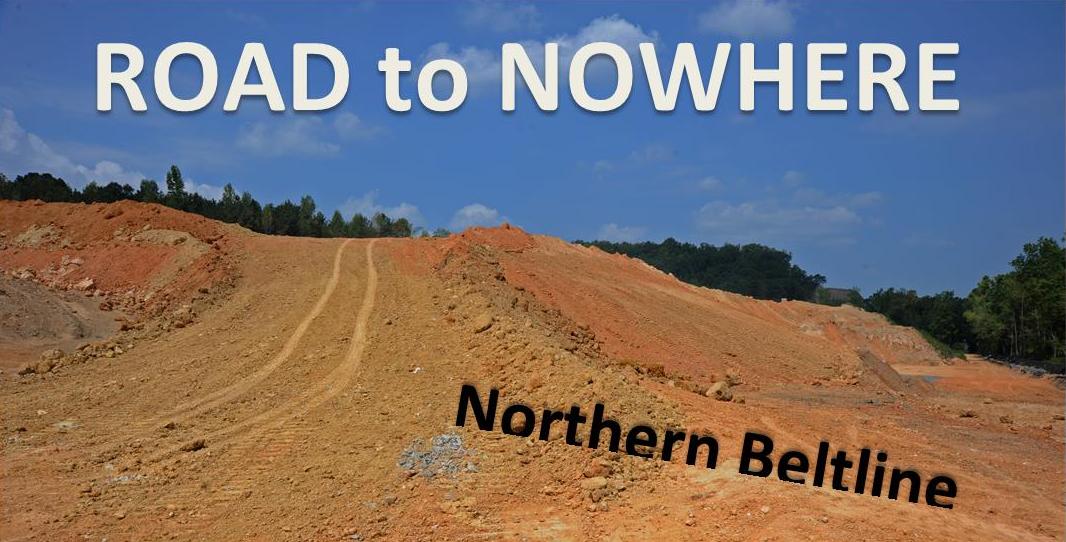
The project was originally proposed in the 1960s but ALDOT only first began construction on the Northern Beltline in 2014, and only the draining and grading of an approximately one-mile section was completed. Construction for this small 1.86-mile section is currently underway after all construction stopped in 2016. ALDOT’s transportation plans indicate that the entire Beltline would take 60 years to complete and in 2024, the Federal Highway Administration indicated that any section west of I-65 would not even start construction in the next twenty years. Approving the construction of another 9.5 miles of the Beltline between US 31 and SR 79 does not indicate how the rest of the project will be funded or when it will be completed.
According to experts, the Northern Beltline will do little to help the region meet any kind of economic competitiveness, environmental sustainability, or social equity goals. Instead, only a select group of large landowners and construction companies will benefit. Construction of the Northern Beltline was ranked 36th in priority by the Birmingham Regional Planning Commission and if completed, the road would only relieve 1-3% of traffic on I-20/59 through downtown Birmingham, at the cost of degrading the city’s air quality, water quality, forested acreage, and wetlands. Of particular concern is the fact that the Beltline would impact the tops of both the Cahaba and Black Warrior River watersheds, primary drinking water sources for Birmingham and surrounding communities. It is also of particular concern that the discharges outlined by permit application number SAM-2011-01079-CMS threaten endangered species habitat.
I/we would like to formally ask USACE and ADEM to hold a public hearing so that we can talk about these issues in more detail, and so that other members of the community can have their voices heard. It is unclear from the joint public notice what streams will be impacted, how they will be impacted, and how the impacts will be mitigated. A public hearing is needed to address these significant issues and address widespread public concern about the purpose of the Northern Beltline itself.