Protect the Marine Stadium Basin: Pause the Proposed Mooring Field and Listen to the Community
City of Miami Mayor and
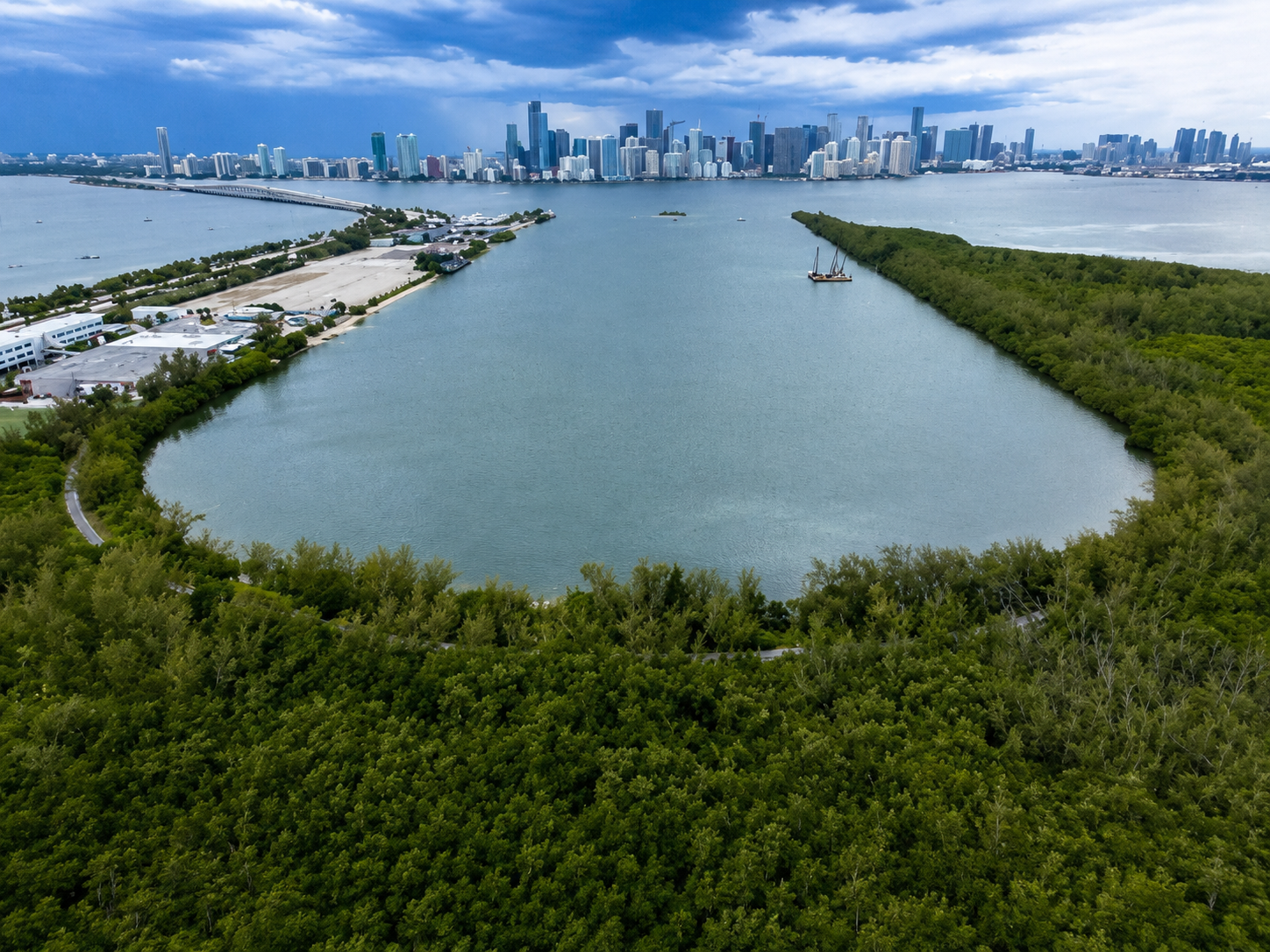
The Marine Stadium Basin is a unique public waterfront that belongs to the entire community. It is a place where residents and visitors paddle, row, recreate, watch events, and experience Biscayne Bay.
We are asking the City of Miami to pause the proposed mooring field and meaningfully engage the community before moving forward with plans for approximately 195 permanent mooring anchors in the Marine Stadium Basin.
The proposed number and placement of mooring anchors raise important questions about environmental protection, navigation, recreation, public access, and the long-term future of Virginia Key.
The Basin has changed significantly since earlier mooring-field concepts were developed. The area has undergone efforts to address derelict vessels, and conditions today are different from when previous proposals were considered. Earlier concepts contemplated substantially fewer moorings, including approximately 45 vessels in 2018 and 97 buoys in a 2021 concept.
The community deserves an opportunity to understand why a much larger 195-anchor configuration is now being proposed and whether it is appropriate for this highly active public waterfront.
We respectfully ask the City of Miami to:
- Pause the current permitting process for the proposed 195-anchor mooring field;
- Conduct meaningful public engagement with the Virginia Key Advisory Board, residents, environmental organizations, recreational users, rowing and paddling communities, and other stakeholders before moving forward;
- Reconsider the proposed number and configuration of mooring anchors based on current conditions and demonstrated need;
- Protect seagrass, mangroves, hard-bottom habitat, and other sensitive Biscayne Bay resources from avoidable impacts;
- Evaluate potential conflicts with rowing, paddling, boating, and Marine Stadium events, as well as public access and navigation;
- Consider the cumulative impacts of proposed development throughout Virginia Key rather than evaluating individual projects in isolation; and
- Ensure that any future mooring-field plan is based on current science, transparent analysis, and the long-term public interest.
We recognize that mooring infrastructure can play an important role in addressing derelict vessels and improving vessel management. However, solutions must be appropriately scaled to current conditions and must protect the environmental, recreational, and public value of the Marine Stadium Basin.
Biscayne Bay and Virginia Key belong to all of us. Decisions about permanent infrastructure in this public waterfront should be made transparently, with the community at the table and with the protection of the Bay at the forefront.
Please add your name and ask City of Miami to pause the proposed mooring field, listen to the community, and reconsider the plan before moving forward.
Sponsored by
To:
City of Miami Mayor and
From:
[Your Name]
The undersigned organizations respectfully submit these comments regarding the proposed Marine Stadium Mooring Field within the Miami Marine Stadium Basin on Virginia Key.
We recognize the City's desire and interest in addressing unmanaged/unregulated anchoring, derelict vessels, and water quality degradation within Biscayne Bay, however, the proposal currently under the review by the Florida Department of Environmental Protection (FDEP) goes far beyond addressing those issues - instead of a targeted management strategy, it would permanently transform approximately 134 acres of one of Miami's most iconic public waterfronts. The submitted management plan states that the project would establish 195 mooring balls, associated dinghy facilities, and upland support amenities across approximately 134 acres of the Marine Stadium Basin.
We respectfully urge that the city modify this application to better reflect all the uses of the Marine Stadium Basin. We submit the following comments for your consideration:
1. The proposal is inconsistent with the long-term public vision for Marine Stadium.
For decades, the Marine Stadium Basin has served as one of South Florida's premier venues for rowing, dragon boat racing, paddle boarding, sailing, community recreation, and internationally recognized marine events owing to its sheltered configuration. The basin is naturally protected from prevailing winds and wave action, providing uniquely calm water conditions that distinguish it from much of Biscayne Bay - the exact characteristics that make the basin uniquely well suited for human-powered water sports, establishing it as one of Miami Dade’s most important public recreational waterways.
The 2010 Virginia Key Master Plan remains active and was used to modify the MMS Basin for a Boat Launch and Trailer Parking in 2021, however, the Master Plan does not include any reference to a “mooring field.”
As the City of Miami is actively pursuing restoration of the historic Miami Marine Stadium itself - the voters are being asked to decide the future of adjacent marina redevelopment through a citywide referendum, and these investments envision a vibrant, flexible public waterfront - not a basin which primary function becomes long-term vessel storage.
As the City of Miami actively pursues restoration of the historic Miami Marine Stadium and voters were asked to decide the future of adjacent marina redevelopment through a citywide referendum, these initiatives should enhance public access, expand recreational opportunities, and maximize the public benefit derived from these publicly owned waterfront assets, not permanently transform the basin into a waterbody with primary function of long-term vessel storage. The Marine Stadium Basin should not become another sheltered anchorage and must remain an integral component of City’s and County’s public natural spaces.
The basin's daily recreational use by hundreds of paddlers, rowers and crew teams, and other human power crafts must be fully considered. While other communities are required to construct venues for human powered vessels and water sports, Miami already has the ideal location for these activities. The protection from prevailing winds and wave action provides the uniquely sheltered water course for these sports not found elsewhere in Miami.
Miami’s teams are well known internationally with USA certified coaches and team members. The proposal states that the Miami Marine Stadium might have five events a year whereby boats will need to be moved. There is no consideration for events that could occur and did occur in the past for water sports. Kana Lui, Swim Miami, the Miami Triathlon, the Breast Cancer Corporate Race could all return now that the Basin is healing without the incursion of boat parking.
The applicant proposes temporary removal of surface buoys for only a limited number of special events while leaving permanent helical anchors embedded within the basin floor - this approach may accommodate occasional scheduled events but fails to account for the basin's daily recreational use by hundreds of paddlers, rowers, sailors, and community organizations.
(https://www.miami.gov/files/assets/public/v/1/document-resources/pdf-docs/capital-improvements/exhibit-virginia-key-consensus-master-plan.pdf)
2. The proposal represents a dramatic expansion beyond previous public discussions and longstanding stakeholder concerns.
Notably, the concerns regarding this proposal are not new, since at least 2017 the Virginia Key Advisory Board has repeatedly expressed concern that a municipal mooring field could fundamentally alter the character of the Marine Stadium Basin and urged the City to undertake a more comprehensive planning process before advancing the project.
In 2018, the Virginia Key Advisory Board considered a City proposal for a significantly smaller 45-vessel mooring field and formally recommended that the City suspend construction while pursuing alternative approaches, including designation of the basin as a Limited Anchorage Area under State Law, enhanced enforcement of existing regulations, removal of derelict vessels, and other available management strategies before committing to permanent mooring infrastructure. The Board further urged the City to ensure meaningful stakeholder engagement, demonstrate compatibility with Marine Stadium programming, and evaluate consistency with the Virginia Key Master Plan before proceeding.
Since 2018, two formal statements from the City have appeared, neither of which include 195 anchors:
The City Marinas and Mooring Fields Analysis of 2021 on page 10 references a 97-buoy mooring field, but not 195 anchors; and
At its June 24, 2021, meeting, the City Commission considered a resolution for fifty mooring achors and unanimously agreed to an amendment “on the number of mooring anchors up to 75.” (Page 91 City Commission Minutes.)
Rather than resolving these longstanding concerns, the current proposal instead has expanded to 195 permanent moorings - more than four times the scale previously contemplated, without demonstrating why such a dramatic increase is necessary or why less intensive alternatives would not adequately accomplish the City's stated management objectives.
Many of the fundamental planning questions raised nearly a decade ago, including compatibility with recreation and Marine Stadium programming, consistency with the long-term vision for Virginia Key along with meaningful public engagement remain largely unanswered today.
3. Piecewise planning cannot adequately evaluate cumulative impacts to Virginia Key and Key Biscayne.
The Marine Stadium mooring field cannot be evaluated in isolation.
Simultaneously, the following is currently being considered:
restoration and reactivation of Miami Marine Stadium;
redevelopment of former Seaquarium property;
the opening of the boat ramp and trailer parking;
a marina redevelopment proposal being considered for a November referendum; District 7 Shoreline Project (Rickerbacker Causeway redevelopment);(potential) Broader Virginia Key planning initiatives?;
(potential) Any Policy changes? (look up any County/City recent policy changes).
The proposed mooring field is also directly in conflict with the future redevelopment re-activation of the Marine Stadium. The City is simultaneously pursuing the restoration and redevelopment of the historic Marine Stadium, including introduction of new vendors, businesses, and other waterfront uses that will depend on meaningful and functional access to the Basin. A permanent field of 195 mooring anchors occupying 134 acres of the basin would substantially constrain water access and navigation for these future uses and introduce additional vessel and dinghy traffic into the same waters required for Stadium operations. The City should not approve permanent mooring infrastructure before demonstrating that it is compatible with the access, navigation, and water-dependent activities envisioned for the redeveloped Marine Stadium.
Each of these projects affects the others - with implications for traffic on the Rickenbacker and parking, which in the Virginia Key Master Plan is known as the Flex Park. Plans for the Flex Park have already been produced and submitted for consideration by the consulting firm Civitas. The question is, “To what extent are these plans under consideration or applicable?”
In addition, boat traffic within the MMS Basin is a consideration. Boats will be entering and leaving the mooring field. Dinghies will be moving within rowing/paddling lanes. There will be prime times that require monitoring for boat launch, trailer parking, rowing and paddling parking and launching. The current proposal does not take activity into consideration.
Each of these projects affects the others - yet no comprehensive planning effort has evaluated how a permanent 195-vessel mooring field would influence future recreation, event programming, navigation, environmental restoration, or public access - major public infrastructure decisions should not be made incrementally through separate permit applications.
4. Managing vessels should not come at the expense of public waters.
We support responsible vessel management, removal of derelict vessels, improved pumpout services, improving water quality and protection of valuable natural resources, however, these objectives do not require permanently converting one of South Florida's premier public recreational basins to a 195-vessel mooring field.
The City's own environmental documentation acknowledges that unmanaged anchoring has affected benthic habitats, but replacing unmanaged anchoring with one of Florida's largest municipal mooring fields is hardly the only available solution; in our view a comprehensive planning process should evaluate phased implementation, smaller alternatives, enhanced enforcement, limited anchorage designation, and other management tools before permanently altering the character of the basin.
Public input and changes in state and county laws are helping to support the Basin as a safe place for marine life and the reputation and attraction for Miami for water sport teams. Slow speed/minimum wake signs, which the City had intended to place in 2014, were added to the Basin between November 2021 and January 2022 as the result of public input and concerns for safety.
An ordinance is being considered that delegates to the County the authority for the MMS Basin to become an Anchoring Limitation Area (ALA). Previously, such a designation required action by the Fish and Wildlife Conservation Commission (FWC) in Tallahassee. Decision is pending.
Florida State Law has extended the protected perimeter around a mooring field from one hundred’ to three hundred.’ No vessel anchoring can take place in this perimeter area. The current proposal does not take this change into account and uses more square footage of open water than necessary.
The Marine Stadium Basin represents a unique public asset whose value cannot be measured solely by the number of vessels it can accommodate. It is a place for recreation, competition, education, environmental stewardship, and public gathering. As Miami invests in restoring the historic Marine Stadium and shaping the future of Virginia Key, decisions regarding the basin should strengthen, not diminish, that long-term public vision.
For these reasons, the undersigned organizations respectfully urge decision makers to reject the proposal as currently designed and instead pursue a comprehensive public planning process that evaluates vessel management together with Marine Stadium restoration, waterfront redevelopment, recreation, environmental protection, and long-term public access before permanent infrastructure is installed.
A better solution can only be achieved when aligned with all multiple stakeholders.