Co-Sponsor and Support the RESTORE Act
Senator Thom Tillis
Sponsored by

To:
Senator Thom Tillis
From:
[Your Name]
June 18, 2026
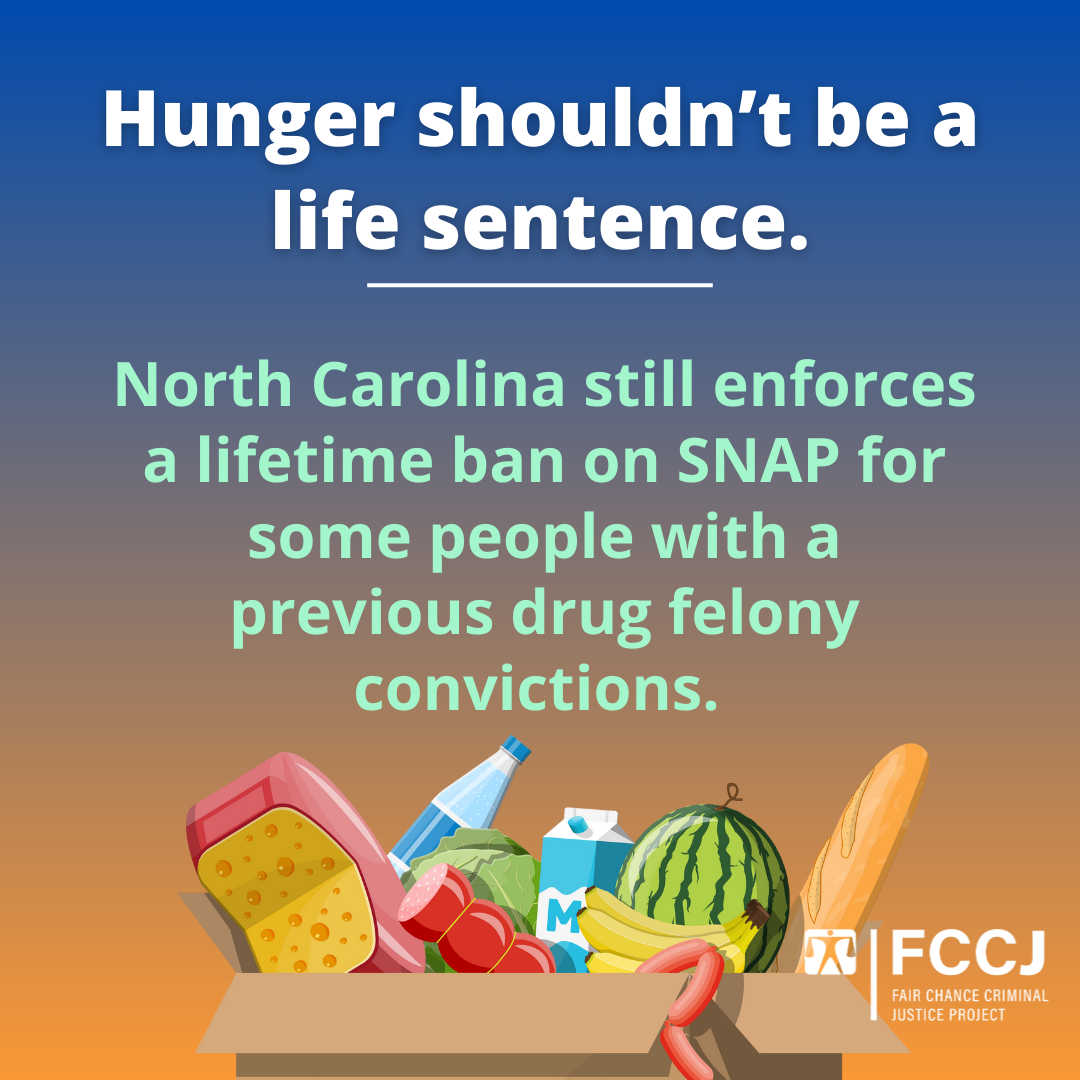
We are a group of North Carolina residents who are directly impacted by the SNAP and TANF bans or who love someone who is. Because of a past drug conviction, we are barred from receiving these critical supports for either six months or, in many cases, the rest of our lives. We write to respectfully request that you co-sponsor H.R. 5223, the RESTORE Act of 2025, to end the bans on SNAP and TANF benefits for people with felony drug convictions.
We are parents, neighbors, workers, and students striving to rebuild our lives and contribute meaningfully to our communities. Yet, despite our efforts, we continue to face the severe and lasting consequences of the felony SNAP ban.
In North Carolina alone, at least 45,000 people are subject to a lifetime ban on SNAP and TANF because of a Class G or higher felony drug conviction. Tens of thousands more face a six-month ban because of lower-level convictions. These policies affect not just individuals, but families and entire communities.
The impact is profound. People returning home from incarceration are twice as likely to experience food insecurity as people who have never been incarcerated. An overwhelming 91 percent of formerly incarcerated individuals report struggling to access enough food, and 37 percent say they have gone an entire day without eating because they could not afford it.
Increasingly, the felony SNAP ban is falling hardest on mothers and their children. According to the Sentencing Project, women are significantly more likely than men to be incarcerated for drug offenses, 26 percent of incarcerated women compared to just 13 percent of men, meaning this policy disproportionately harms families and caregivers. As a result, this policy disproportionately punishes caregivers and places entire households at risk. In North Carolina, more than 70 percent of SNAP participants are in families with children, underscoring how vital this support is to family well-being. Additionally, women have historically relied on SNAP at higher rates than men, being nearly twice as likely to receive benefits, meaning these bans cut off a critical lifeline for those most responsible for feeding and caring for children. The result is not just individual hardship, but deeper, generational harm to families across our state.
By denying access to food assistance, this policy creates barriers that make stability and success far more difficult to achieve. Many of us have had to make impossible choices, such as deciding whether to pay rent or buy groceries, or deciding to feed ourselves or feed our children. Hunger does not promote rehabilitation; it undermines it.
The SNAP and TANF bans extend punishment long after a sentence has been served. They make it harder to secure employment, maintain stability, and successfully reenter society. This is not only unjust, it is counterproductive to the goals of improving public safety, enhancing recovery, and bolstering the economy.
Access to food is a basic human need. When that need is met, people are better equipped to work, care for their families, and contribute positively to their communities. Removing these barriers is not only the right thing to do, it is a practical investment in stronger, healthier, and safer communities across North Carolina.
We respectfully urge you to support and co-sponsor H.R. 5223, the RESTORE Act of 2025, to end the felony SNAP and TANF bans and ensure that people like us have access to the basic resources needed to succeed.
Thank you for your time, your leadership, and your consideration of this critical issue.