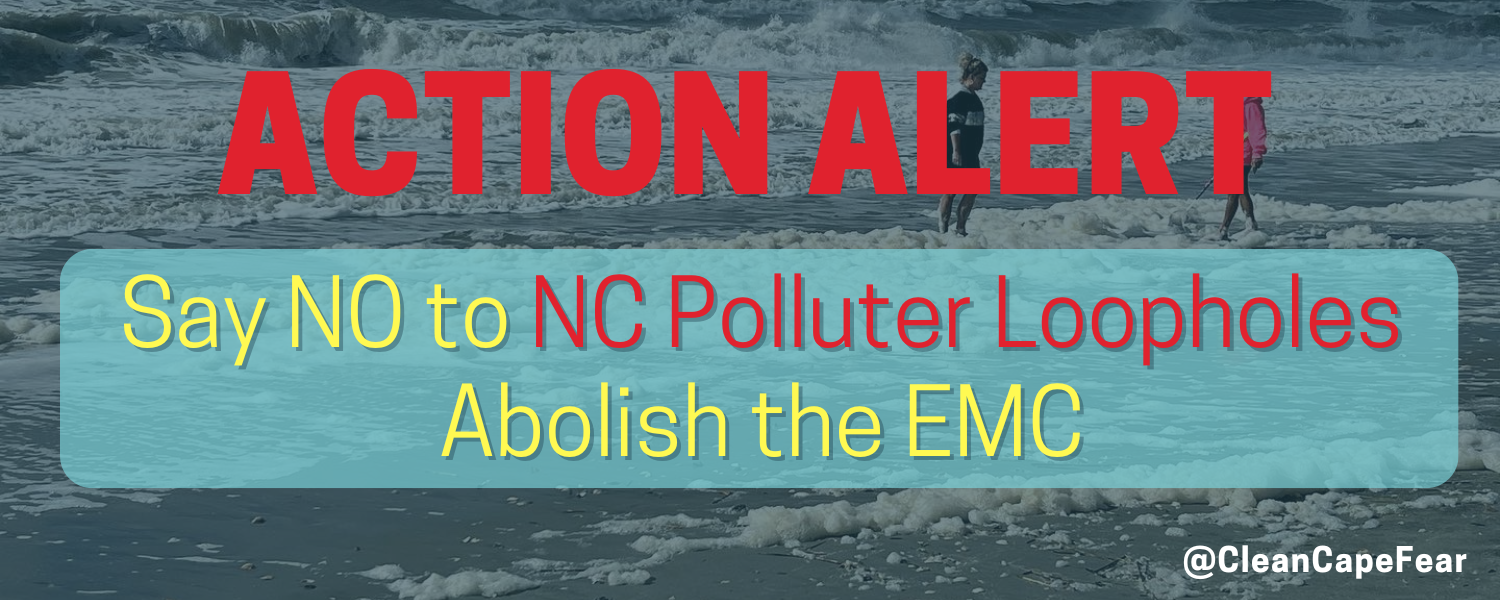
Say NO to NC Polluter Loopholes. Abolish the EMC.
John D. Solomon (EMC Chair), Members of the NC Environmental Management Commission and NC DEQ Staff
Since 1980, Chemours and DuPont dumped toxic PFAS forever chemicals into the Cape Fear River. We found out in 2017. By then our neighbors were sick, our wells were contaminated and our children had been drinking poisoned water for decades while the companies responsible kept getting rich. We fought back. We went to Congress. We went to the United Nations. We helped win the first-ever federal PFAS drinking water standards in US history.
Now North Carolina's Environmental Management Commission (EMC) is about to hand industry polluters another victory by adopting rules the polluters wrote themselves. No enforceable limits. No penalties. Zero consequences for nearly 500 industrial facilities dumping PFAS and 1,4-dioxane into our rivers.
The EMC has spent decades captured by the chemical industry and is now hamstrung by political interference. It is beyond repair. More than 3.5 million North Carolinians drink unsafe levels of PFAS in their tap water. Over one million drink water with cancer-causing 1,4-dioxane. Sign this petition. Comments close June 15.
Then, show up to a public hearings before May 12. Make the EMC look you in the eyes. Hear your stories. See your humanity. Tell the EMC what these polluter loopholes are costing your family.
Say NO to NC Polluter Loopholes. Abolish the EMC.
Sponsored by

To:
John D. Solomon (EMC Chair), Members of the NC Environmental Management Commission and NC DEQ Staff
From:
[Your Name]
We the undersigned submit these comments in opposition to the NC Environmental Management Commission's proposed PFAS monitoring and minimization rules and 1,4-dioxane monitoring and minimization rules. We address both rule sets jointly given that the comment periods are running concurrently, the rule structures are substantively similar, and both PFAS and 1,4-dioxane affect many of the same communities across NC.
We OPPOSE these rules in their current form for the following reasons:
The proposed rules impose no enforceable discharge limits on PFAS or 1,4-dioxane.
Requiring industrial and municipal dischargers to develop minimization plans without mandating specific reduction targets, timelines or enforceable limits does not constitute meaningful regulation.
The rules do not require polluters to reduce the amount of PFAS or 1,4-dioxane they discharge.
There are no benchmarks, no binding reduction goals and no penalties if discharges remain unchanged or increase.
The monitoring provisions are insufficient. Requiring reporting on only three PFAS compounds leaves the vast majority of toxic PFAS pollution unmonitored and unreported.
The state already has documented knowledge of where 1,4-dioxane is being discharged. Additional monitoring without enforceable consequences does not protect public health.
The rules were substantially shaped by input from industrial dischargers and wastewater utilities, not public health standards or independent scientific review. Rules written by the regulated industry to govern the regulated industry do not serve the public interest.
North Carolinians in the Cape Fear watershed and across the state have been exposed to dangerous levels of PFAS and 1,4-dioxane in their drinking water for years.
PFAS exposure has been linked to cancer including kidney and testicular cancer, thyroid disease, hormone disruption, immune system damage and developmental harm in children and infants.
1,4-dioxane is a probable human carcinogen that causes liver and kidney damage and cannot be removed by conventional drinking water treatment systems.
A voluntary approach to pollution reduction will not protect public health. The history of PFAS contamination in NC demonstrates conclusively that industrial polluters will not reduce toxic discharges without enforceable legal obligations to do so.
We call on the Environmental Management Commission to reject the proposed PFAS and 1,4-dioxane monitoring and minimization rules as written. In their place, the EMC should adopt health-based water quality standards that establish enforceable discharge limits for PFAS and 1,4-dioxane, require meaningful and timely pollution reductions, impose penalties for non-compliance and protect North Carolina communities from further contamination of their drinking water sources.
Clean water is a human right. North Carolinians deserve rules that protect people over polluter profits.