STOP 580 COMMONAGE: Protect Vernon’s Hillsides and Taxpayers’ Pockets!
Vernon City Council
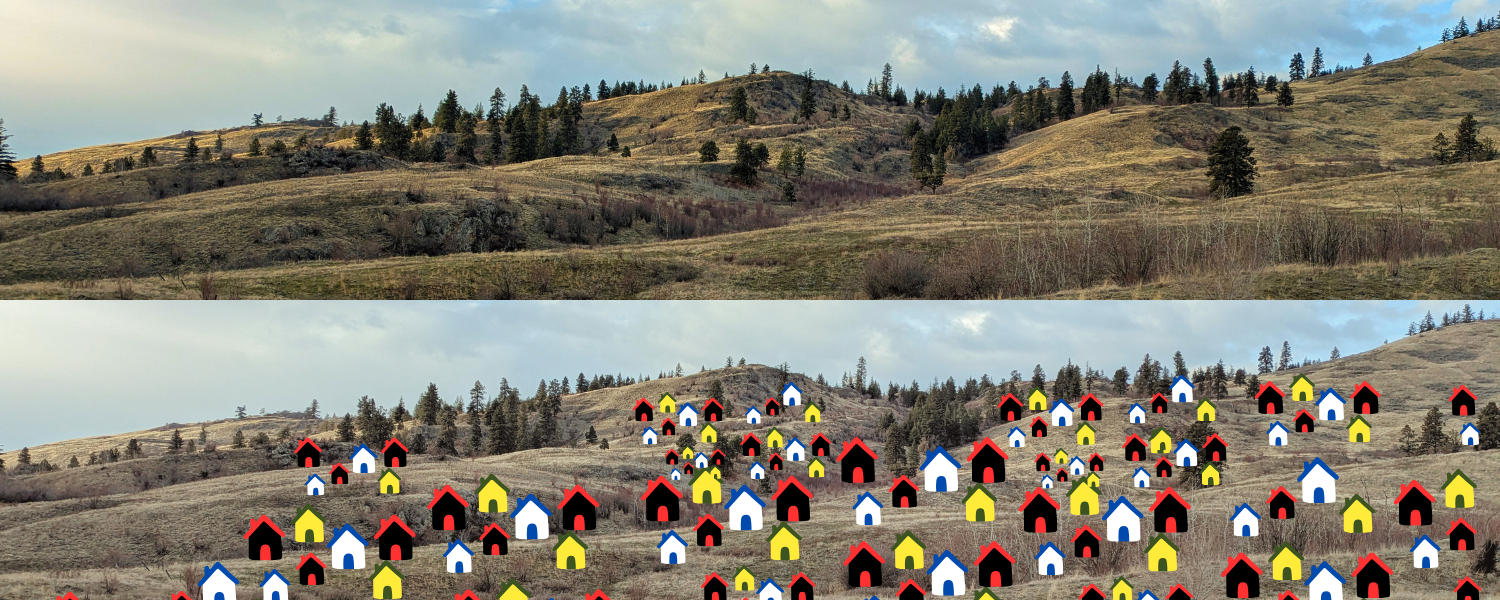
The City of Vernon is considering a significant amendment to the Official Community Plan (OCP), changes that would enable 580 Commonage, a hillside sprawl development far from the city core and existing infrastructure.
Hillside Sprawl Creates Permanent Costs for Taxpayers:
Existing hillside developments are only partially built.
City staff confirmed capacity for about 7,000 units in these areas.
Expected tax revenues from those developments have not materialized — yet costs remain.
Future costs to maintain and replace roads, water and sewer pipes, drainage systems, snow clearing, emergency services, and other infrastructure to be borne by Vernon residents, not the developer.
Approving more hillside sprawl would increase these permanent obligations while providing less reliable tax revenue — a pattern that is financially unsustainable.
Public Safety Concerns:
Hillside developments place families in higher-risk wildfire zones.
Limited evacuation routes.
Climate change brings hotter, drier summers and more extreme fire behaviour, and higher emergency response and insurance costs.
580 Commonage Undermines Livability and Affordability:
Promises “attainable” housing rather than affordable housing.
Affordable housing costs no more than 30% of gross income, including utilities.
Attainable housing is tied to market prices
Increases car dependence, traffic congestion, and transportation costs,
Pulls investment away from the city core — where housing, services, schools, jobs, and transit already exist.
The Process Undermines Democratic Structures:
Proposal weakens the OCP, a plan shaped by over 4000 responses from Vernon residents.
Undermines other adopted plans that call for compact, climate-friendly growth, protection of sensitive ecosystems, and responsible use of public infrastructure.
Disrespects the hours of time citizens have put into consultation processes and committees
We don’t need to choose between growth and responsibility. The OCP as it currently reads outlines how Vernon can grow in a compact, walkable, transit-supportive way that strengthens downtown, supports local businesses, and uses existing infrastructure efficiently.
Vernon can grow — but we must do it wisely.
This petition asks Mayor and Council to reject the proposed OCP amendment, protect hillside lands, and direct growth to appropriate locations within the city.
Petition by

To:
Vernon City Council
From:
[Your Name]
DEAR MAYOR AND COUNCIL,
We, the undersigned, call on you to uphold Vernon’s Official Community Plan (OCP) and reject the proposed amendment that would enable the 580 Commonage hillside development.
PERMANENT FINANCIAL LIABILITIES FOR TAXPAYERS
Approving this amendment creates permanent financial obligations for Vernon taxpayers.
While the developer funds initial construction, hillside infrastructure must be maintained indefinitely at public expense, including roads, water and sewer pipes, drainage systems, snow clearing, emergency services, and other infrastructure.
Experience in Vernon and elsewhere shows that:
-Low-density sprawl development generates less tax revenue per hectare than compact development
-long-term servicing and replacement costs are significantly higher
Base costs remain when developments are partially built, leaving taxpayers to cover shortfalls, as is the case in all existing Vernon hillside developments.
PUBLIC SAFETY AND WILDFIRE RISK
The proposed development raises public safety concerns.
Housing in forested and grassland hillside areas is exposed to elevated wildfire risk, intensified by:
-steep slopes
-wind exposure
-limited evacuation routes.
As climate change increases the frequency and severity of wildfires:
-emergency response costs continue to rise
-insurance availability and affordability are increasingly strained.
Development in these locations places residents at greater risk.
“ATTAINABLE” HOUSING IS NOT AFFORDABLE HOUSING
Affordable housing is defined as housing that costs no more than 30% of household income, including utilities. “Attainable” housing ties costs to market rates.
Building far from the city core increases car dependence and household transportation costs. These costs erode upfront savings in purchase price.
True affordability is achieved through compact, multi-unit housing in serviced areas near jobs, schools, and transit — not through car-dependent hillside sprawl.
LOSS OF IRREPLACEABLE NATURAL LANDS
The Commonage is a significant natural asset. It functions as a connected ecosystem and wildlife corridor, supporting:
-biodiversity
-species at risk.
Large-scale development would:
-fragment habitat
-increase wildlife–vehicle collisions
-increase human–wildlife conflict
-accelerate the spread of invasive species
Once developed, these natural lands are changed permanently. Parks and trails do not replace intact ecosystems; they degrade them.
DEMOCRATIC PROCESS AND PUBLIC TRUST EROSION
This proposal conflicts with multiple Council-adopted plans, including:
-Official Community Plan
-Climate Action Plan
-Transportation Plan
-Housing Needs Report
-Sensitive Ecosystems Inventory
-Parks Master Plan
These plans were developed through extensive public engagement and expert input. They articulate a clear vision for Vernon:
-compact, climate-friendly growth
-efficient use of existing infrastructure
-protection of sensitive lands
-effective and efficient public transit.
Amending the OCP to accommodate a hillside sprawl proposal:
-undermines planning integrity
-weakens accountability to citizens
-erodes public trust in municipal decision-making
-discourages future participation in democratic processes.
We support growth. We support housing. We support affordability, public safety, and environmental stewardship. But growth must occur in the right places — in the city core and existing neighbourhoods, near services, transit, schools, and jobs — not through costly, elevated-risk hillside sprawl.
WE RESPECTFULLY URGE MAYOR AND COUNCIL TO:
-Reject the proposed OCP amendment;
-Uphold Vernon’s adopted planning framework;
-Protect hillside ecosystems for future generations; and
-Direct new housing to locations that are fiscally responsible, climate-aligned, and safe.