Who should lead the Wisconsin Cannabis Caucus
Please pull up this link and open it in a new tab. You will need the list open for your review to reference and use in the next part of the survey:
List of the Wisconsin Elected Officials for 2025-26
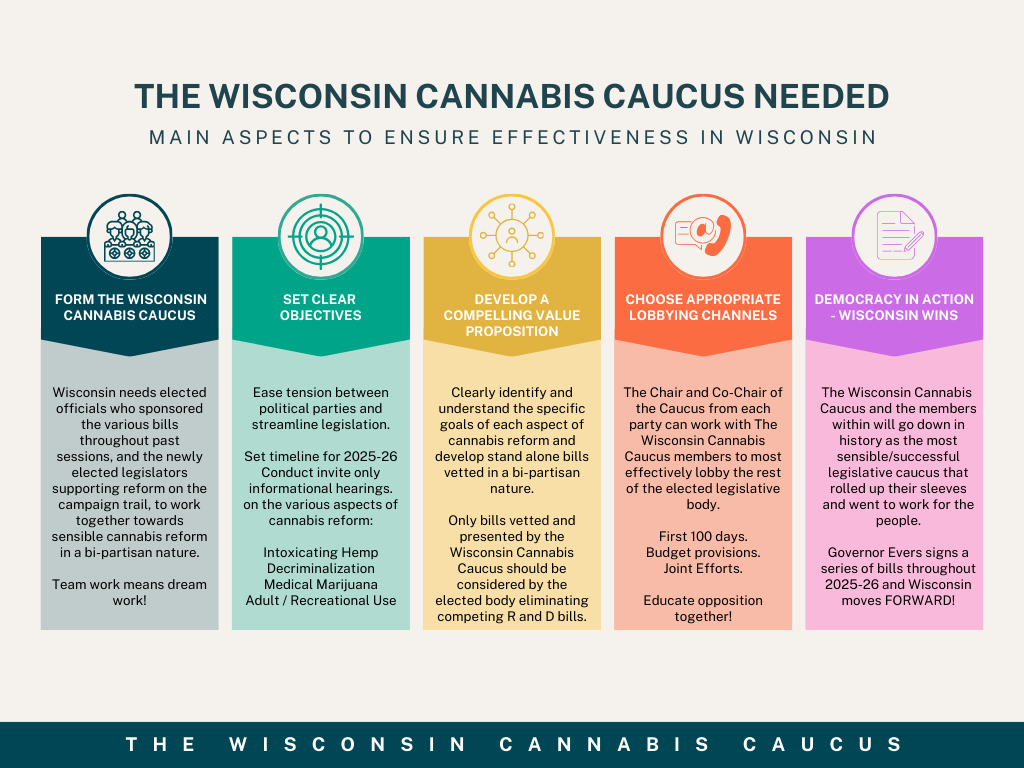
Wisconsin needs elected officials who sponsored the various bills throughout past sessions and the newly elected legislators supporting reform on the campaign trail to work together towards sensible cannabis reform in a bi-partisan nature.
During election cycles, we need to put the pressure on candidates to help form The Wisconsin Cannabis Caucus if elected.
jay
An official bipartisan state caucus can streamline cannabis reform legislation at the state level while developing and promoting sensible cannabis policy reform and work to ease the tension between political parties.
The Wisconsin Democrat Caucuses include: Asian American Pacific Island Caucus, American Indian Caucus, Black Caucus, Disability Caucus, Environmental Caucus, Jewish Caucus, Labor Caucus, Latino Caucus, LGBTQ+ Caucus, Progressive Caucus, Rural Caucus, Veteran Caucus and Women's Caucus.
There are Wisconsin Republican Caucuses also, aren't there?
Bipartisan Wisconsin Caucuses include: Wisconsin Children's Caucus, Wisconsin Paper Caucus, Wisconsin Legislative Trails Caucus and Wisconsin’s Legislative Sportsmen’s Caucus.
At the federal level there are hundreds of issue based caucuses:
There are some examples of bi-partisan caucuses also, such as: State Mental Health Caucus, Congressional Rural Health Caucus, Congressional Sportsmen Caucus, Senate Mental Health Caucus in the U.S. Senate
and our favorite federal caucus, The Congressional Cannabis Caucus.
What is next?
If Republicans insist on discussing cannabis policy solely behind closed doors within their own ranks, that is one challenge. However, another pressing issue is the stark division within the GOP itself. On one side, there are Republicans pushing for a complete ban on intoxicating hemp products, while on the other, there is an equally significant faction advocating for some degree of cannabis reform. This internal conflict reflects the broader uncertainty within the party on how to address the issue.
It has become painfully clear that Speaker Robin Vos is not interested in advancing cannabis reform in any meaningful way. Instead of governing and fostering collaboration, Vos has positioned himself as an arbiter, effectively stalling progress. His refusal to work with Democrats on this critical issue underscores his unwillingness to lead in a way that reflects the will of the people or the evolving needs of Wisconsin.
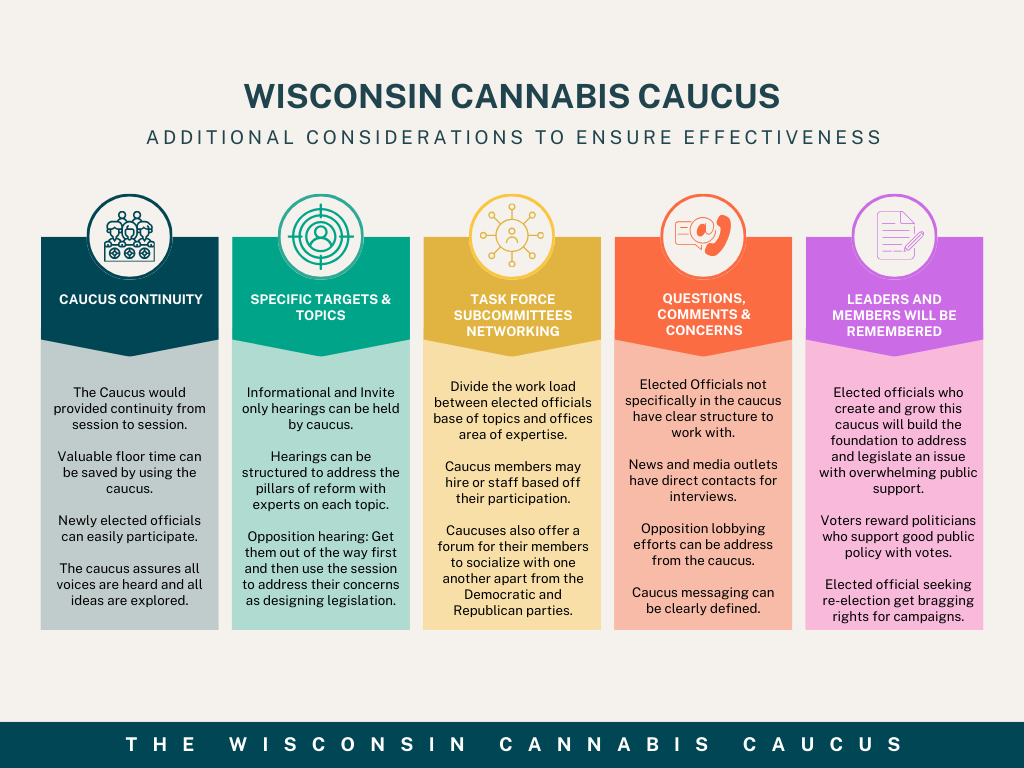
Despite these obstacles, there remains a clear path forward for legislators who genuinely care about cannabis reform. To break through the gridlock and foster bipartisan cooperation, it is essential to establish a Wisconsin Cannabis Caucus. This dedicated, cross-party group could serve as a platform for lawmakers committed to crafting and advancing policies that reflect the realities and opportunities of cannabis regulation. By forming such a caucus, pro-reform legislators can work together to ensure that cannabis policy becomes a priority in 2025 and beyond, transcending partisan politics and addressing the issue in a way that benefits all Wisconsinites.
Action by

