Created by

Sponsored by

CANCELLED: Reality Crisis: How to Protect Democracy in an Age of Algorithms, Conspiracy Theories & Extremism
Start: 2025-04-14 20:00:00 UTC Greenwich Mean Time : Dublin, Edinburgh, Lisbon, London (GMT+00:00)
End: 2025-04-24 20:30:00 UTC Greenwich Mean Time : Dublin, Edinburgh, Lisbon, London (GMT+00:00)
Event Type:
Virtual
A virtual link will be communicated before the event.
Host contact info hello@movementecology.org.uk
This event has been cancelled and replaced with this event titled The Psychology of Conspiracy Theories & How to Talk to People About Them
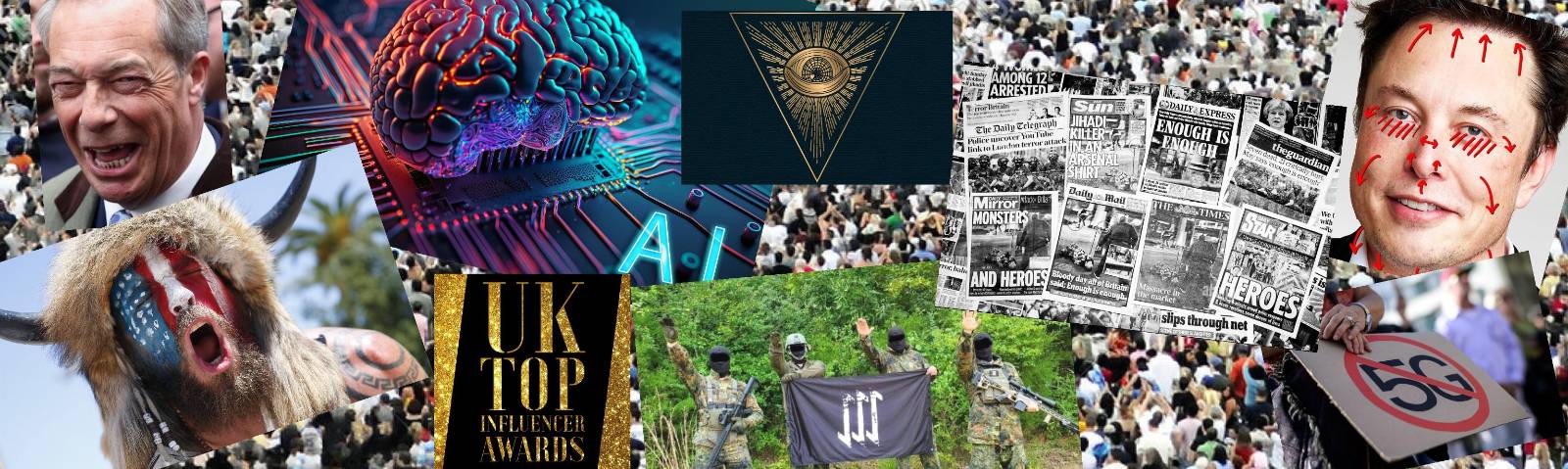
We are living in a time in which it has never been easier to fabricate and disseminate false information; in which much of the information we consume is controlled by a small group of tech companies, which deploy algorithms and use our psychology against us; and in which the new global order is making us more vulnerable to manipulation and threatening genuine democratic participation. All of this amounts to an erosion of a shared reality, along with distrust, rampant conspiracy theories, and extremism.
If you would like to understand more about how social media and the Internet are changing the way we communicate, the way we view ourselves, others and the world, and our ability to shape our society for the benefit of all, come along to this three-part web series.
This is a THREE-PART web-series. We invite you to join for all three sessions, but you're also welcome to drop in for one.
Session 1: 7-8.30pm, 10th April
Session 2: 7-8.30pm, 17th April
Session 3: 7-8.30pm, 24th April
In this series, the Movement Ecology Collective will host Aneira Roose-McClew. Aneira is an educator, facilitator, writer and practitioner of participatory democracy. Having worked as a secondary school teacher, she writes teaching resources and delivers workshops for young people. She is currently studying for an MSc in Sustainability and Behaviour Change and is using her studies to explore system change, the link between worldviews, values and behaviour, and how we can use our imagination and storytelling to bring about social change. These past eighteen months, she has been researching the media and information landscape, and has written resources to help people better understand how social media, algorithms, artificial intelligence and false information are impacting their lives and the world in which they live. She co-founded the community building and skill sharing organisation Trust the People, which delivers free training for those seeking to bring about inclusive and deliberative change in their communities.
During the three sessions, we will reflect on the following questions:
- How has social media changed the way people consume, share and create information?
- What are the different types of false, misleading and manipulative content in circulation? What methods are used to spread this content? How can we avoid falling prey to it?
- What risks do conspiracy theories and extremism pose to individuals and society? How are they spread online? What draws us to these ways of thinking and behaving?
- What is generative AI and what impact can it have on society?
- How can the media and information landscape impact democracy?
At the end of the course, you should better understand the risks posed by the changing media and information landscape, and how you can safeguard yourself and those around you.
Session 1: Exploring the Impact of Social Media, and Confronting Disinformation, Misinformation & Mal-information [7-8.30pm, 10th April]
During this session, we will explore:
- The benefits and drawbacks of social media
- How social media has altered the information landscape
- The methods that social media companies use to keep people engaged on their platforms and the impact of algorithms
- What ‘misinformation’, ‘disinformation’ and ‘mal-information’ are and the techniques used to spread them
- How to avoid falling prey to these types of ‘information disorder’
Session 2: Conspiracy Theories & Extremism [7-8.30pm, 17th April]
During this session, we will explore:
- What conspiracy theories are, why people believe in them, how they are spread and their impacts
- The relationship between conspiracy theories and extremism
- What draws people to extremist movements
- The role the Internet and social media play in exposing people to conspiratorial and extremist content
Session 3: Generative AI & the Impact that the Media & Information landscape has on Democracy [7-8.30pm, 240th April]
During this session, we will explore:
- What generative AI is and the risks and benefits posed by it
- What a democracy needs to function effectively
- The impact that the features of the media and information landscape we have explored can have on democracy