Ask Oregon Dept State Lands to say "NO" to Jordan Cove Pipeline for LNG
DSL Coordinator Bob Lobdell <jordancove@dsl.state.or.us>
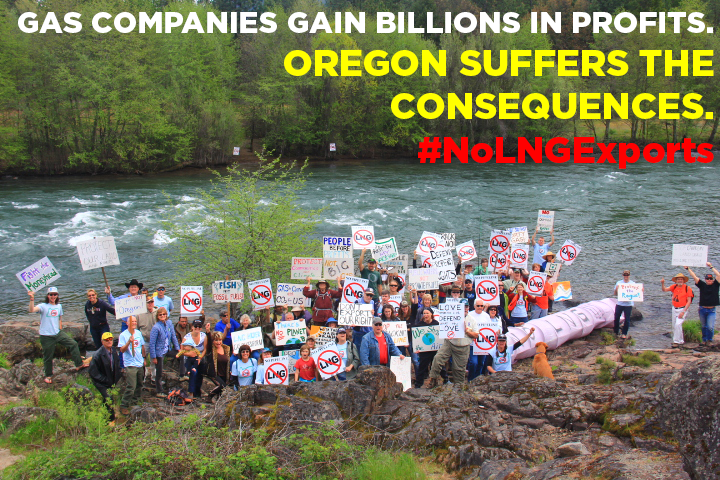
On December 6, 2018, the Oregon Department of State Lands opened up a 60-day public comment period on a critical permit needed to construct the 229 mile Pacific Connector fracked gas pipeline and the Jordan Cove LNG export terminal. Take action today to stop Oregon from becoming a fracked gas export hub by letting Oregon DSL know why you oppose the Jordan Cove project.
USE THE FORM HERE to insert your own personal comment, using the Comment Guide below, or write your own. In the third paragraph you may insert your personal reasons why we dont need this huge green house gas emitter.
Tell Oregon Department of State Lands to Deny Removal-Fill Permits for Jordan Cove by February 3rd 2019
For more than 14 years, southern Oregon communities have been fighting a proposal from a Canadian energy company to build a 229-mile Pacific Connector fracked gas pipeline and the Jordan Cove LNG export terminal, collectively called “Jordan Cove”. If approved, the pipeline and terminal would be the largest climate polluter in the state and pipeline and terminal construction would threaten Oregon rivers, streams and the Coos Bay estuary.
On December 6th, 2018 the Oregon Department of State Lands (DSL) opened a 60-day public comment period for an important permit known as the “Removal-Fill Permit.” DSL is one of several state agencies that can shut down the Jordan Cove LNG by denying necessary ‘removal-fill’ permits needed for dredging related to the pipeline and terminal.
Under the Clean Water Act, the state of Oregon has the authority to deny permits for projects that could harm drinking water, irrigation, fishing, rafting, clamming, and purity of waterways. Similar fracked gas pipeline projects across the country have been stalled or stopped completely when these permits are denied by state agencies. In 2014, DSL denied removal-fill permits for the Coyote Island coal export terminal near Boardman, Oregon.
COMMENTS ARE DUE BY FEB 3, 2019.
What is the permit that I’m commenting on?
Permit: State Removal-Fill Permit
Agency: Oregon Department of State Lands (DSL)
What is the agency reviewing?
DSL is one of several state agencies that can shut down the Jordan Cove project by denying necessary ‘removal-fill’ permits needed for dredging related to the pipeline and terminal. Under Oregon law (ORS 196.795-990), DSL is required to determine whether (1) the project is consistent with the protection, conservation, and best uses of the water resources of the state; (2) the project is the practicable alternative with the least adverse impacts on the water resources; and (3) the project does not unreasonably interfere with the preservation of waters for navigation, fishing, or public recreation. DSL is also required to review the public need for the project, the economic costs to the public, public health and safety, compatibility with existing land uses, and proposed mitigation for impacts to waterways.
Agency website: https://www.oregon.gov/dsl/WW/Pages/jordancove.aspx
What can I include in my comments?
The goal of comments is to tell the Department of State Lands (DSL) to deny the removal-fill permit for the reasons listed below. You can use this language in your comment if you want!
Jordan Cove has failed to demonstrate that the project is consistent with the protection, conservation, and best use of Oregon’s waters.
Jordan Cove has failed to demonstrate that the project is a practicable alternative with the least adverse impacts on water resources.
Jordan Cove has failed to demonstrate that the project won’t interfere with navigation, fishing, or public recreation.
Your comments don't need to be technical or complicated! Just focus on the impacts that the pipeline and terminal would have on streams and rivers and how that would affect you. Additionally, you can touch on impacts that dredging and construction would have on public safety, water quality, drinking water, wildlife, recreation, fishing, navigation of public waters and more.
1. DSL should deny permits because the proposed fracked gas pipeline and terminal would likely unreasonably interfere with beneficial uses of waterways including navigation, fishing, and public recreation. (See ORS 196.825(1)(b)).
What to write about: Include your specific concerns about how you recreate on the impacted rivers and streams. Do you like to go fishing, boating, swimming, rafting, or hiking on or near the Rogue, Umpqua, Klamath, Coos, or Coquille rivers? Do you like to go fishing, boating, or swimming in Coos Bay? Do you live in Southern Oregon and use water for irrigation or livestock watering? How would you be impacted if these waters became polluted as a result of dredging these rivers and streams or filling in wetlands?
EXAMPLE: I love fishing on the Rogue River and am concerned that pipeline construction will harm fish. Constructing the pipeline will cut down trees near streams, which can heat the stream and harm fish and fish habitat.
EXAMPLE: I own (or I work) for a rafting company that holds trips on the Klamath, Rogue, Coos, and/or Umpqua Rivers and are concerned that the river would become inaccessible during construction and that impacts will permanently alter the aesthetic value of the river, which would negatively impact your business/place of employment.
EXAMPLE: I go clamming in Coos Bay and I’m afraid giant tankers will create too much traffic for the public to navigate the channel and that dredging will harm wildlife where community members traditionally fish.
2. Increased harm to Oregon’s waters: The project is not consistent with the protection, conservation, or best use of Oregon’s waters. (See ORS 196.825(1)(a)).
What to write about: How would you be impacted if the Klamath, Rogue, Umpqua, Coos, or Coquille Rivers became polluted as a result of dredging these rivers and streams or filling in wetlands? Consider possible impacts to fish, wildlife, or public safety (polluted drinking water, increased flooding). How would you be impacted if dredging in Coos Bay destroyed aquatic habitat for fish and shellfish? Include your specific concerns about how the project is not in the public interest and will harm our rivers and our communities.
EXAMPLE: I am concerned that trenching, blasting, and damming streams will pollute the water by increasing muddiness, and will harm fish. I spend time every summer at the South Umpqua River with my kids and dogs when we visit my folks.
EXAMPLE: This project is one of the largest and most environmentally harmful private projects in Oregon. It threatens fish, clean water, recreation, and wildlife.
3. Increased risks to public health and safety: The terminal and pipeline would likely interfere with public health and safety. (See ORS 196.825(3)(e)).
What to write about: How would you be impacted if construction of the pipeline resulted in increased pollution of your drinking water supplies? How would you be impacted if dredging of Coos Bay and the navigation channel increased tsunami risk to your community? The pipeline would also cross the source streams for 11 municipal drinking water supplies.
EXAMPLE: I live (or I work) in Medford and am concerned that the pipeline will cross tributaries to my local drinking water supply.
EXAMPLE: I am concerned about the public safety impacts of this project including that the Jordan Cove LNG export terminal would put over 16,000 people in a hazardous burn zone and that this high-pressure explosive gas pipeline would cross some of Oregon’s most fire-prone forests.
When you ADD your NAME, We'll send your comment and content info the appropriate contact at the Oregon Department of State Lands.
Sponsored by

To:
DSL Coordinator Bob Lobdell <jordancove@dsl.state.or.us>
From:
[Your Name]
Building the Jordan Cove LNG export facility and the Pacific Connector fracked gas pipeline is the wrong direction for our safety, rivers, and climate.
I strongly oppose the Jordan Cove Liquefied Natural Gas (LNG) and Pacific Connector Pipeline proposed project (DSL Application Number APP0060697) and request that the Oregon Department of State Lands (DSL) deny the removal-fill permit because the proposed activities would likely harm Oregon’s water resources, fishing, navigation, and public recreation as well as increase risks to public health and safety.
Construction of the LNG export terminal and the 229-mile pipeline would impact more than 485 rivers and streams, including the Klamath, Rogue, Umpqua, Coos, and Coquille Rivers. At each place where the 36-inch pipeline crosses waterways, the construction will harm habitat for fish and pollute clean water. The project would also require dredging out and fundamentally re-shaping the Coos Bay estuary.
Construction of the Jordan Cove LNG terminal and pipeline will harm clean water, fishing, navigation, and public recreation by:
--Cutting down streamside trees, resulting in warmer stream temperatures that harm fish;
--Disturbing and re-suspending toxic materials in and around waterways;
--Permanently destroying wetlands;
--Potentially releasing drilling chemicals and other contaminants into rivers and streams;
--Crossing the rivers and streams that are the drinking water source for 12 public drinking water systems and more than 116,000 Oregonians;
--Fundamentally altering the Coos Bay estuary, increasing murkiness and degrading habitat for salmon and shellfish, like oysters and clams;
--Modifying the navigation channel at Coos Bay that would interfere with the ability of the public to access these areas for fishing and recreation; and
--Increasing ship traffic in the navigation channel that could increase invasive species released through ballast or engine cooling water.
Oregon DSL should deny the removal-fill permit because Jordan Cove has failed to demonstrate that the project is consistent with the protection, conservation, and best use of Oregon’s waterways.
Further, Oregon DSL should deny the removal-fill permit because Jordan Cove LNG has failed to demonstrate that the project will not interfere with public health and safety. Dredging out Coos Bay will allow more water to move more quickly in the event of a tsunami, increasing risks to local communities. The export terminal would put thousands of Coos County residents in a hazardous burn zone, while the gas pipeline would cross some of Oregon’s most fire-prone forests.
I strongly oppose this project and the Oregon Department of State Lands should deny Jordan Cove's removal-fill permit application.
Thank you for your consideration of my request.